


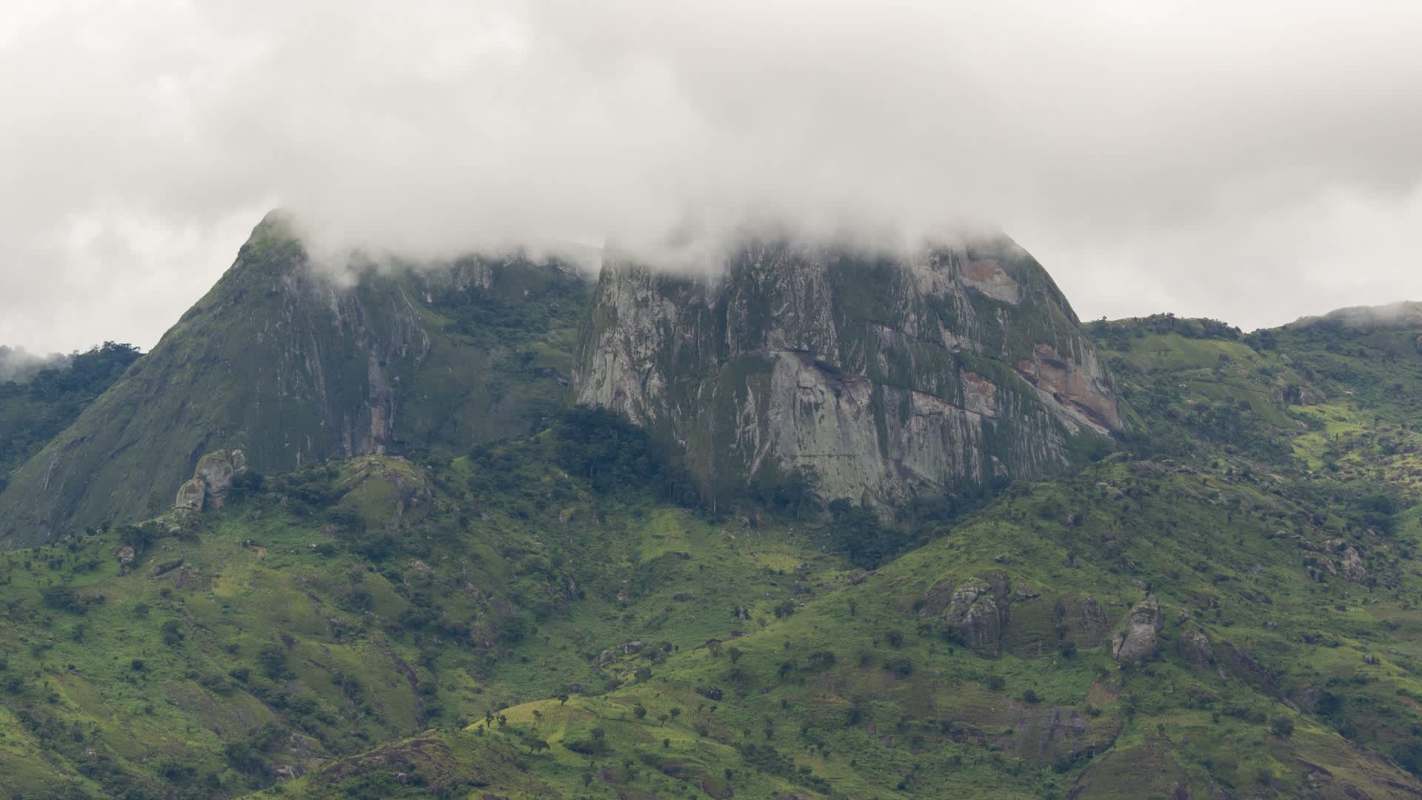
In Mozambique's isolated mountaintop rainforests, scientists have documented four chameleon species that were previously unknown to science.
The finding highlights how much of the natural world remains undiscovered and how quickly some newly recognized species could be at risk.
What happened?
The study, published in the journal Vertebrate Zoology, offers a look at how much biodiversity can develop in Mozambique's "sky islands," forested mountain zones cut off from the landscape below.
As Nautilus reported, these high, wet habitats rise above surrounding savannas, and some are divided from one another by at least 28 miles of dry terrain that chameleons seldom traverse.
To determine how many species were present, researchers examined DNA from 31 chameleons collected on six of the country's larger sky islands — Mabu, Mulanje, Chiperone, Namuli, Inago, and Ribáuè — and matched those results with physical traits.
Using both lines of evidence, the South African herpetologists concluded that the animals represented six separate species, four of them new to science.
TCD Picks » Quince Spotlight
💡These best-sellers from Quince deliver affordable, sustainable luxury for all




Despite sharing the basic form suited to life in forests, the isolated populations developed their own distinctive features over millions of years. The chameleons from Mount Ribáuè, for instance, had extra scales under the lower jaw and raised scales along the sides of the head.
Two of the newly identified species were named after primate biologist Jane Goodall and DNA chemist Rosalind Franklin.
Why does it matter?
These mountaintop forests show how intact ecosystems can sustain rare species found nowhere else on Earth. Protecting them could help preserve water cycles, stabilize local landscapes, and support future benefits for nearby communities tied to conservation and scientific research.
Krystal Tolley of the South African National Biodiversity Institute described the setting this way, according to Nautilus: "These mountains rise sharply from the surrounding savanna, trapping clouds and rain and creating cool, moist refuges in an otherwise dry landscape."
Logging is already damaging some of these forests, including on the slopes of Mulanje, where the endemic chameleon species N. mlanjensis has been classified as endangered. For species restricted to a single sky island, the loss of habitat may leave no other place to survive.
What are people saying?
Tolley said the mountains' separation from one another makes them "true 'sky islands,'" which helps explain why evolution produced so many species found only on individual peaks, according to Nautilus.
"Many of their species occur nowhere else on Earth," she added, emphasizing how important conservation efforts in the area are.

Get TCD's free newsletters for easy tips, smart advice, and a chance to earn $5,000 toward home upgrades. To see more stories like this one, change your Google preferences here.







