


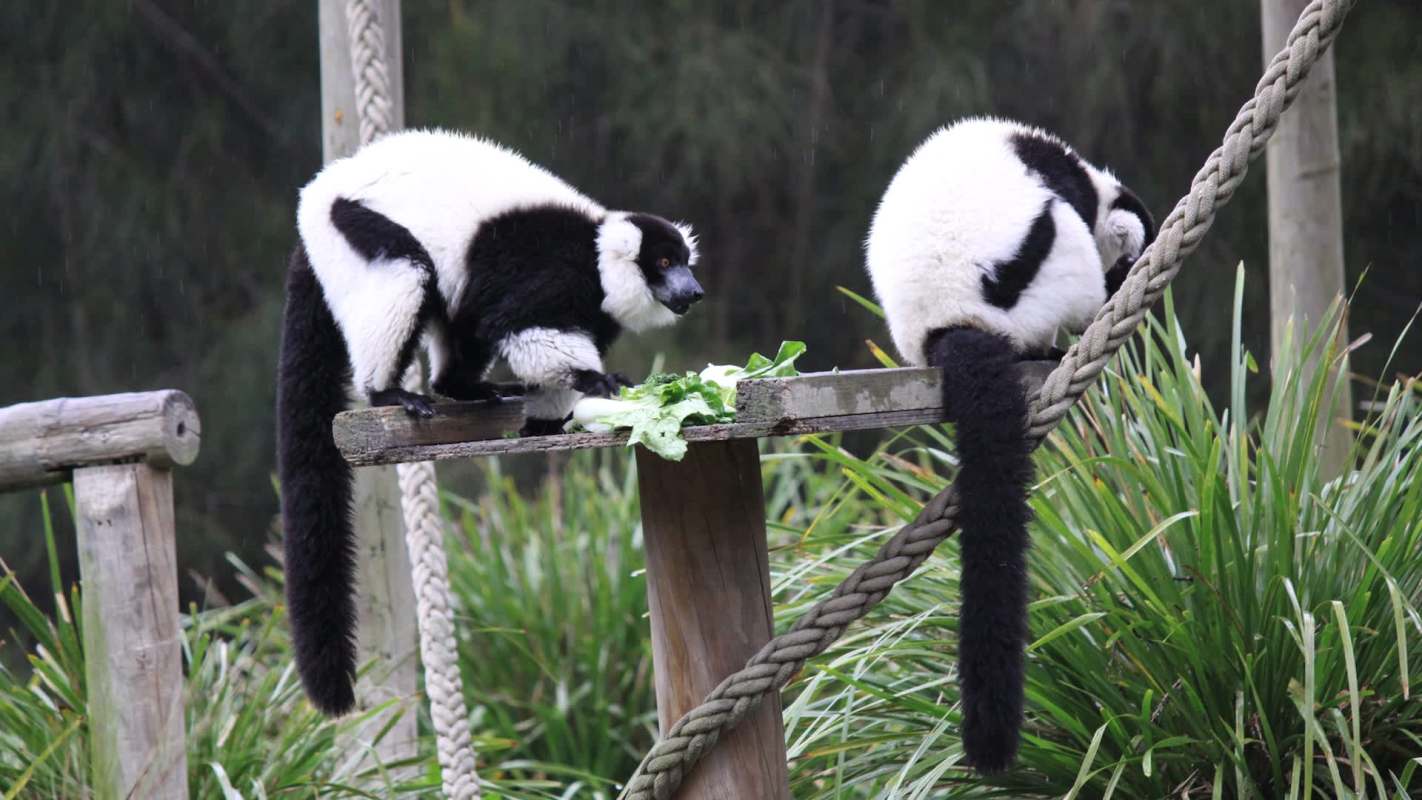
Visitors to New York City's Central Park Zoo can now see a pair of twin black-and-white ruffed lemurs, an encouraging development for one of the planet's most endangered primates.
Their recent public debut underscores how conservation efforts can help a species that is close to the edge.
What's happening?
According to Popular Science, Central Park Zoo visitors can now spot Masco and Tonga, fraternal black-and-white ruffed lemur twins, in the Tropic Zone exhibit. Masco is male, and Tonga is female.
In the tropical rainforests of eastern Madagascar, black-and-white ruffed lemurs fill a key ecological niche. When they feed on nectar from the Madagascar-native Traveler's tree, pollen collects on their faces, which helps make them some of the largest pollinators in the world.
The International Union for Conservation of Nature lists black-and-white ruffed lemurs as "critically endangered," and habitat loss and poaching have reduced wild populations by at least 80% across three generations.
The twins were born to Koa, the troop's dominant female, and Milo, her chosen dominant male. Popular Science reported that the Central Park Zoo has had eight black-and-white ruffed lemur births since first acquiring the species in 2008.
TCD Picks » Quince Spotlight
💡These best-sellers from Quince deliver affordable, sustainable luxury for all




Why does it matter?
For a critically endangered species, every successful birth can matter, especially when it helps maintain population numbers and genetic diversity.
Central Park Zoo Animal Curator Susan Cardillo said, "Lemurs play important roles in protecting plant species and maintaining healthy ecosystems through seed dispersal. In addition to the spread of pollen from their snouts, they are highly frugivorous and pass seeds in their feces across forest landscapes. They are sometimes called the 'rainforest gardeners.'"
Healthy forests help store carbon, protect biodiversity, and support local communities whose lives and livelihoods are tied to stable ecosystems.
What's being done?
For species facing severe decline, accredited zoos may take part in breeding efforts through the Association of Zoos & Aquariums' Species Survival Plan. These programs are designed to increase numbers while preserving genetic diversity across managed populations.
The Wildlife Conservation Society's Madagascar Program is helping conserve the island's biodiversity, including Makira Natural Park, a protected area of more than 1,000 square miles that serves as a major habitat for black-and-white ruffed lemurs.
Cardillo said, "This [second pregnancy] enabled our animal care staff to accurately predict important milestones of the breeding season such as estrous cycle, mate choice, and early signs of pregnancy."

Get TCD's free newsletters for easy tips, smart advice, and a chance to earn $5,000 toward home upgrades. To see more stories like this one, change your Google preferences here.






