


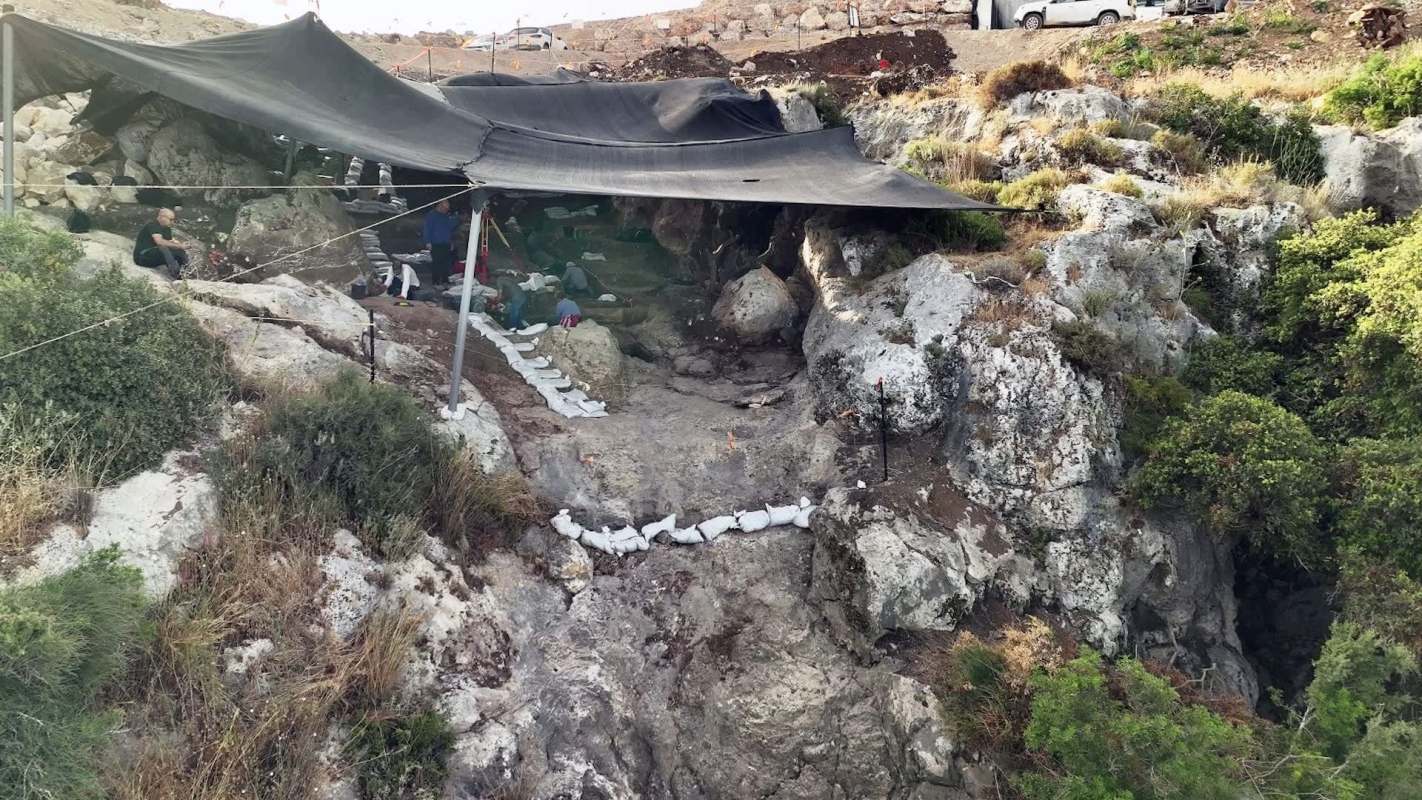
An excavated cave near Haifa, Israel, may offer archaeologists an unusually direct record from a poorly documented phase of human evolution.
Researchers say the site captures one preserved episode of life dating to about 250,000 to 400,000 years ago, as The Press Service of Israel reported.
What happened?
Scientists say the cave, at the edge of Fureidis, may hold rare traces of the pre-Neanderthal Acheulo-Yabrudian culture.
"Sites from this culture are actually very rare," Kobi Vardi of the Israel Antiquities Authority told TPS. "We know of only 10 such sites in the entire Middle East."
Its value may come from how intact and isolated it remained.
After construction work put the cave at risk, archaeologists from the IAA and Haifa University told TPS that the long-sealed site might preserve a single cultural layer rather than the multiple periods often mixed together in other caves, offering evidence from a key late Lower Paleolithic moment.
TCD Picks » Quince Spotlight
💡These best-sellers from Quince deliver affordable, sustainable luxury for all




Among the finds are hand axes, scrapers, and blades as well as animal bones from fallow deer, gazelle, and ancient horses, the publication noted. Researchers say evidence of water nearby could explain why prehistoric hunter-gatherers were repeatedly drawn to the area.
Why does it matter?
Archaeological evidence from this span of time is scarce, even though it sits just before Neanderthals and modern humans became more widely established, as TPS explained.
Researchers believe the period may contain early indications of shifts in human physiology, technology, and social behavior that later became much more important.
Because the cave preserved both tools and bones so well, scientists may be able to reconstruct everyday activity with unusual precision, including hunting, food processing, camp layout, and the use of surrounding resources.
TPS noted that comparable caves from this era have yielded evidence of heavy fire use and long-term human influence, pointing to a richer social life than researchers once assumed.
What are people saying?
Vardi emphasized how rare the find was, especially its condition.
"Here we have an exceptional level of preservation," he told TPS. "This is a time capsule in which not only flint tools were preserved but also very well-preserved animal bones from animals they hunted."
Vardi said that the cave may also point to deep mental and social shifts from its time period.
"It is interesting because here we also see a transformation in cognition," Vardi said. "Suddenly, we see a more developed flint industry. It probably teaches us about a different kind of social organization."

Get TCD's free newsletters for easy tips, smart advice, and a chance to earn $5,000 toward home upgrades. To see more stories like this one, change your Google preferences here.






