


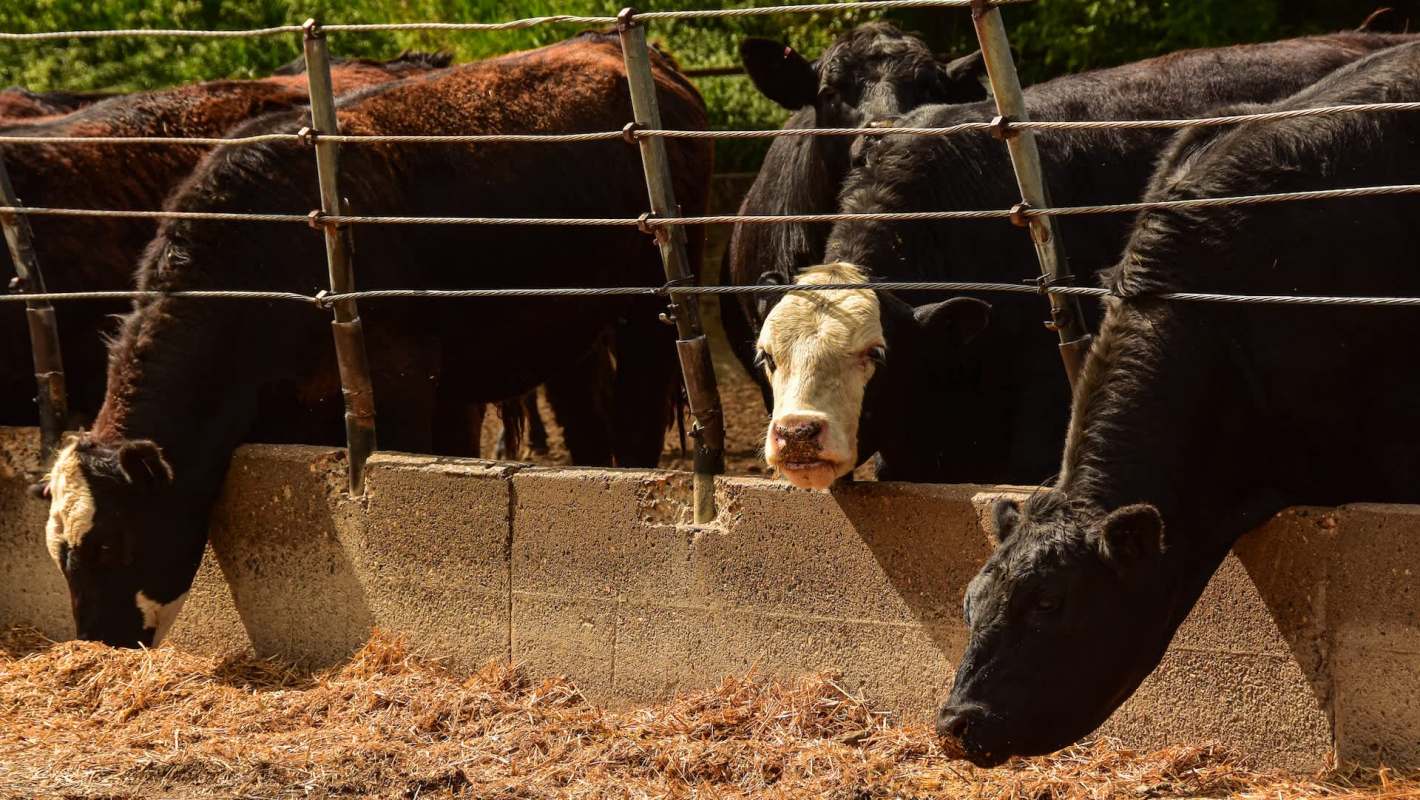
A new study, published in Environmental Research, found that people living nearer to livestock feeding operations experienced significantly higher cancer rates.
Researchers from Yale University investigated whether residents of Texas, California, and Iowa experienced higher levels of cancer if they lived closer to concentrated animal feeding operations (CAFOs). These states were chosen in part due to the sheer number of CAFOs present.
Perhaps unsurprisingly, according to the study, those who lived near CAFOs did experience higher cancer rates.
Texas residents experienced higher rates of every type of cancer (except breast cancer) with higher exposure to CAFO facilities. In both Iowa and California, residents similarly experienced higher levels of every cancer type investigated with higher exposure to CAFOs.
Nicole Deziel, one of the paper's co-authors, told Inside Climate News that "there are many pathways through which CAFOs could impact cancer, including changes to air quality, water quality, noise, and odor."
However, the study's authors also noted that even though results across all three states showed a potential link between cancer rates and how closely the residents lived near CAFOs, "further investigation is warranted to explore causal mechanisms and potential confounding factors."
TCD Picks » Quince Spotlight
💡These best-sellers from Quince deliver affordable, sustainable luxury for all




Why is studying CAFOs important?
As the study's authors put it, "CAFOs are significant sources of environmental pollution with potential public health implications. [But] despite growing concern of environmental health risk, few studies have assessed the associations between exposure to … CAFOs and cancer incidence across diverse geographic regions and populations."
Amanda Claire Starbuck, who serves as research director at the nonprofit Food & Water Watch, described the study as "groundbreaking," explaining to ICN, "I don't think this topic… has really been emphasized enough and explored enough."
CAFOs house an overwhelming majority of the farm animals in the United States. And the millions upon millions of animals at CAFOs produce all sorts of pollutants, including methane, volatile organic compounds, aerosols, and particulate matter.
The researchers explained that "chronic exposure to these pollutants has been linked to inflammation, oxidative stress, and immunosuppression which may contribute to the cancer development."
|
Which of these savings plans for rooftop solar panels would be most appealing for you?
Click your choice to see results and earn rewards to spend on home upgrades. |
 Save $1,000 this year 💸
 So while Starbuck is right that this research is "groundbreaking," it's critical to note that the study does not find that CAFOs cause cancer despite the correlations found.
More research is needed to better understand the connection between these facilities and public health. And considering how many CAFOs there are across the U.S. and how many people live near them, this research can't come soon enough.

Get TCD's free newsletters for easy tips, smart advice, and a chance to earn $5,000 toward home upgrades. To see more stories like this one, change your Google preferences here.






