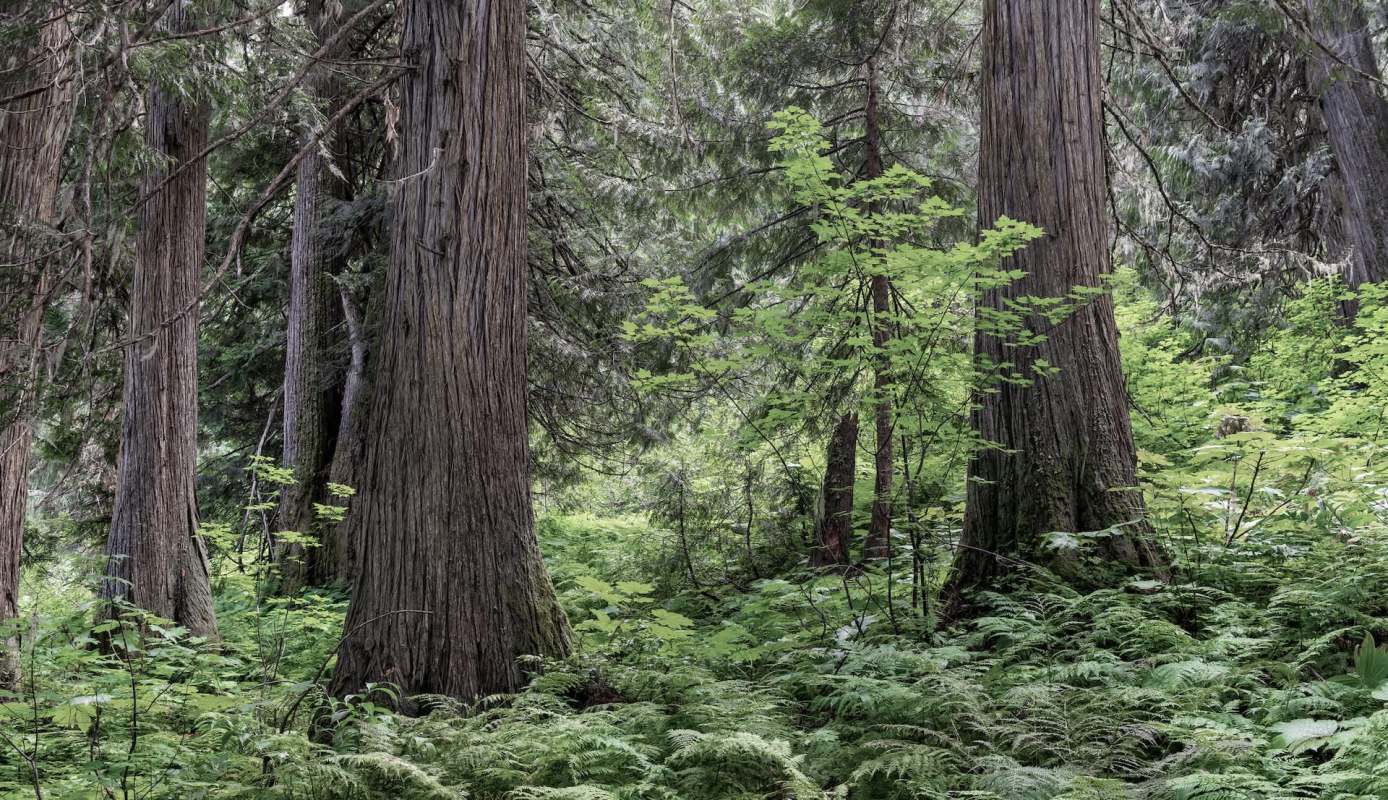
A science educator is challenging claims about Canada's forests and the damage those claims can leave out. Replanting trees after logging may allow land to remain classified as a forest, but that designation does not tell the whole story of its recovery.
Here's what to know
In a TikTok video, Ross Reid (@nerdyaboutnature) explained the difference between deforestation and forest degradation.
A replanted logging site can lose much of its carbon storage and ecological richness without appearing in deforestation figures. It may still carry the same forest land-use classification after its mature trees are gone.
Reid said logging older forests causes damage that Canada's low reported deforestation rates can mask.
"Not all forests are created equal, with mature oldgrowth forests storing far more carbon and biodiversity than secondgrowth forests, but when those old forests are logged and replanted, technically their land-use distinction doesn't change — its all still defined as a 'forest,'" Reid wrote in the caption.
Slow-growing trees help mature forests support biodiversity and hold large stores of carbon.
TCD Picks » Quince Spotlight
💡These best-sellers from Quince deliver affordable, sustainable luxury for all




More background
Reid disputed the idea that increased vegetation seen in satellite images signals healthy ecosystems — a claim associated with "global greening."
That greenery can come from invasive species or crops planted for industrial harvesting as well as diverse native forests, with very different environmental consequences.
Invasive species can leave ecosystems less able to adapt to planetary warming by disrupting how they function.
Reid said the risks of extreme wildfires, declining water quality, drought, flooding, and landslides are higher in degraded, second-growth forests than in mature forest ecosystems.
Those risks can directly affect communities that depend on nearby forests and waterways.
He also warned that logging can leave forests releasing more carbon than they absorb for decades, slowing efforts to curb planet-warming pollution.
What can be done?
Reid urged conservation and restoration efforts to look beyond forest acreage and focus on forest health, carbon retention, and ecosystem function.
He also challenged "global greening" claims by asking which plants account for that growth.
Reid urged attention to the biological complexity lost when mature forests are cut, and whether restoration protects the functions people and wildlife depend on.
"Even as a kid it was wild to me to consider 'mono-species planted in grid' a forest … it's wild that some ppl can get why losing old growth is a terrible loss and planting ONE same tree again and again is a win," one commenter wrote. "Thx for your hard work spreading knowledge tho, your content is always interesting and digestible. I hope more and more ppl will hear it!"
Where can I learn more?
Looking beyond tree cover means paying attention to mature forests and the carbon they store or release.
• A California group claims Earth's largest redwood discovery; only 4% of old growth remains.
• In Washington, 7,500 donors saved 29 acres of Olympic rainforest from a timber sale.
• Brazil's Amazon emissions nearly quadrupled without drought, according to a 15-year study.

Get TCD's free newsletters for easy tips, smart advice, and a chance to earn $5,000 toward home upgrades. To see more stories like this one, change your Google preferences here.