


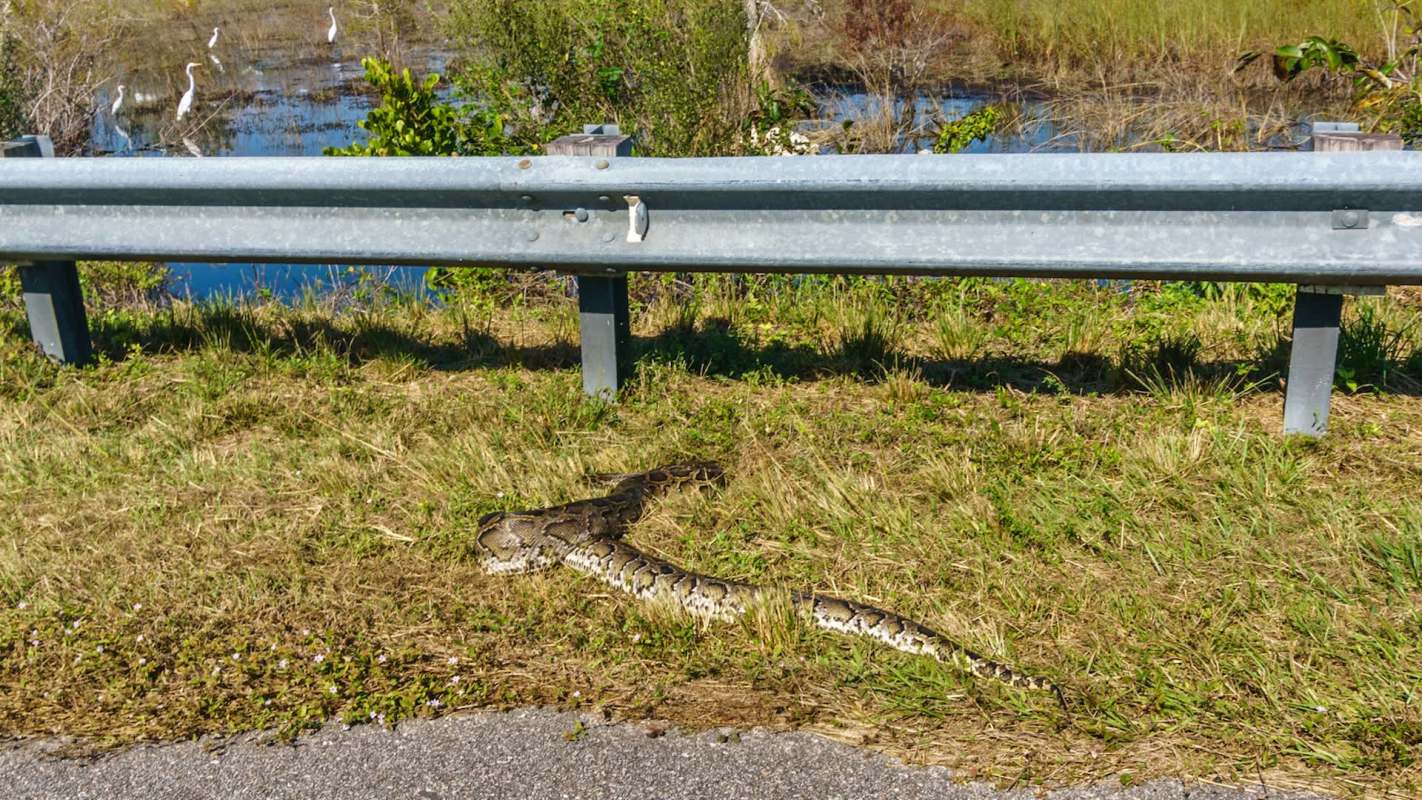
Invasive Burmese pythons in South Florida may be doing more than wiping out mammals across the Everglades.
Scientists have found 25 types of seeds in the digestive tracts of Burmese pythons removed from the Greater Everglades, suggesting they may help disperse plants across one of the nation's most fragile ecosystems.
Here's what to know
A study by researchers from the University of Florida, the U.S. Geological Survey, and the Conservancy of Southwest Florida documented the 25 seed types in python digestive tracts. The research was then published in the peer-reviewed Journal of Zoology.
Because Burmese pythons do not eat fruit directly, the seeds entered their stomachs indirectly after they ate mammals and birds that had eaten the fruit first, a process the researchers called diploendozoochory.
Many of the seeds the scientists found were still viable. One germination test found that nearly 40% of cabbage palm seeds sprouted after passing through a python's gut, as reported by Nature World News.
The Conservancy of Southwest Florida provided most of the python samples, where biologists Ian Bartoszek and Ian Easterling spent years collecting stomach and digestive-tract contents from snakes removed in the Greater Western Everglades, per Nature World News.
TCD Picks » Quince Spotlight
💡These best-sellers from Quince deliver affordable, sustainable luxury for all




The samples included native plants such as cabbage palm, Florida's state tree, and creeping cucumber. Unfortunately, the researchers also found seeds of invasive plant species in the snakes' stomachs, meaning the invasive serpents could also be unintentionally helping another invasive species spread.
More background
Their network analysis indicated that these reptiles are becoming part of Everglades seed-dispersal systems.
The study authors concluded that "invasive reptiles not only disrupt native plant-animal interactions but may also reshape them, with implications for ecosystem stability, restoration, and management."
That possibility is more concerning because pythons have already devastated major native seed carriers in the Everglades. A 2012 study in Proceedings of the National Academy of Sciences found that since 1997, sightings in Everglades National Park had dropped by 99.3% for raccoons, 98.9% for opossums, and 87.5% for bobcats, as explained by Nature World News.
Where can I learn more?
These stories look at how Burmese pythons are changing the Everglades and how Florida is responding.
• In the Greater Everglades, pythons are spreading seeds through prey animals that ate fruit first.
• Across South Florida, pythons are altering Everglades ecosystems, with effects reaching beyond mammal declines.
• Florida biologists found pythons are eating Nile monitors, adding another invasive twist to control efforts.

Get TCD's free newsletters for easy tips, smart advice, and a chance to earn $5,000 toward home upgrades. To see more stories like this one, change your Google preferences here.






