


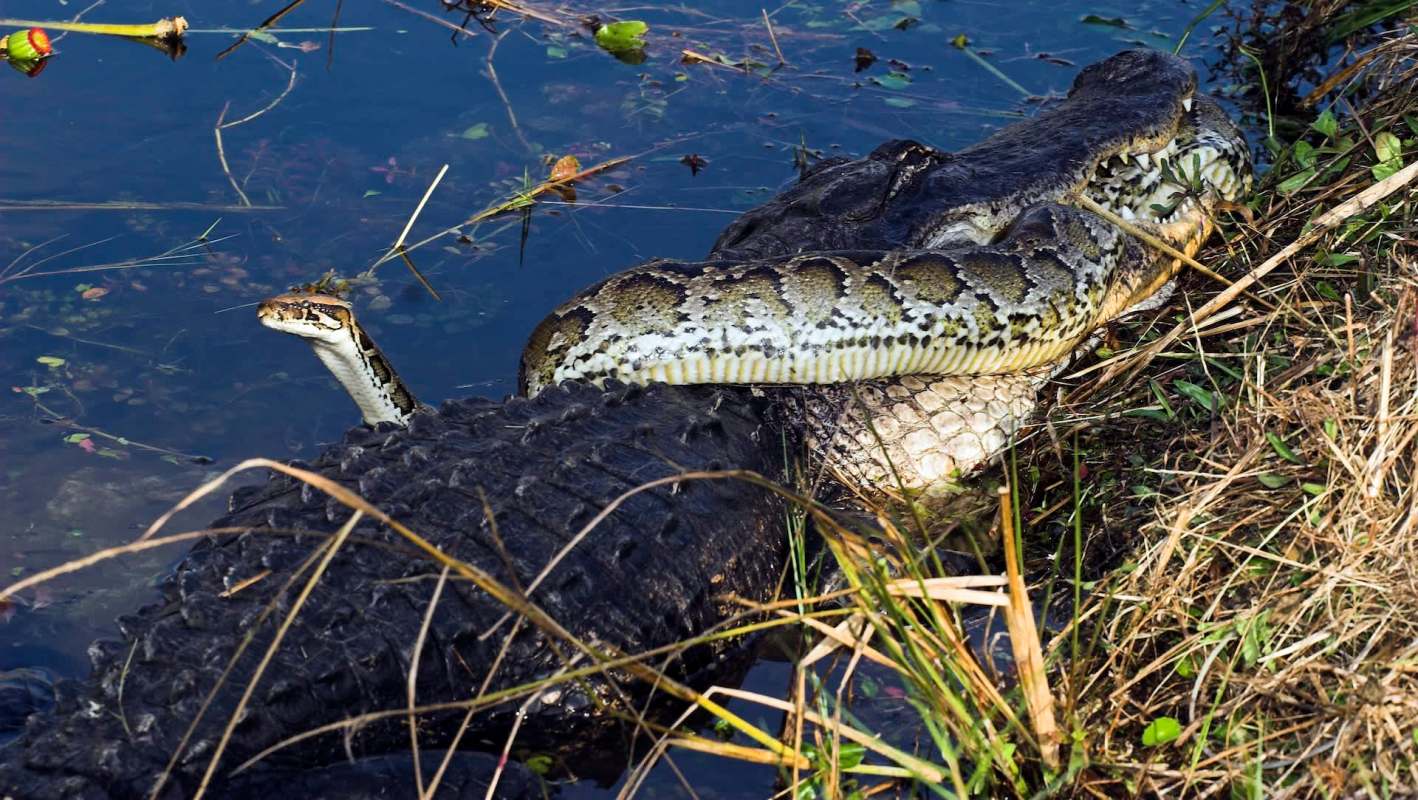
Researchers in South Florida said they are making progress in controlling Burmese pythons.
What happened?
According to NPR, scientists are using unusual tools to track and remove Burmese pythons in the Florida Everglades.
Ian Bartoszek, a wildlife biologist and science project manager at the Conservancy of Southwest Florida, told NPR, "Florida is a perfect-storm situation for a reptile to become established out in the Greater Everglades. We have a vibrant pet trade, many ports of entry and subtropical climate in the southern portion of the state and up into the central portion."
One of the most effective strategies has been tracking male pythons during breeding season. Bartoszek said, "We realized that our male snakes were finding us big females in the breeding season."
Female pythons can lay up to 100 eggs at a time.
NPR reported that the conservancy has removed about 20 tons of python across 200 square miles over a little more than a decade. Researchers also discovered that a bobcat had killed one of their scout snakes, a male named Loki.
TCD Picks » Quince Spotlight
💡These best-sellers from Quince deliver affordable, sustainable luxury for all




After Loki was killed, Bartoszek said to NPR, "So very much a win for the home team, a win for the Everglades on that one. And we were a little bit sad to lose a valuable scout snake, but at the same time, it was also great to see the Everglades pushing back."
Why does it matter?
As Bartoszek explained, researchers at the University of Florida have identified "up to 86 species of animal from the bellies of python," showing that the snakes are "very much a generalist apex predator."
According to the U.S. Geological Survey, pet owners likely introduced Burmese pythons in the U.S. after discarding them in the wild. This poor wildlife management by humans is what makes people now consider them "invasive."
Predation on mammals, birds, and reptiles that are established in an area also ripples through the entire food web. And a weakened Everglades ecosystem can undermine restoration efforts and the ecosystems South Florida communities rely on.
The snakes are highly adaptable, reproduce quickly, and can survive on a wide range of prey.

Get TCD's free newsletters for easy tips, smart advice, and a chance to earn $5,000 toward home upgrades. To see more stories like this one, change your Google preferences here.






