


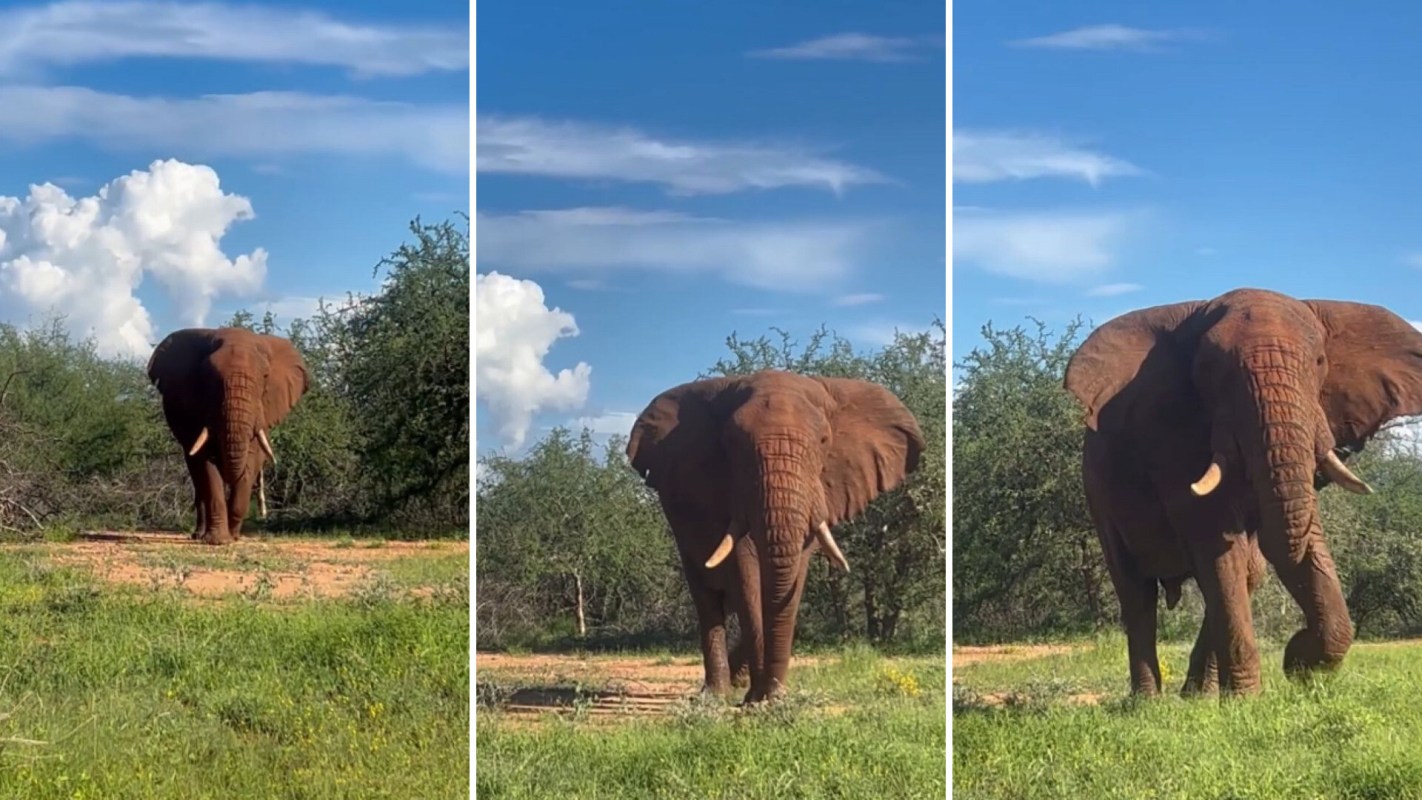
A roadside elephant encounter in Kenya is drawing attention online after it captured a bull elephant giving a clear warning to an approaching vehicle that it was not welcome.
What happened?
Viral footage shared this week shows a bull elephant stepping out from roadside vegetation and facing the vehicle with his head raised and ears spread, a warning posture in elephant behavior.
In an Instagram post, the wildlife advocacy group Save the Elephants wrote, "Meet Samal, one of the bulls from the Babala elephant population we're studying… he made it clear… that he wasn't comfortable with the approaching vehicle."
According to Save the Elephants, Daud Abdi, the organization's field education officer at Babala, was present when Samal came out of the brush beside a road and signaled that he did not want the vehicle any closer.
The massive elephant attempted to make himself appear even larger by spreading his ears wide and raising his head up.
Field teams and wildlife experts pay close attention to that posture because an elephant with its head raised and ears flared may be trying to look more threatening before a situation escalates.
TCD Picks » Quince Spotlight
💡These best-sellers from Quince deliver affordable, sustainable luxury for all




Thankfully, the experts recognized Samal's signs, slowed the vehicle and "gave Samal the space he needed. Moments later, the tension eased."
Why does it matter?
The encounter shows how elephants communicate stress and discomfort, signals that can help people avoid a dangerous situation if they recognize them early enough.
When a large animal feels boxed in or pressured, a vehicle can go from observer to threat in a matter of seconds. Giving an elephant space can help protect both the people nearby and the animal itself.
Respecting wildlife distance rules and understanding basic warning signals can make time in nature safer anywhere, from safari roads to parks much closer to home.
What's being done?
Save the Elephants shared the field encounter in a post illustrating what elephant warning behavior looks like in practice.
The group is also studying the Babala elephant population, the kind of research that can support stronger conservation planning and safer coexistence in areas where humans and elephants cross paths.
In wildlife areas, it's good to move slowly, keep a wide distance, stay inside your vehicle unless officials instruct otherwise, and never push closer for a better view or photo.
Those choices alone cannot solve habitat pressure or human-wildlife conflict. Still, they can reduce the chances of a frightening or harmful interaction and give animals the space they need to move without feeling cornered.

Get TCD's free newsletters for easy tips, smart advice, and a chance to earn $5,000 toward home upgrades. To see more stories like this one, change your Google preferences here.






