


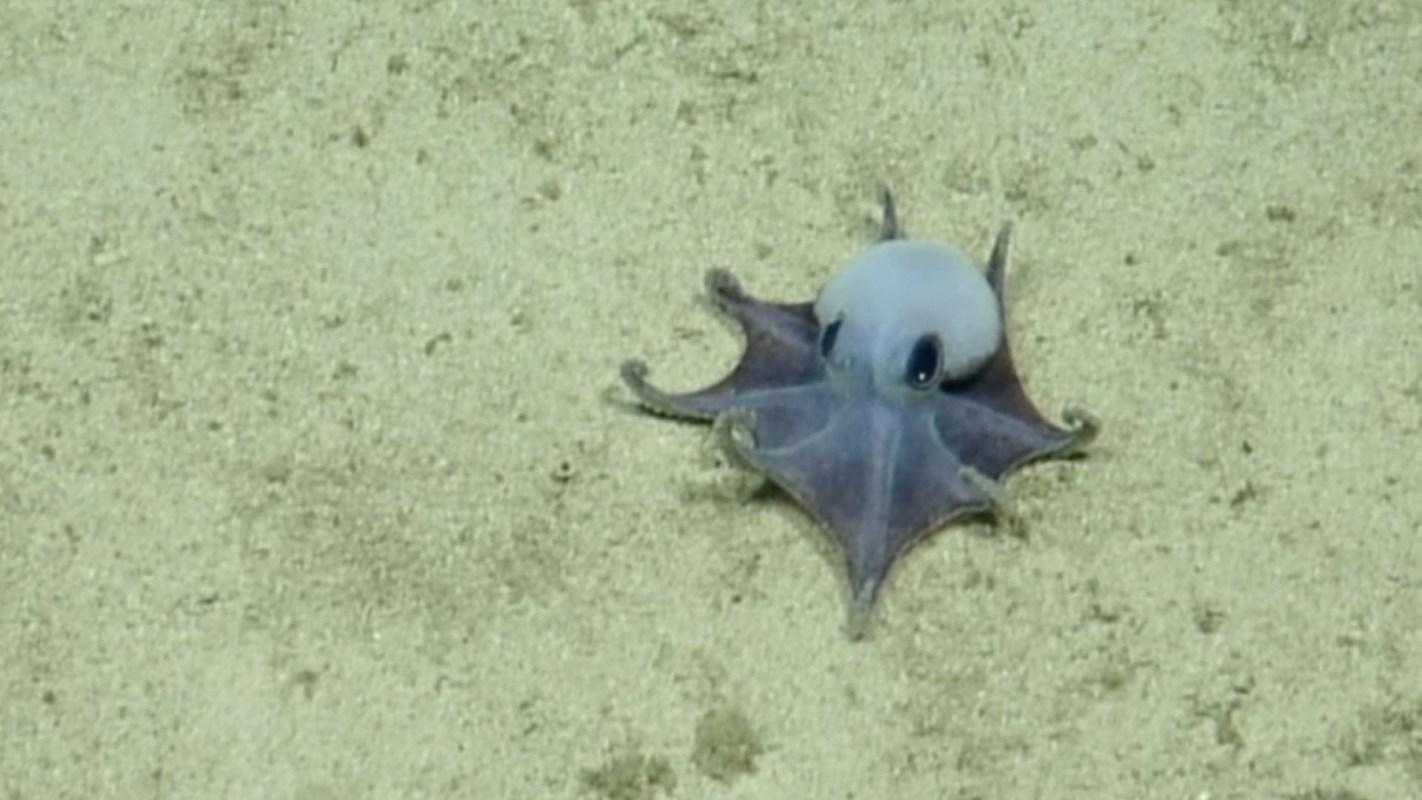
A tiny blue octopus plucked from the deep waters near the Galapagos has given scientists a rare surprise. The golf-ball-sized creature turned out to be one that no one had ever documented before, the team confirmed in a news release.
Found nearly 5,800 feet below the surface, the animal is a reminder that some of Earth's most remarkable wildlife is still waiting to be discovered.
What's happening?
Scientists announced the discovery of the new octopus species in a paper published in the journal Zootaxa. The animal was first seen during a 2015 expedition aboard the E/V Nautilus.
It appeared on camera as a remotely operated vehicle crossed the seafloor near an underwater mountain about 5,800 feet, or 1,773 meters, below the ocean's surface. The expedition involved the Charles Darwin Foundation and the Galapagos National Park Directorate.
Later, scientists reviewing many deep-sea specimens realized the tiny blue octopus was unlike the others they had collected. They put the word out to octopus expert Janet Voight in Chicago and got the preserved specimen sent to her.
"Right away, I knew it was something really special," Voight, curator emerita of invertebrates at Chicago's Field Museum, said in the release. "I'd never seen anything like it."
TCD Picks » Quince Spotlight
💡These best-sellers from Quince deliver affordable, sustainable luxury for all




Because the team had only one specimen, researchers relied on non-destructive micro CT scans rather than dissection, allowing them to examine its anatomy and confirm it was a species new to science.
Why does it matter?
The Galapagos Islands are one of the world's biodiversity hotspots. The islands are home to more than a thousand plant and animal species unique to the region, and the new octopus adds to that total.
Deep-ocean ecosystems are still poorly understood, even in places famous for wildlife. Findings like this help scientists build a clearer picture of how life survives in extreme underwater environments and how those species fit into larger ecosystems.
It also shows how much there is left to learn about the ocean, even as human activity increasingly affects marine habitats. The more researchers know about what lives in these waters, the better equipped conservation groups and park managers are to protect them.
In this case, micro CT scanning allowed the team to study the octopus in detail while preserving the only known specimen. The whole saga can be an inspiration to citizen scientists to use tools like iNaturalist to aid conservation efforts and act responsibly when encountering rare creatures.
What's being done?
As exploration continues, researchers say more surprises may be waiting in the waters around the Galapagos, especially in remote places that have rarely been studied.
"Discoveries like these remind us how much of the deep ocean in Galapagos remains unexplored," co-author Salome Buglass concluded in the news release. "Every new species helps us better understand these hidden ecosystems and why protecting them matters."

Get TCD's free newsletters for easy tips, smart advice, and a chance to earn $5,000 toward home upgrades. To see more stories like this one, change your Google preferences here.






