


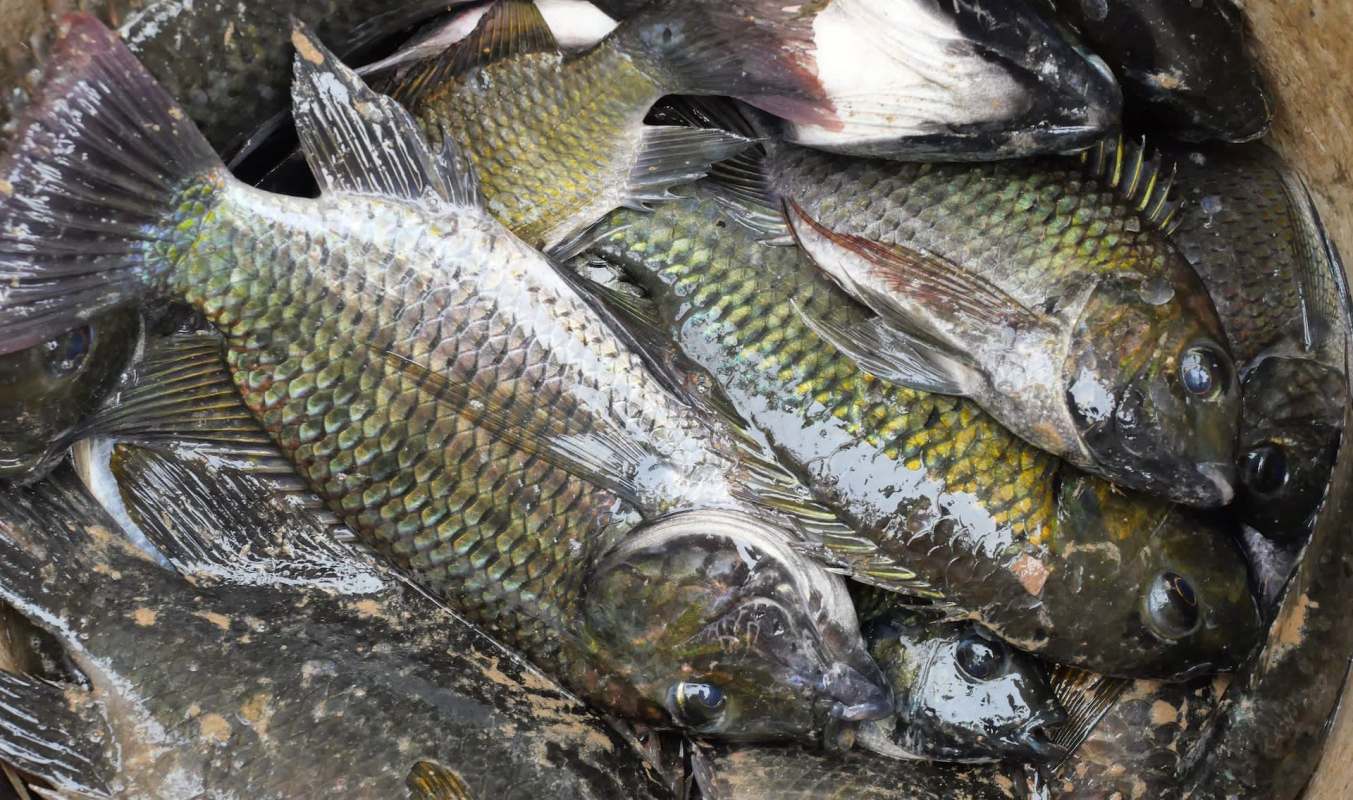
A fast-spreading invasive fish is turning parts of Thailand's waterways into a cautionary tale for both food systems and biodiversity.
While blackchin tilapia may be edible, many shrimp farmers and fishers say it has become a symbol of lost income, disrupted ecosystems, and a steeper path toward a healthier future for their communities.
What's happening?
First noted in Thailand in 2011, blackchin tilapia — a species from West Africa — has since been documented in at least 19 provinces, according to The Guardian. People say the fish is crowding local habitats in places ranging from Bangkok's canals to coastal waters near Pattaya.
In Samut Songkhram, the spread has also wrecked livelihoods. Local fisher Wallop Khunjaen told The Guardian that blackchin tilapia overran his shrimp stock and ultimately drove him out of shrimp farming. He said nearly all of the million baby shrimp in his pond vanished over the span of two months. "They ate everything. They ate the shrimp; they even ate the crab," he said.
The fish breeds quickly, has a high juvenile survival rate, and can live in both fresh and brackish water. That combination has made it especially hard to control and particularly destructive in places where people depend on freshwater sources for work and food.
Why does it matter?
This kind of environmental problem can hit local communities first and hardest. When invasive species crowd out native fish, damage water quality, and disrupt aquaculture, entire communities can lose income, food security, and stability.
TCD Picks » Quince Spotlight
💡These best-sellers from Quince deliver affordable, sustainable luxury for all




"We have gone far beyond the point that we can return," Thotsapol Chaianunporn, an assistant professor in the environmental science department at Khon Kaen University, told The Guardian.
Scientists are also worried about what is happening beneath the surface. The Guardian reported that females can dig pits in sandy areas, potentially increasing sediment and harming bottom-dwelling organisms and underwater plants. The fish also eats zooplankton, which helps keep algae growth in check.
What's being done?
Thai authorities have expanded control efforts by releasing Asian sea bass as a possible predator, developing blackchin tilapia intended to produce sterile offspring, and paying people to catch the fish. Officials have reportedly removed thousands of tons, though experts say eradicating the species is no longer realistic.
Researchers are also stressing the value of earlier detection. Dean Jerry, a distinguished professor of aquaculture genetics at James Cook University in Singapore, told The Guardian that water testing for environmental DNA is especially powerful because "Fish are particularly big shedders." Detecting an invasion sooner can give officials a much better chance of limiting the damage.
Some communities are also trying to find economic uses for the fish rather than letting it go entirely to waste. Adisorn Jamsuksaward, owner of Kor-Tae seafood restaurant in Samut Prakan province, has experimented with serving it and said, "People are hesitant, but once they try it – [they say] it's delicious."
Still, fishers say the supply is so massive that selling it is not enough to solve the problem.
Thanandon Charoenhiransaku, a fishing-net seller and fisher in Bangkok, said, "It's a silent threat. You don't notice until it's there."

Get TCD's free newsletters for easy tips, smart advice, and a chance to earn $5,000 toward home upgrades. To see more stories like this one, change your Google preferences here.






