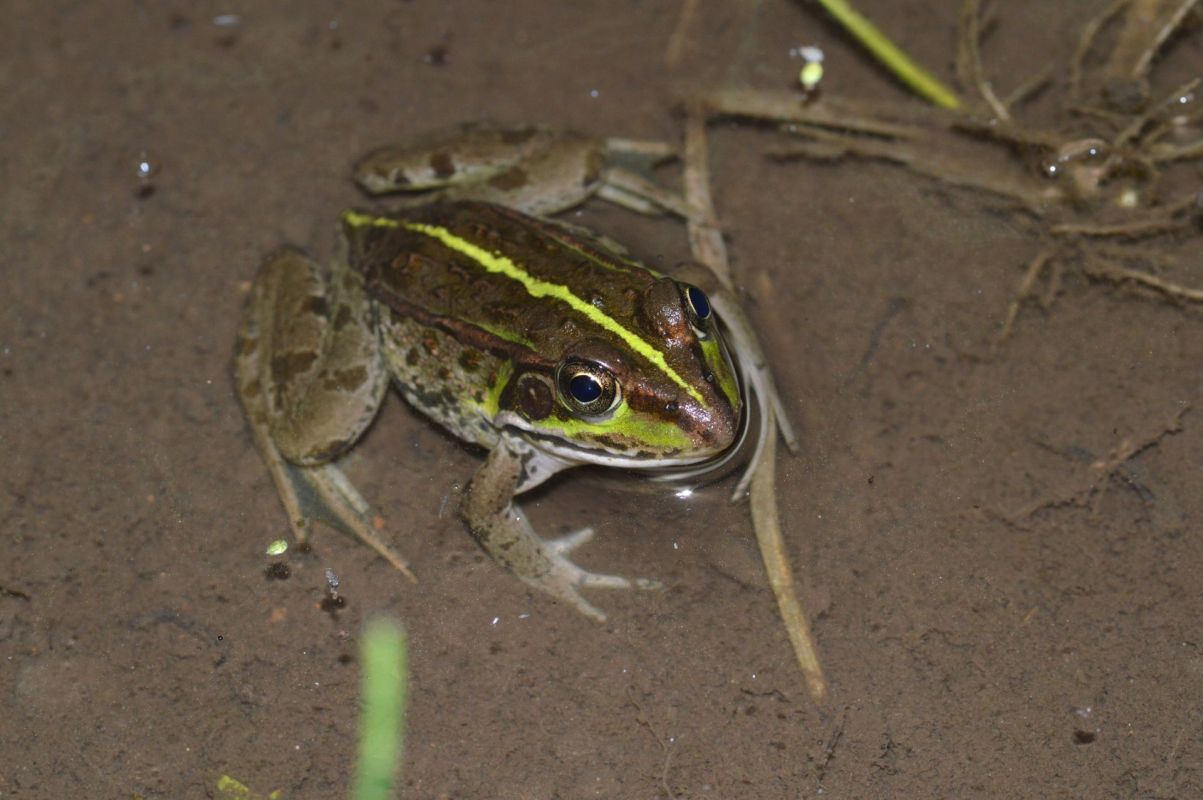
One frog species in Japan appears able to withstand repeated stings from the insect known as the "murder hornet," continuing to swallow it even after being stung in the eyes, mouth, and tongue. The same hornet can kill a mouse and devastate a honeybee colony.
Researchers found that the black-spotted pond frog, which is native to Japan, can hunt and eat the world's largest hornets despite being stung multiple times, a unique level of resistance that most animals would be unlikely to endure.
What's happening?
According to Smithsonian Magazine, the single-author paper by Kobe University ecologist Shinji Sugiura in Japan was published on December 3 in the journal Ecosphere.
In tests involving 45 frogs, Sugiura gave 15 frogs each one of three hornet species: a northern giant hornet, often coined the "murder hornet," a yellow hornet, or a yellow-vented hornet.
Of the three species, the northern giant hornet was eaten by nearly four-fifths of the frogs, compared with 87% for yellow-vented hornets and 93% for yellow hornets.
Sugiura said in a statement, "While a mouse of similar size can die from a single sting, the frogs showed no noticeable harm, even after being stung repeatedly."
TCD Picks » Quince Spotlight
💡These best-sellers from Quince deliver affordable, sustainable luxury for all




After the invasive species was first spotted in British Columbia and Washington state about six years ago, officials launched an effort to track and eliminate it. Smithsonian Magazine reported that officials declared the species eradicated from the United States in December 2024.
Sugiura began studying these frogs after previous reports found murder hornet remains in the animals' stomachs. His earlier research also suggested that pond frogs could eat venomous wasps without suffering severe effects from their stings.
Why does it matter?
Northern giant hornets can devastate honeybee colonies, which are essential to ecosystems and agriculture because of their role in pollination.
Animals can respond to venom very differently; what is deadly or intensely painful to one species may have little apparent effect on another.
In this case, the frogs were stung while swallowing the hornets and kept eating anyway. None regurgitated their prey afterward.
Brian Gall, a biologist at Hanover College in Indiana who was not involved in the study, told the New York Times, "Amphibians seem to have the perfect weaponry to consume dangerous prey. Their prey is consumed whole and swallowed immediately, and they produce considerable mucus that can envelop the prey."
He also said how amphibians might be especially equipped to handle venom from their prey, since some species naturally produce their own toxins, giving them more resistance to certain poisons.
The findings could help scientists better understand predator-prey relationships, venom resistance, and why some species have natural defenses that others do not.
What's being done?
Researchers are trying to determine the limits of that resilience. Sugiura suspects hornet venom may be designed primarily as a defense against birds and mammals, which are more common predators, rather than amphibians like pond frogs.
He also wants to test whether these frogs can withstand stings from other venomous creatures and whether there is a certain level at which the venom finally becomes harmful.
"If pond frogs do possess physiological mechanisms that suppress pain or resist hornet venom, understanding them could one day help us develop new ways to reduce pain or inflammation in humans," Sugiura told Gizmodo.
"Hornet stingers are powerful weapons that are generally thought to deter most predators, yet these results reveal that some animals can tolerate such venomous attacks and still prey on these insects."

Get TCD's free newsletters for easy tips, smart advice, and a chance to earn $5,000 toward home upgrades. To see more stories like this one, change your Google preferences here.