


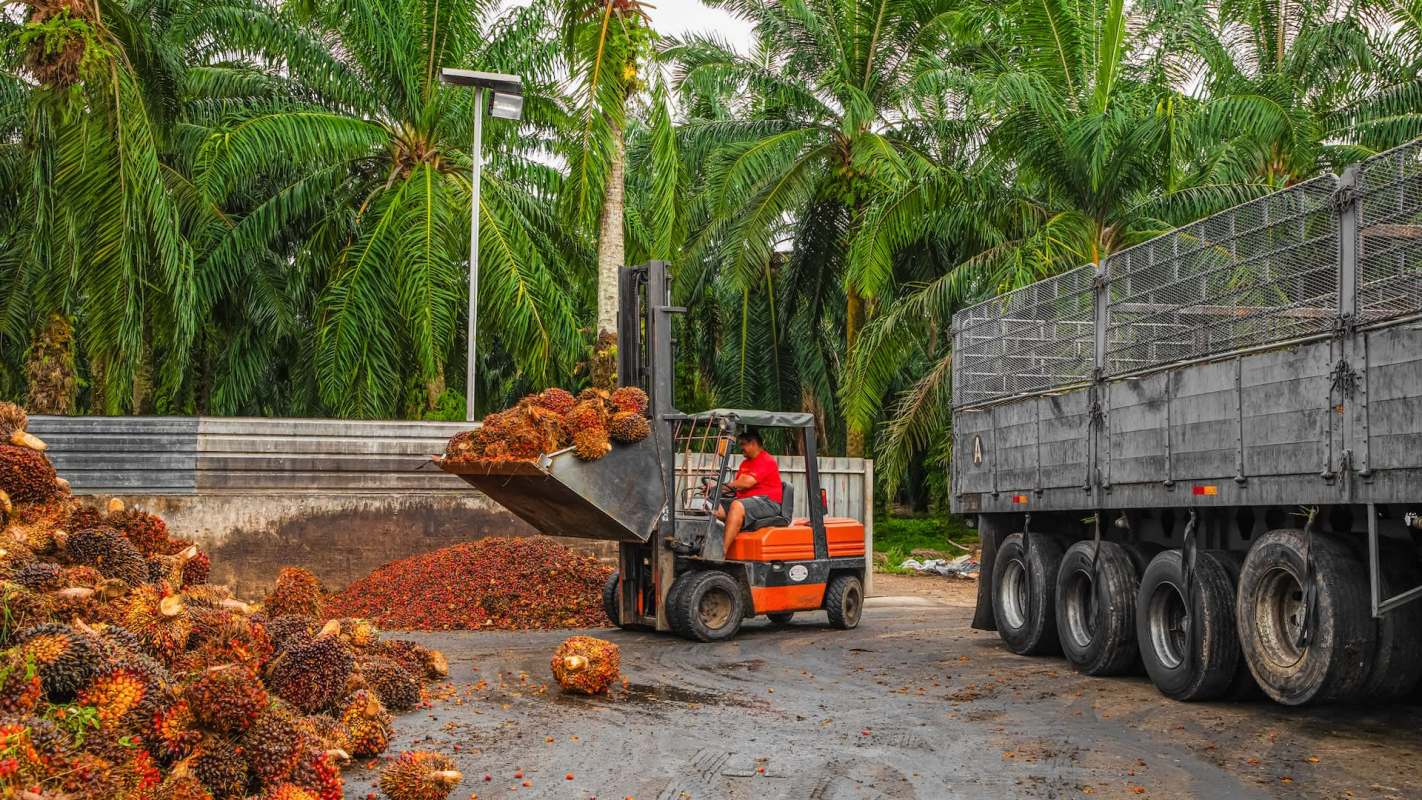
Many staple purchases rely on crop-based oils, whether in makeup, medicines, margarine, or animal feed, and the ecological damage tied to them may be much larger than it seems.
According to new research, roughly 75% of the biodiversity impacts associated with the expansion of oil-crop production worldwide can be traced to three crops: oil palm, soybean, and coconut.
What's happening?
In a study published in Nature Food, a team led by ETH Zurich sustainability professor Stephan Pfister used decades of land-use, trade, and production data to examine how growing demand for oil crops has affected animal and plant life globally.
Describing it as the "world's first study on the issue," the researchers found that oils used in many everyday products can come with disproportionately large ecological consequences.
Looking across 19 different oil crops, the researchers found that most of the biodiversity damage was linked to just three of them — oil palm, soybean, and coconut — which together made up about three-quarters of the total.
From 1995 to 2020, biodiversity losses associated with oil crops increased by about 80%, the study found, with tropical areas bearing some of the heaviest effects. The analysis also showed that more than half of those impacts were driven by consumption outside the countries where the crops were produced.
TCD Picks » Quince Spotlight
💡These best-sellers from Quince deliver affordable, sustainable luxury for all




Among those "externalized impacts," more than 80% were tied to demand from the European Union, China, and the United States.
Why does it matter?
Biodiversity loss is not just about distant forests or endangered species. When ecosystems are degraded, communities can lose clean water, fertile soil, pollinators, and natural protection from floods and heat — all of which support food supplies, local economies, and public health.
"From an environmental protection perspective, biodiversity loss is just as big a global problem as climate change," Pfister said, outlining the motivation for the study, according to ETH Zurich.
The findings also highlight how global supply chains can slow progress toward a safer, healthier future for everyone. Products used in daily life may seem convenient or affordable at checkout, but the hidden costs can fall on tropical regions already under pressure from deforestation, habitat loss, and rising global temperatures.
If demand in the U.S., EU, and China is helping drive habitat destruction elsewhere, the benefits and burdens of modern consumption are not being shared evenly.
The study adds to growing evidence that what ends up in cabinets, kitchens, and cosmetics bags can have ripple effects on wildlife and on communities whose livelihoods depend on healthy landscapes.
What's being done?
Research like this can help governments, companies, and consumers make more informed choices about sourcing and land use. By identifying which crops are linked to the largest share of biodiversity loss, the study points to where stronger standards, better traceability, and more responsible purchasing could have the greatest effect.
For businesses, that could mean improving supply-chain oversight and investing in sourcing practices that reduce pressure on sensitive habitats. For policymakers, it could support rules that discourage deforestation-linked imports and reward lower-impact production.
"An important lever is to invest in better production methods and the protection of ecosystems in the producing countries," Pfister said.

Get TCD's free newsletters for easy tips, smart advice, and a chance to earn $5,000 toward home upgrades. To see more stories like this one, change your Google preferences here.






