


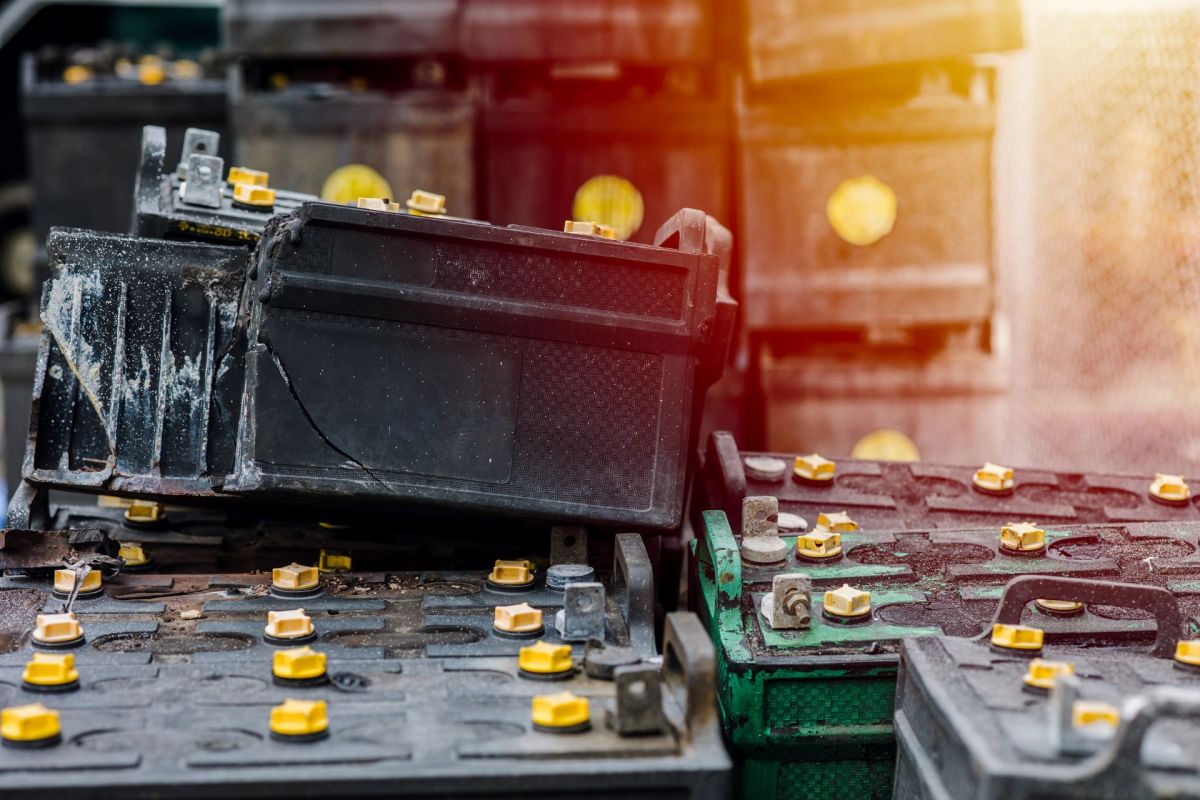
The increased recycling of spent lithium-ion batteries, found in everything from electric vehicles to energy storage systems to smartphones, has posed some problems.
While a significant issue is getting people to properly recycle these batteries rather than tossing them out in the garbage, where they are known to catch fire in garbage trucks often, even the act of recycling itself presents dilemmas. Among the most pressing issues is that the currently used recycling methods pose a risk to the environment and require a significant amount of energy.
However, according to a writeup from the National Research Council of Science and Technology in TechXplore, a research team from the Korea Institute of Geoscience and Mineral Resources has developed a more environmentally-friendly way to recycle these batteries, which not only enables a circular battery ecosystem but also lays the groundwork for a future closed-loop battery lifecycle.
As the team stated in its study, published in the journal Small, "This work presents a remarkable advancement in the upcycling method of LIB cathode materials and contributes to establishing a circular system for battery materials."
The method? Rather than focusing on metal recovery, as traditional battery recycling does, the newly developed method is an electrochemical process that converts lithium manganese oxide from used lithium-ion batteries into manganese ions. Once converted, these manganese ions can work as electrolytes for zinc-manganese redox flow batteries.
Redox flow batteries are a fairly new and promising energy storage system that enables more efficient energy storage, with applications in renewable energy integration and the stabilization of grids. These energy storage systems are particularly good at balancing renewable power sources, such as wind and solar.
Due to the scalability and long cycle life of redox flow batteries, they are an excellent way to store energy and stabilize current power grids, leading to savings for towns and individuals. Additionally, the sustainability of this energy storage system represents a significant step forward in achieving the global goal of transitioning to renewable energy, which will reduce pollution and help mitigate numerous pollution-related health issues.
The electrochemical process developed by the research team also enables the selective separation of lithium and manganese, providing further opportunities for material reuse. Additionally, it allows used batteries not only to serve as a direct source of electrolytes but also to be recycled into the precursor materials needed for new batteries. With this newly developed process, the energy consumption and environmental impact of battery recycling are greatly reduced.
Though it's unclear when or if an adoption of this new battery recycling method might occur, the National Research Council of Science and Technology reported in TechXplore that team lead Dr. Yosep Han shared, "We aim to further enhance battery resource circularity and energy storage efficiency, contributing to carbon neutrality and a recycling-oriented society."
|
What is your biggest concern with EV batteries?
Click your choice to see results and speak your mind. |
 They're not efficient enough ⚡
Join our free newsletter for weekly updates on the latest innovations improving our lives and shaping our future, and don't miss this cool list of easy ways to help yourself while helping the planet.
TCD Picks » Quince Spotlight
💡These best-sellers from Quince deliver affordable, sustainable luxury for all




Cool Picks





