


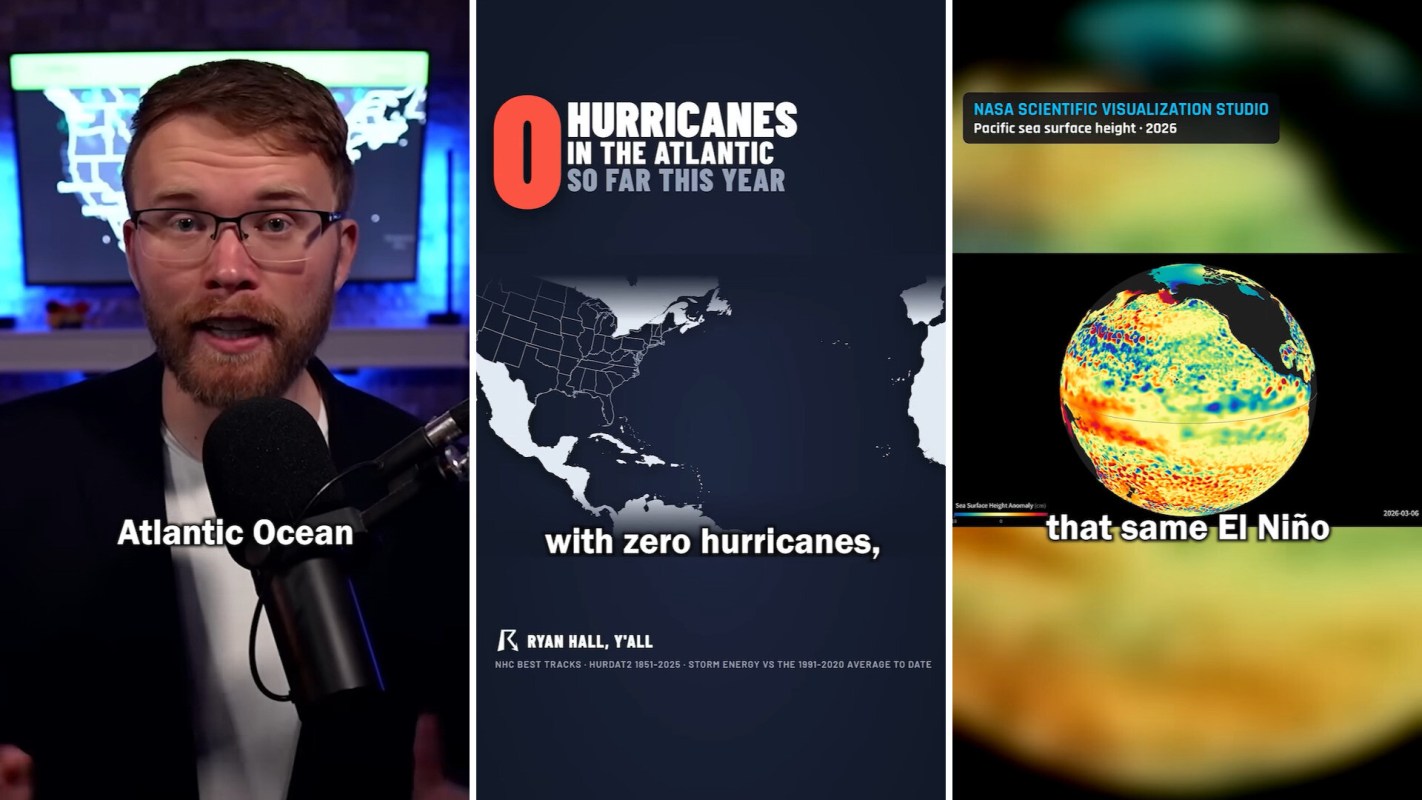
An unusually quiet Atlantic hurricane season is closing in on something that has not happened in 13 years: a full summer without a single hurricane.
That may sound like welcome news, but meteorologist Ryan Hall and storm survivors alike warn that the calm stretch does not erase the risk of a damaging late-season storm.
Here's what to know
In a YouTube video, Ryan Hall (@RyanHallYall) highlighted just the down season, noting that the Atlantic basin still has had no hurricanes, even though its first typically arrives by Aug. 11.
Hall said the season has produced only four storms, and all of them have been weak. (A fifth drenched the Gulf Coast this week.) That left accumulated storm energy at roughly 13% of the normal level, a significant shortfall.
He said El Niño was largely responsible, with the Pacific pattern generating strong winds over the Atlantic that tear apart developing storms before they can organize.
History shows how unusual the delay is. Hall said only six summers in the past 60 years have finished without a hurricane, and if none forms by Sept. 12, it would mark the latest first Atlantic hurricane since 1941.
TCD Picks » Quince Spotlight
💡These best-sellers from Quince deliver affordable, sustainable luxury for all




More background
Hurricane activity can vary widely from year to year, depending on ocean temperatures, atmospheric moisture, and wind patterns such as El Niño.
As a reminder that a slow season can still turn dangerous, Hall cited 1992, when the Atlantic stayed quiet until mid-August and then produced Hurricane Andrew, which intensified quickly and struck South Florida as a Category 5 storm about a week after forming.
One commenter echoed that concern, writing, "Any storm that has enough energy to fight through an El Niño-altered jet stream and make landfall as a hurricane has the capability to be devastating."
Another commenter, who recalled living through Andrew, described how misleading a calm season can be before disaster strikes.
What can be done?
For people living along the Atlantic or Gulf coasts, the quiet stretch offers extra time to prepare.
That means reviewing evacuation routes, checking emergency supplies, confirming flood coverage, and making sure phones and backup batteries are ready before a storm is anywhere nearby.
A slow season may mean fewer storms, but it does not change the danger posed by a single hurricane.
At the community level, emergency managers and officials still need to prepare as if a major storm could develop. Schools, hospitals, utilities, and transit systems are all more resilient when planning stays consistent.
As one commenter who lived through Andrew put it, "Not many people took it seriously because it was such a quiet season that year." Hall said, "The odds do favor one of the quietest hurricane seasons in decades, but September is still September, and I'm watching it every single day."
Where can I learn more?
The Atlantic's slow season doesn't say much about how the rest of the season will unfold. For a fuller picture, these articles examine suppressed activity, ocean heat, and why a single storm can still reshape an otherwise quiet year.
• NOAA says it only takes one storm to upend a quiet Atlantic season.
• As a super El Niño is building in the Pacific, forecasters say the Atlantic is developing the rare conditions known as an Atlantic Niña — a pairing that may shape the remaining hurricane season.
• Hurricane Beryl showed an explosive early-season threat can rewrite expectations overnight.
Even a summer without a hurricane calls for close attention. Fewer storms on the calendar can leave coastal communities vulnerable if one strong system comes ashore.

Get TCD's free newsletters for easy tips, smart advice, and a chance to earn $5,000 toward home upgrades. To see more stories like this one, change your Google preferences here.






