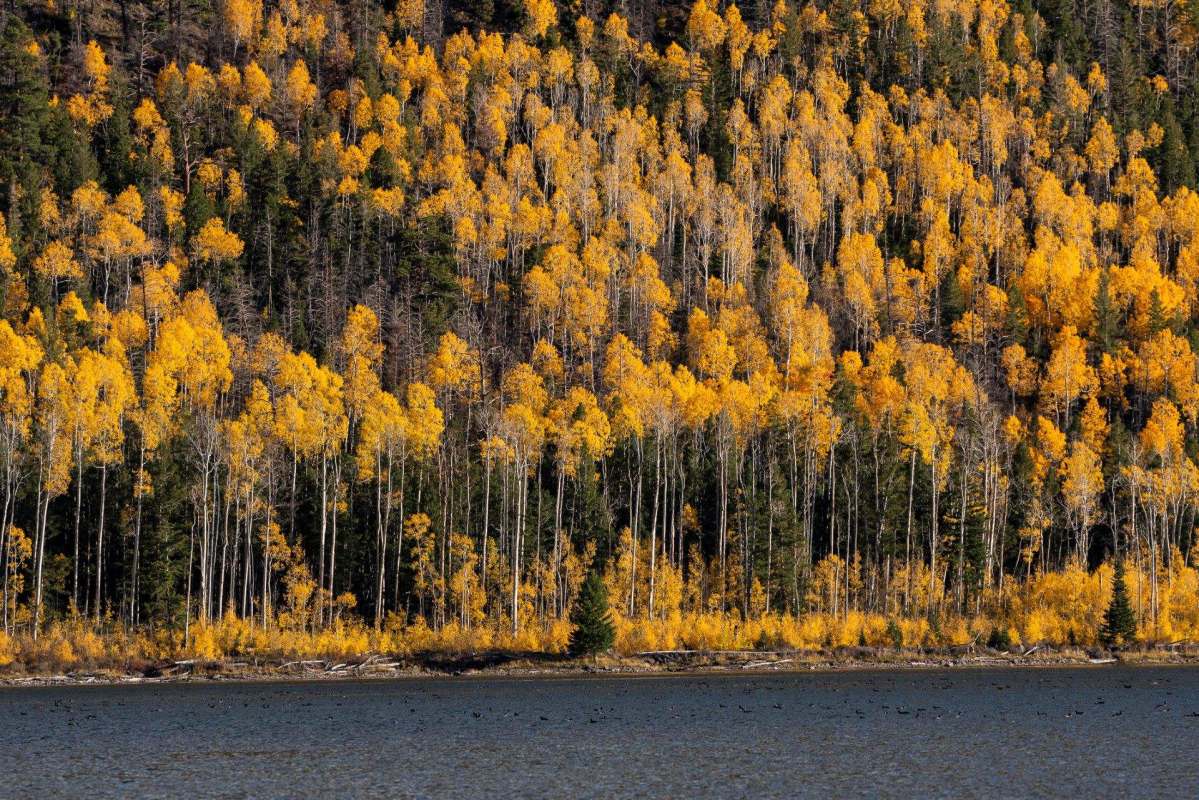
A tree many people might overlook could make a meaningful difference in reducing the dangerous effects of the wildfire season.
According to Canadian researchers, planting aspen around communities and critical infrastructure could slow wildfires, lessen their intensity, and curb how far flames spread.
In a national-scale study highlighted by Phys.org, the researchers reported that large aspen patches occurred far more often on fire perimeters than within the burned areas. This study was the first to show this pattern between aspen and wildfire behavior on a national scale.
That suggests the trees may act as natural buffers at a time when communities across Canada face growing wildfire risk.
What's happening?
A McGill University team studying wildfire patterns across Canada found that aspen stands seem to contribute to both fire prevention and fire mitigation.
The study presented a mixed picture: individual aspen trees can burn easily because their bark is thin, yet larger aspen groups were associated with lower fire severity.
TCD Picks » Quince Spotlight
💡These best-sellers from Quince deliver affordable, sustainable luxury for all




Lead author Flavie Pelletier, a recent Ph.D. graduate in Natural Resource Sciences, said, "Aspen is not a 100 percent effective fire deterrent, but compared with other species, it is a better choice to plant around communities or critical infrastructure."
Researchers also looked at whether spring conditions might weaken that benefit, since aspens are typically drier before their leaves emerge.
They did not, however, find a significant link between the season and either fire severity or the amount of aspen along fire perimeters.
For Pelletier, that result offered the clearest sign yet: "This is the strongest indicator that aspen serves as a fire barrier."
She added, "The bigger the aspen patch, the lower in severity the fire tends to be. Even with higher fire weather, as during the historic 2023 fire season, aspen's ability to slow fire progression appears stable."
Why does it matter?
Wildfires do not just destroy trees and the environment — they can hurt communities by forcing evacuations, damaging infrastructure, worsening air pollution, and creating long-term economic strain.
If planting or preserving more aspen near neighborhoods can help reduce how intensely fires burn, that could buy valuable time for emergency crews and lower the chances of a small blaze turning into a major disaster.
In some forests, aspen is cleared to favor commercially valuable conifers, but that practice may also remove a natural barrier to fire.
A greater mix of aspen in forests could support biodiversity while helping communities better withstand wildfire.
In addition to incorporating plant types that help buffer against wildfires, animals can also play a role in reducing the number of flammable shrubs. A herd of 400 goats and 100 sheep was deployed in Malibu to eat invasive plants and overgrowth that could be prone to catching on fire.
What's being done?
To track disturbances such as wildfires, the researchers built an algorithmic mapping tool that turns imagery from NASA Landsat and ESA Sentinel-2 into near-real-time forest maps.
That could help land managers respond more quickly and make better planning decisions. The Canadian Forest Service may use this tool as a secondary data source alongside its existing fire maps to provide faster, more accurate wildfire information.
The findings may also shape decisions about how forests around communities are planted and maintained.
Rather than focusing only on commercially valuable species, planners may have more reason to retain or introduce larger aspen patches in strategic areas.
Pelletier also highlighted a benefit beyond fire protection: "There is value in retaining aspen for biodiversity, but also because mixed stands that include aspen may be less likely to be entirely lost in a fire."

Get TCD's free newsletters for easy tips, smart advice, and a chance to earn $5,000 toward home upgrades. To see more stories like this one, change your Google preferences here.