


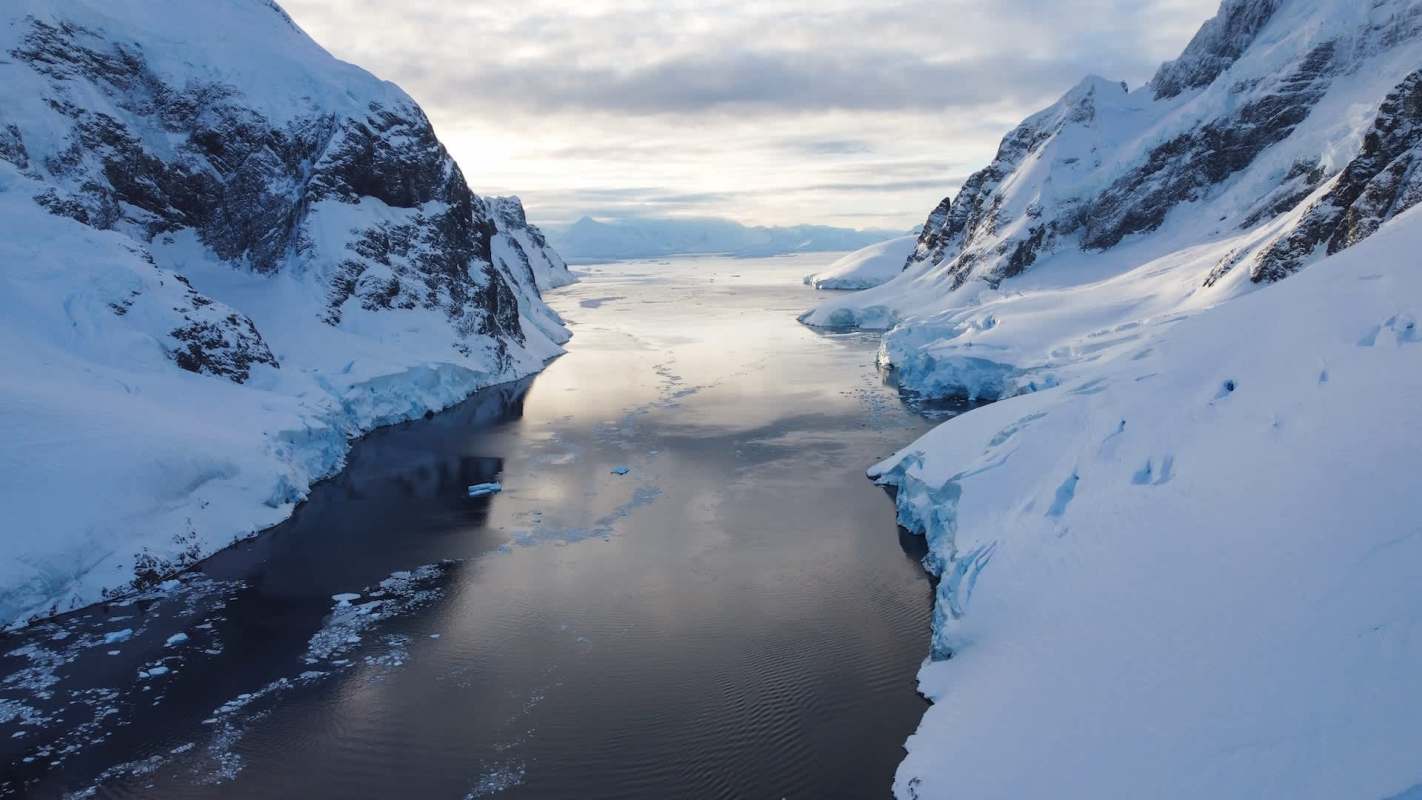
Despite countless social media claims that Arctic ice is recovering at historic rates, one expert fact-checker offered up a succinct rebuttal that clarifies misrepresented data.
In a TikTok from the AAP FactCheck team (@aapfactcheck) of the Australian Associated Press, one expert addressed the topic of Arctic ice melt. Over the last several decades, rising global temperatures and the ice-albedo feedback loop have resulted in incredible rates of ice loss throughout the Arctic.
@aapfactcheck Experts have said the long-term decline in ice mass is clear and that cherry-picking small periods of time gives a misleading picture. Susie Dodds explains. Read George Driver's full report at the link in our bio.
♬ original sound - AAP FactCheck
However, in recent years, the rate of Arctic ice loss appears to have shown a slight slowdown at times. Although it could be seen as good news, scientists have revealed that a boost of heavy snowfall in 2022 resulted in the production of over 200 billion metric tons of ice. But those brief gains were wiped out by over 600 billion metric tons of ice loss in the following year.
"One step forward, three steps back," noted AAP Fact Check.
While the events in the Arctic can be easily explained by science, a few TikTokers viewed the development as potential evidence of a reversal. In some cases, they present the growth of new ice as proof that rising global temperatures may not be as harmful as some may think.
"Antarctica just flipped the script — gaining 100 billion tons of ice a year," wrote one user. "Scientists say 'just a blip' … but what if it's something bigger?"
Although there is certainly nothing wrong with attempting to remain positive or optimistic, purposefully presenting misinformation as fact can actually do more harm than saying nothing at all. In fact, it can undermine the seriousness of rising global temperatures and the impact that they have on our planet.
As explained by the AAP Fact Check team, scientists emphasize that the current ice melt slowdown is temporary. Climate models suggest the pace of melting is likely to accelerate again in the next five to ten years, possibly at double the long-term rate, as the underlying warming trend driven by human emissions continues.
"Antarctica is still losing ice, the sea levels are rising, and short-term snowfall spikes don't change the bigger picture," AAP Fact Check added.
|
Who should be most responsible for recycling plastics? Click your choice to see results and speak your mind. |
 Governments 🏛️
💰Get TCD's free newsletters for easy tips to save more, waste less, and make smarter choices — and earn up to $5,000 toward clean upgrades in TCD's exclusive Rewards Club.
TCD Picks » Quince Spotlight
💡These best-sellers from Quince deliver affordable, sustainable luxury for all




Cool Picks





