An Alaska field worker's latest invasive species roundup shows just how physical and persistent this work can be.
What's happening?
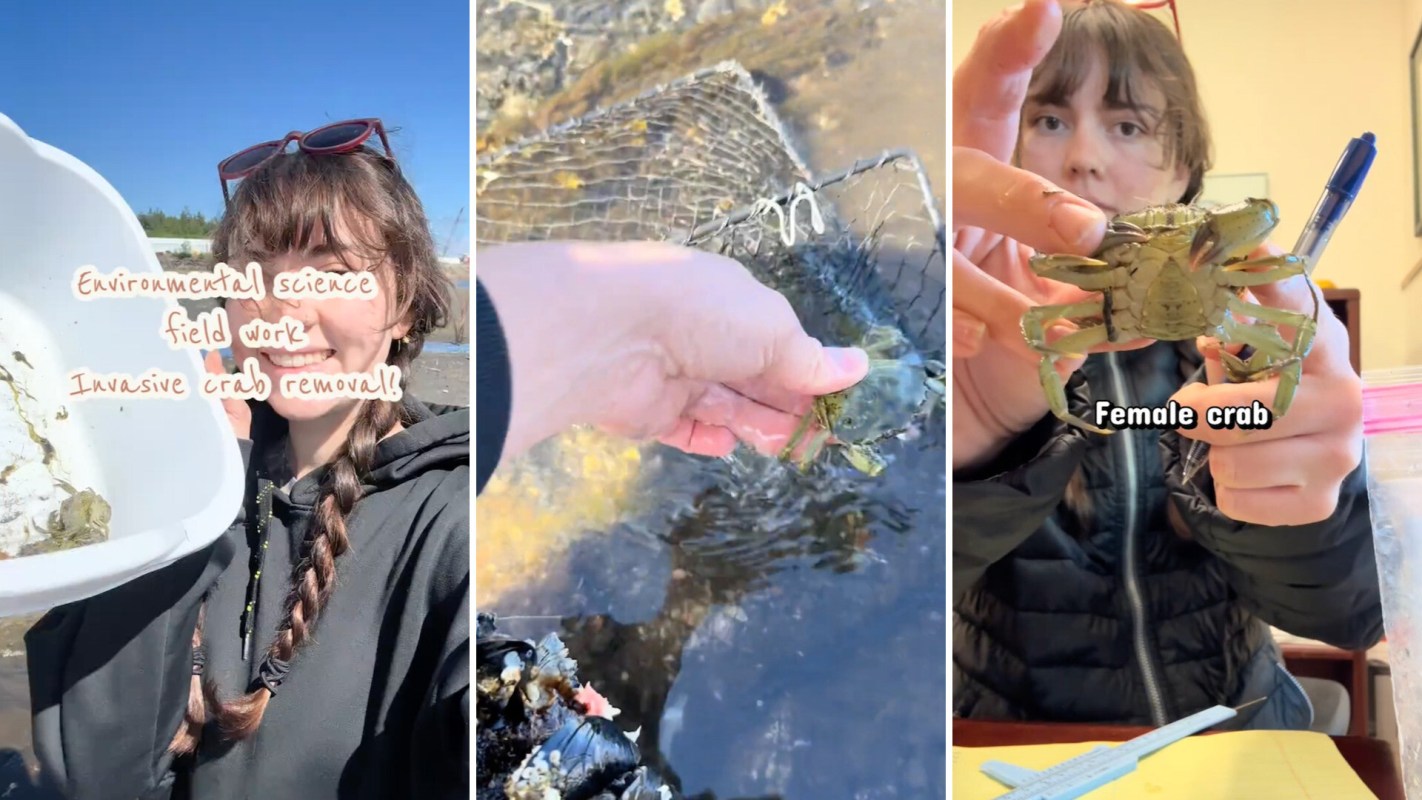
Environmental scientist Malia (@RodrickkRules) in Alaska documented "another day of removing invasive European green crab" in a TikTok, offering a look at the hands-on work of trapping, measuring, and disposing of the species.
@rodrickkrulez More crabs removed! #environmentalscience #alaska #fieldwork #invasivespecies #europeangreencrabs ♬ original sound - Malia 𓆡
The first task was checking pots that had been set previously. The creator said, "There is tons of mink and eagle on this beach that have been trying to steal my bait." While some of the gear had been damaged, other pots still held crabs.
Once the trap check was finished, the search continued in nearby streams. By disturbing the sediment along with the algae and seaweed, Malia could expose crabs hiding underneath and catch them by hand.
Later, the catch was processed back at the office, where every crab was measured, sorted, and then bagged for freezing.
Malia explained, "Due to state regulations in Alaska, there's not much I can do with these crabs other than freeze them and throw them away, but I'm hoping for changes to that in the future."
TCD Picks » Quince Spotlight
💡These best-sellers from Quince deliver affordable, sustainable luxury for all




For identification, the creator stressed that color is not a reliable clue, saying that "not all European green crabs are green" and telling viewers to watch for "five spines on both sides of its head."
Why does it matter?
European green crabs can create ecosystem imbalance and disrupt fragile coastal habitats along the West Coast. Removal work like this helps protect shorelines, fisheries, and the ecosystems that many communities rely on.
In Alaska, healthy coastal waters support local livelihoods, recreation, and food systems, so catching these crabs early can help prevent bigger ecological and economic problems later.
What's being done?
In addition to Malia's hands-on work, public education is also important. In the video, viewers are encouraged to use reference photos to tell green crabs apart from native crabs in their area, and the creator notes that "just because it's a green crab doesn't mean it's invasive."
One commenter wrote, "I'm going into environmental science I'm so excited."
Another asked, "Have you heard of Ketcham Supply in New Bedford, MA? They make pots specifically for green crabs that might hold up better against the elements!"

Get TCD's free newsletters for easy tips, smart advice, and a chance to earn $5,000 toward home upgrades. To see more stories like this one, change your Google preferences here.