


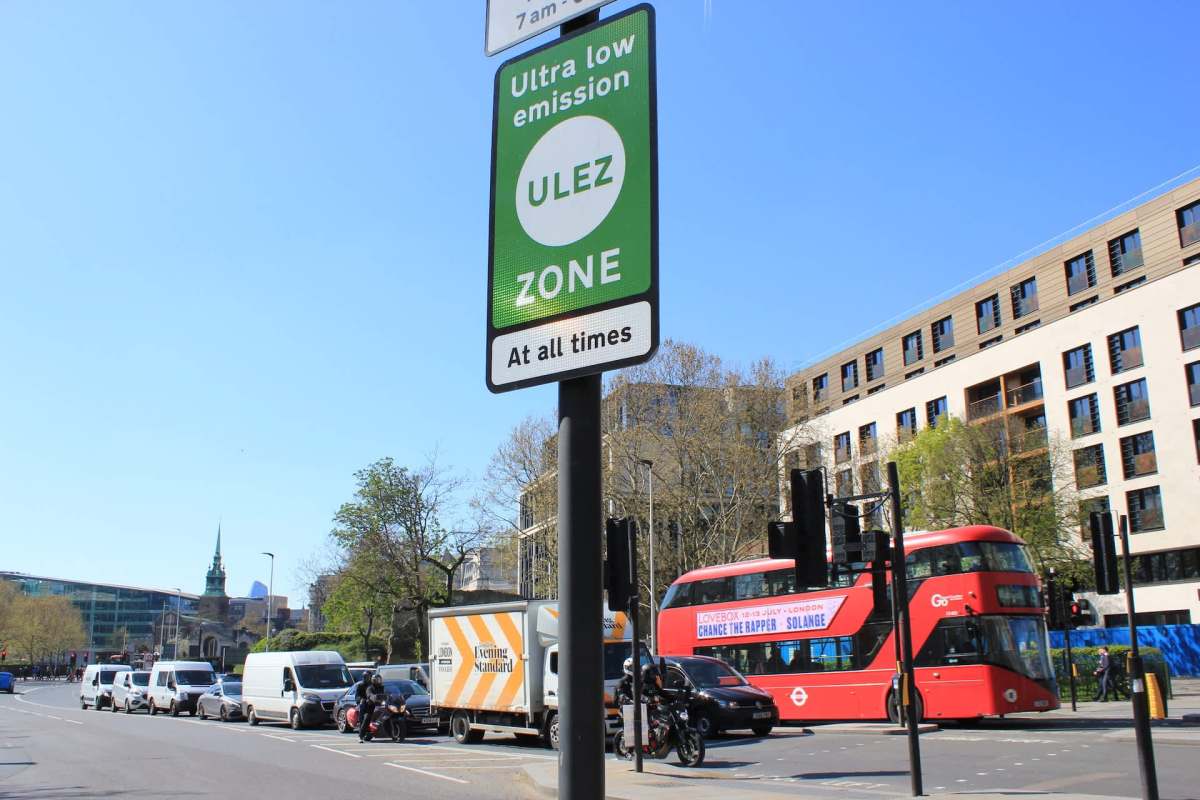
Air pollution rarely gets the level of attention reserved for pandemics or natural disasters, even though it remains one of the deadliest dangers people face every day.
London's recent cleanup shows how quickly conditions can change: without intervention, roadside nitrogen dioxide was once expected to take nearly 200 years to reach legal limits, but the city managed it in nine.
What's happening?
Sadiq Khan, mayor of London, and Michael Bloomberg, former mayor of New York City, are urging cities to treat dirty air like the public health emergency it is — and to act with much greater urgency.
In a joint essay in The Guardian, the two cited a 2016 estimate from King's College London that said London could need almost two centuries to bring roadside nitrogen dioxide within legal limits if no action was taken.
"But with robust and bold action from City Hall, London did it in nine," Khan and Bloomberg said.
They said New York had already demonstrated how air-quality sensors can help direct anti-pollution efforts, contributing to the city's lowest pollution levels in 50 years.
TCD Picks » Quince Spotlight
💡These best-sellers from Quince deliver affordable, sustainable luxury for all




For London, Khan and Bloomberg credited the improvement to combining close air-quality monitoring with policy moves such as Ulez and zero-emission buses.
They also cited research from Imperial College London that they wrote showed fewer hospital admissions among Londoners for respiratory and cardiac problems, "as a direct result of the impact of the Ulez."
Why does it matter?
In their essay, Khan and Bloomberg said air pollution causes more than 8 million deaths each year, exceeding the combined toll of HIV, malaria, and tuberculosis.
Cleaner air can mean fewer asthma attacks, fewer heart and lung illnesses, and lower medical costs for families and communities.
It can also make daily life safer for children walking to school, older adults, and people already living with health conditions.
The burden falls especially hard on low- and middle-income communities, though the authors stressed that no class or country is untouched.
Many of the same measures that reduce air pollution also cut planet-warming emissions, meaning the benefits can run in two directions at once: better public health in the near term and a more stable climate in the future.
What's being done?
Khan and Bloomberg said Bloomberg Philanthropies launched Breathe Cities in partnership with Clean Air Fund and C40 Cities, a program designed to help mayors gather real-time pollution data and turn it into policy.
The effort has already put nearly 1,200 air sensors in place across 14 participating Breathe Cities, including what Khan and Bloomberg described as the first hyper-local monitoring networks in Accra and Nairobi.
Ten of those cities have also committed to creating clean air zones by 2030, spanning areas used by more than 18 million residents and workers.
Khan and Bloomberg wrote, "The good news is this is a fixable problem," and "breathing clean air is a fundamental right."

Get TCD's free newsletters for easy tips, smart advice, and a chance to earn $5,000 toward home upgrades. To see more stories like this one, change your Google preferences here.






