


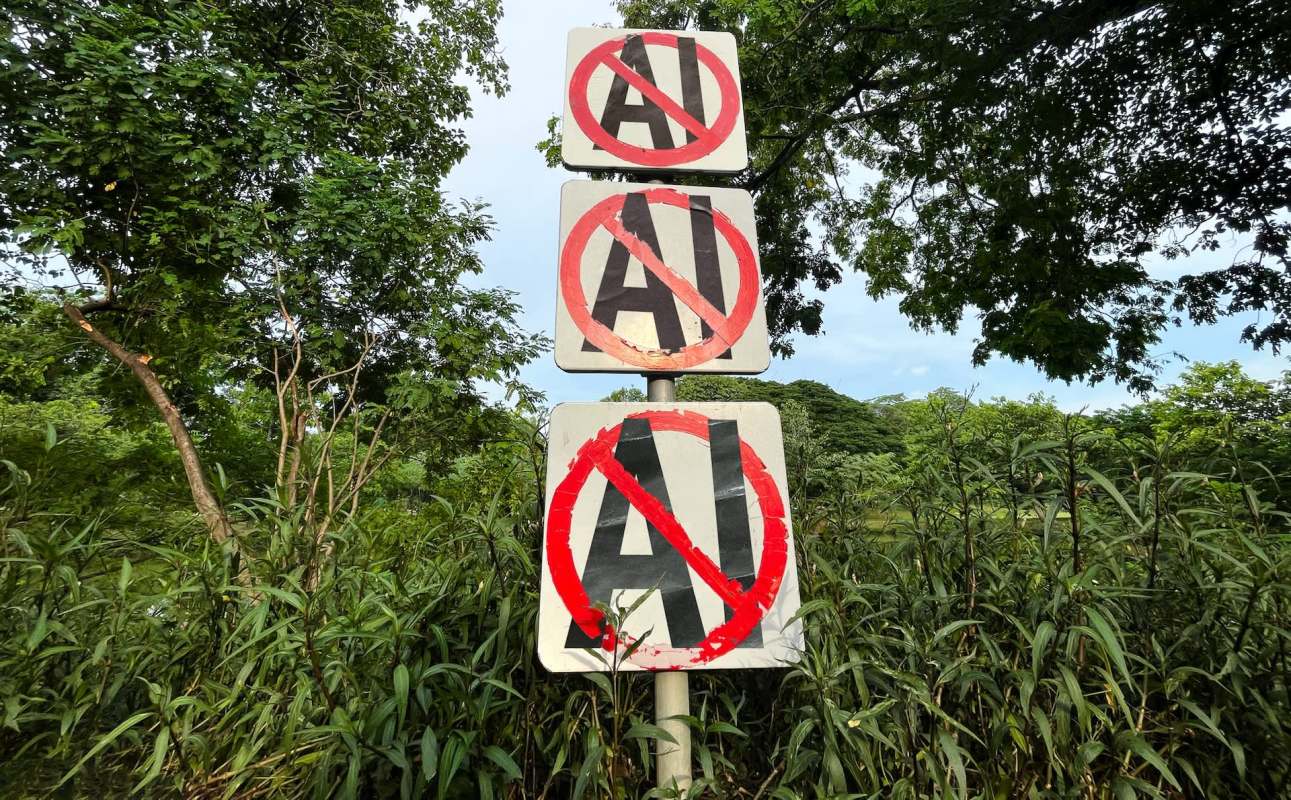
Major artificial intelligence firms are unveiling polished ad campaigns meant to improve the technology's image.
Polling, however, suggests many Americans remain more focused on the AI boom's tangible downsides than on its branding.
What happened?
A new wave of AI marketing is arriving amid heavy skepticism. As Futurism reported, Meta and Anthropic have both rolled out upbeat campaigns that frame artificial intelligence as useful and future-oriented.
However, Pew Research polling cited by Futurism paints a bleak picture for the industry's sales pitch. Some 40% of U.S. adults said AI is more likely to be bad for society than good, while just 16% expected an overall benefit. Another 31% said they believe AI will harm them personally over the next 20 years.
Doubts extend to the physical footprint behind AI as well. Business Insider pointed to a Gallup survey showing that roughly three-quarters of U.S. adults oppose having hyperscale data centers built near where they live.
That resistance is surfacing in local fights. Landowners have challenged city councils over proposed AI data centers. Time reported 142 protests across 42 states in a single day, and opposition has broadened to AI-enabled surveillance tools, including cameras and drones.
TCD Picks » Quince Spotlight
💡These best-sellers from Quince deliver affordable, sustainable luxury for all




Why does it matter?
AI is no longer just a software story. It is increasingly becoming an energy, water, land-use, labor, and public-trust story as well.
Data centers require enormous amounts of electricity to power servers, which can put added strain on the grid. In some cases, that can also contribute to higher costs or more pollution if the electricity comes from non-renewable energy sources. Meanwhile, they also use vast quantities of water for cooling, which can deplete local supplies.
AI is not inherently harmful. For example, the technology can help utilities balance demand, improve renewable energy forecasting, and optimize grid operations. But those possible benefits are arriving alongside major risks, including heavy energy and water use, misuse in surveillance or warfare, security concerns, and economic fears, such as job losses.
Those tradeoffs can feel especially immediate when a new data center is proposed nearby or when AI tools are introduced into schools, workplaces, and public services more quickly than regulations can keep pace.
Many people appear to be judging AI less by its promises than by its visible impacts.
What's being done?
Some of the strongest responses are coming from communities and local governments. As proposals for large data centers move forward, public hearings, zoning fights, and environmental reviews are becoming major battlegrounds for residents asking tougher questions about energy demand, water use, tax incentives, and neighborhood disruption.
Organizers are also challenging the expansion of AI-driven surveillance. In some cities, local efforts have pushed back against police use of AI-integrated drones and other monitoring systems, showing that adoption is not happening without resistance.
For now, the industry's upbeat ad campaigns are running into a far more skeptical public mood. Many Americans do not seem persuaded by slogans such as "the future is for everyone" and "hope in hard questions."

Get TCD's free newsletters for easy tips, smart advice, and a chance to earn $5,000 toward home upgrades. To see more stories like this one, change your Google preferences here.






