


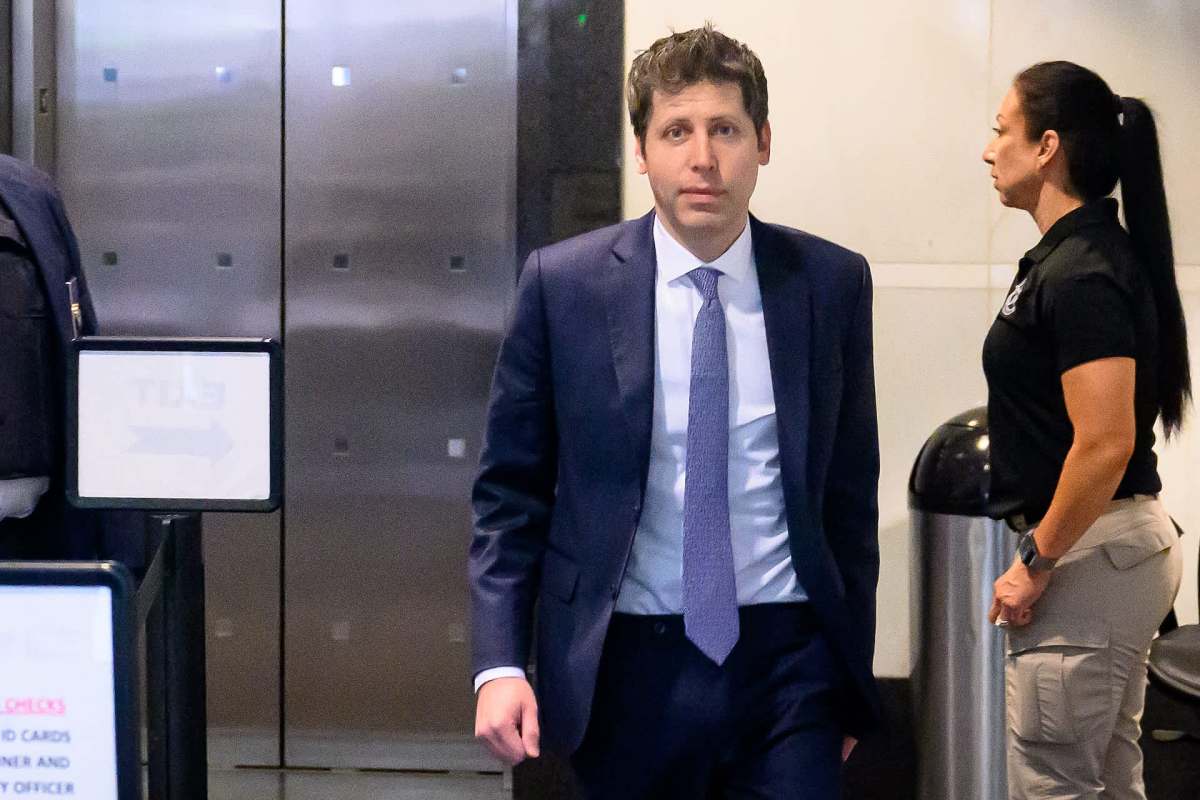
Sam Altman is backing away from some of his starkest warnings about artificial intelligence and jobs. After years of predicting sweeping worker displacement, the OpenAI CEO now says the feared "jobs apocalypse" has not materialized as he expected.
Speaking at a Sydney event hosted by the Commonwealth Bank of Australia, Altman said he no longer believes the labor market is headed for the kind of collapse some AI leaders have forecast and is "delighted to be wrong" about the impact AI would have on employment, Time reported.
He said he expected AI to have already wiped out more entry-level white-collar jobs, but that has not happened. Altman added that he now thinks he underestimated the value of the "human part" of work and the importance people place on interacting with others on the job.
His shift comes after years of much darker predictions made by himself and others. Altman had previously said AI would "probably replace most of the jobs people do today" and that some job categories would disappear entirely.
The new comments come at a tense moment for the industry, as major AI companies pursue ambitious growth targets while businesses question whether costly AI tools deliver enough value.
Workers are being asked to plan their careers around a technology whose real-world impact remains unsettled. Some executives, including Anthropic CEO Dario Amodei, continue to warn that entry-level white-collar jobs could vanish quickly, while economists say the evidence so far is far murkier.
TCD Picks » Quince Spotlight
💡These best-sellers from Quince deliver affordable, sustainable luxury for all




There are also signs that AI adoption is moving more slowly than the technology itself. Many have grown deeply concerned about the technology's impact on society. As the concern grows, so do the lawsuits against some of the technology's major players.
A recent Brookings report found that rapid progress in AI capability is not automatically producing broad economic gains, and the Yale Budget Lab said unemployment through March 2026 had not changed meaningfully for workers in jobs with high AI exposure, according to Time.
At the same time, job cuts are real. Outplacement firm Challenger, Gray & Christmas reported that AI was named in almost 50,000 layoffs through April this year.
Some companies are also starting to push back on AI spending, which may slow the rush to replace workers before the tools prove their usefulness. Time reported that Uber leaders have raised concerns about cost, Nvidia's Bryan Catanzaro said compute can exceed labor expenses, and Microsoft has reportedly pulled back some licenses over price.
Researchers and policy experts, meanwhile, are trying to bring more evidence into the discussion. Peter Wildeford of the AI Policy Network said one of the biggest unknowns is "reallocation" — whether workers whose tasks are automated remain unemployed or move into new roles.
"I don't think we're going to have the kind of jobs apocalypse that some of the companies in our space advocate or talk about," Altman said, according to Time.
As Wildeford put it, "Forecasting economic impacts from AI is inherently speculative and uncertain."

Get TCD's free newsletters for easy tips, smart advice, and a chance to earn $5,000 toward home upgrades. To see more stories like this one, change your Google preferences here.






