


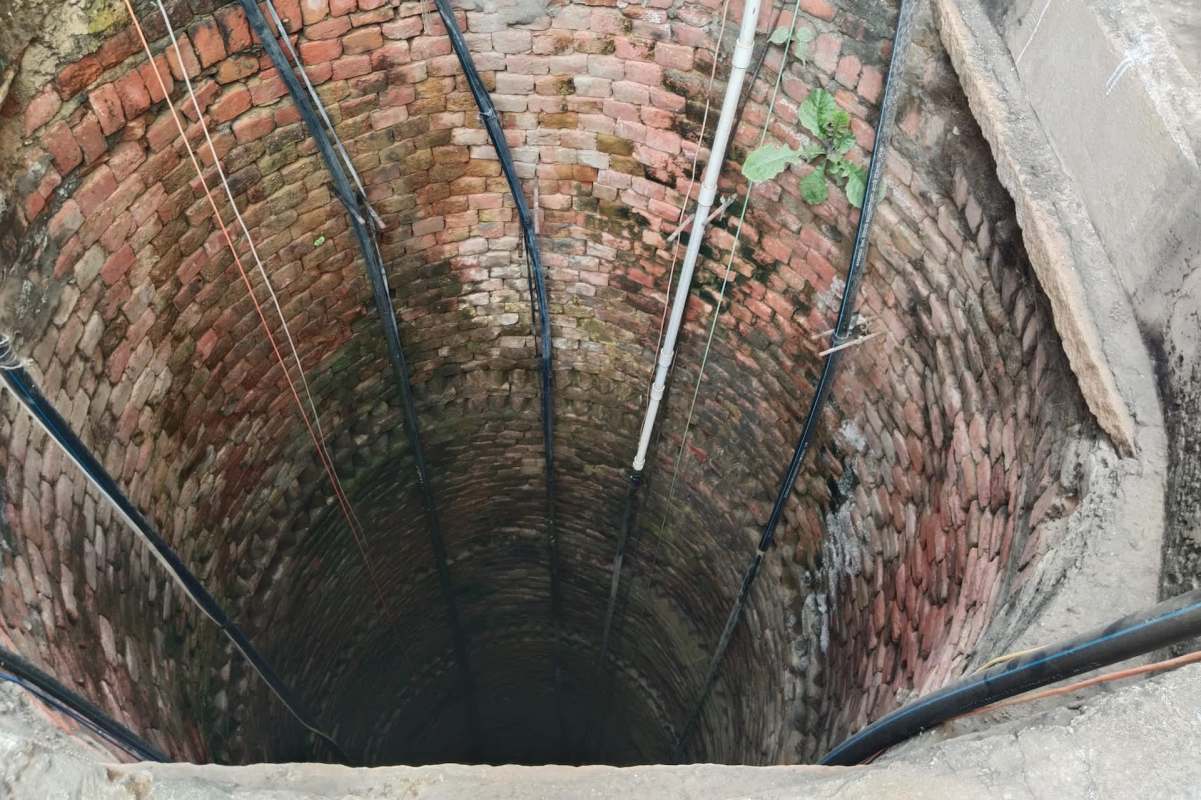
In a water-scarce area just outside New Delhi, the rapid growth of AI-related data centers is colliding with a long-running basic need: residents say they have spent years trying to get dependable water access.
That pressure is especially clear in Khora, a densely populated part of Ghaziabad.
As DW reported, people there rely heavily on groundwater while nearby data centers require large amounts of water to cool servers.
What's happening?
Describing how severe the shortage has become, Deepak Joshi, president of the Khora Residents' Association, said, "In some parts, one has to dig 1,000-1,200 feet (305-366 meters) to extract water."
Carpenter Naeemuddin Saifi said that even after 35 years in Khora, he still cannot afford a private water connection. Instead, he depends on a shared borewell and pays 1,000-1,200 rupees (~$10-20 USD) each month.
The situation in Khora reflects a broader national trend. India is trying to establish itself as a major destination for the AI data center boom, and more than half of the country's data centers are located in water-stressed regions.
TCD Picks » Quince Spotlight
💡These best-sellers from Quince deliver affordable, sustainable luxury for all




Those pressures are visible in Ghaziabad's groundwater data. The Central Ground Water Board estimated the annual extractable groundwater there at about 2,714 hectare-meters (27,140,000 cubic meters), while withdrawals in 2024-2025 reached roughly 272% of the recommended share.
Nearby Noida, just minutes from Khora, already has more than 20 operating data centers, including AdaniConnex.
Meanwhile, Uttar Pradesh's 2026 Data Center Policy Draft promises an "uninterrupted 24x7" water supply for data centers.
Why does it matter?
Joshi told DW that some families have already left the area, and he said borewells cannot be considered a dependable solution when the water table continues to drop.
Residents also lost a long-anticipated option in 2025, when authorities formally scrapped a plan to divert some Ganges water to Khora.
India's data center capacity climbed from about 375 megawatts in 2020 to around 1,500 megawatts in 2025. Data Center Map estimates that there are 305 facilities nationwide, which consumed around 150 million tons of water in 2025.
AI's expansion is also closely tied to the power grid. Data centers consume enormous amounts of electricity, which can strain local infrastructure and, in some cases, lead to higher energy costs, increased water use, and broader environmental risks.
At the same time, AI can help utilities forecast demand, improve efficiency, and better integrate renewable energy.
What's being done?
A major concern, experts say, is the lack of transparency.
Gayatri Naik, co-director of the Center for Environmental Law, Education, Research and Advocacy at the National Law School of India University, told DW, "We don't have a conclusive regulatory aspect with regard to governing any of the water uses by these data centers."
Companies may need approval to extract groundwater, but they generally do not have to routinely make their water-use figures public.
Prateek Aggarwal, a senior representative of the Council on Energy, Environment and Water, said the first step should be mandatory disclosure: "Energy, water, and carbon use reported every year, including exactly where the water comes from and how much gets recycled."
Experts are also calling for phased efficiency standards and stricter siting decisions that would consider water availability alongside land and electricity infrastructure.
Local officials say an alternative water project for Khora is being developed, but residents say they have not yet received any meaningful updates.
"Even a borewell is not a permanent solution. The levels of water could drop anytime," Joshi said.
Naik summed up the broader challenge this way: "How will you bring a balance between this water that is required for drinking as well as the water demands by these companies who are extracting the water from a water scarce area?"

Get TCD's free newsletters for easy tips, smart advice, and a chance to earn $5,000 toward home upgrades. To see more stories like this one, change your Google preferences here.






