


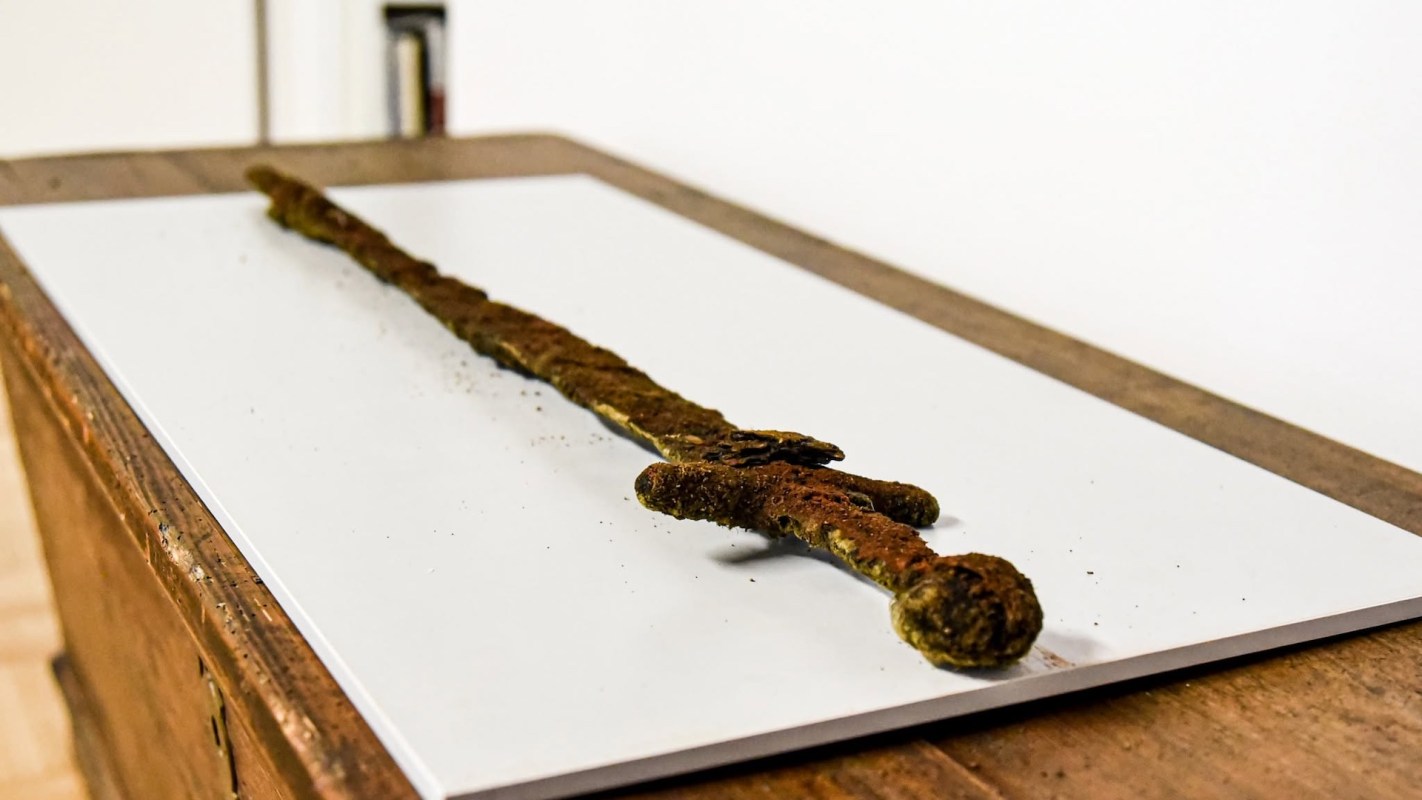
Archaeologists in western Poland are examining an 11th-century sword recovered from a river in the region.
Because the blade remained remarkably intact despite centuries underwater, experts already count it among the area's most important recent medieval finds.
What happened?
Wronki-area resident Mirosław Tucholski made the discovery in the Warta River and alerted authorities soon afterward, Archaeology News reported.
Museum of the Wronki Region staff said reporting it helps protect archaeological heritage and gives specialists a chance to examine finds properly.
A preliminary review was followed by confirmation from archaeologist Ryszard Pietrzak, who identified the weapon as authentic and assigned it to the early Middle Ages.
Specialists place its manufacture in the 11th century, within the Piast period, when Central Europe was marked by recurring warfare and political rivalry.
TCD Picks » Quince Spotlight
💡These best-sellers from Quince deliver affordable, sustainable luxury for all




How the weapon came to rest on the river bottom remains unclear. Researchers say it might have been dropped by a warrior while traveling or fighting, but they also consider the possibility that it was intentionally deposited in the water as an offering, in line with ritual traditions known from medieval Europe and earlier pagan practice.
Why does it matter?
Its state of preservation is what makes the find especially notable. That condition gives scholars a rare chance to study medieval weapon production, the working of the metal, and signs of how the blade was used.
Finds like this also help historians trace how people moved, fought, hunted, traded, and practiced rituals across the region.
Similar discoveries have also surfaced in Polish waterways in recent years, including a 13th-century sword recovered in Warsaw in 2025 and another blade found near Włocławek in 2024, which some researchers linked to a 10th-century Viking, according to Archaeology News.
Across Poland, drought-driven drops in river and lake levels have been bringing long-hidden objects into view more often. While that can lead to remarkable finds, it also puts fragile artifacts at risk once underwater conditions no longer protect them.
What's being done?
Officials have already notified the Wielkopolska Voivodeship Conservator of Monuments and secured the sword for conservation.
Wronki mayor Rafał Zimny also provided funding to support its restoration and scientific study. It is now slated for conservation and close analysis at Nicolaus Copernicus University in Toruń.
Once that work is complete, the sword is expected to go on display at the Museum of the Wronki Region.

Get TCD's free newsletters for easy tips, smart advice, and a chance to earn $5,000 toward home upgrades. To see more stories like this one, change your Google preferences here.






