


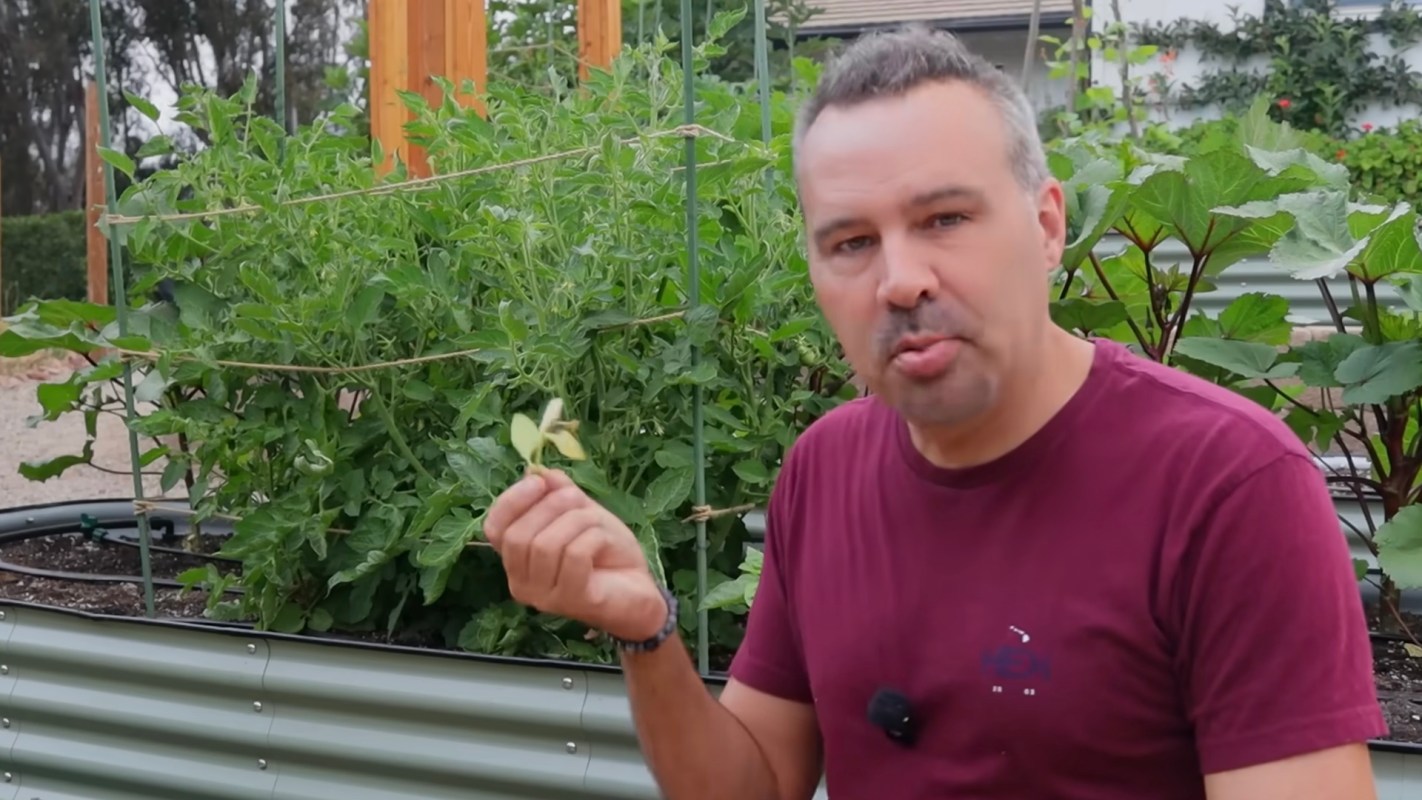
Yellowing tomato leaves can make any gardener fear the worst. Still, that shift from green does not automatically mean the plant is in decline — it can also be a sign that something needs attention.
What's happening?
In a YouTube video, Brian Lowell of Next Level Gardening (@NextLevelGardening), a gardening content creator, said the discoloration usually comes back to one of seven common causes: normal leaf aging, overwatering, underwatering, root damage, nutrient deficiencies, disease, or pests.
His core advice was to investigate instead of guessing. As he put it, "They're not the problem, they're the plant's way of telling you that something else is going on."
One of the most useful clues is the part of the plant where yellowing first appears. A small number of old leaves near the bottom may yellow as the plant redirects energy toward fresh growth, flowers, and fruit. When the color change spreads upward or shows up in new leaves, it is more likely signaling a problem.
Other clues come from the leaves and the soil. He suggested noting whether a leaf is yellow across the whole surface or mainly between the veins, whether brown or black spotting is present, and whether the soil beneath the surface is soggy, dry, or evenly moist. Lowell said roots need oxygen along with water, which is why overwatering and underwatering can look similar.
Why does it matter?
Tomatoes are one of the most rewarding crops to grow. A healthy plant can help households save money on produce, enjoy better-tasting food, and spend more time outside doing an activity that supports both mental and physical health.
TCD Picks » Quince Spotlight
💡These best-sellers from Quince deliver affordable, sustainable luxury for all




Lowell also warned against treating every pale leaf as a fertilizer problem. Many gardeners "immediately reach for the fertilizer," he said, even when watering issues, root stress, or disease are really to blame. In those cases, extra fertilizer can cost money and still leave the actual problem unresolved.
One commenter wrote: "One thing I've noticed with houseplants is that most problems usually aren't caused by a lack of fertilizer—they often come down to the basics: light, watering, airflow, soil, and simply giving the plant enough time to adjust."
What can I do?
Before making any changes, Lowell recommended a basic checkup. See if the yellowing is confined to older leaves near the bottom, look for spots or halos that could point to disease, and inspect the undersides of leaves for pests including spider mites, whiteflies, and aphids.
He also advised testing the soil below the surface instead of relying on the top layer alone. If that deeper soil stays waterlogged, reduce irrigation and improve drainage; if it is bone dry, water more deeply and on a steadier schedule. And when yellowing truly does match a nitrogen deficiency, Brian said older leaves usually lose color first because the plant is shifting nutrients into newer growth.
He boiled the process down to this: "Different clues, different diagnosis."

Get TCD's free newsletters for easy tips, smart advice, and a chance to earn $5,000 toward home upgrades. To see more stories like this one, change your Google preferences here.







