


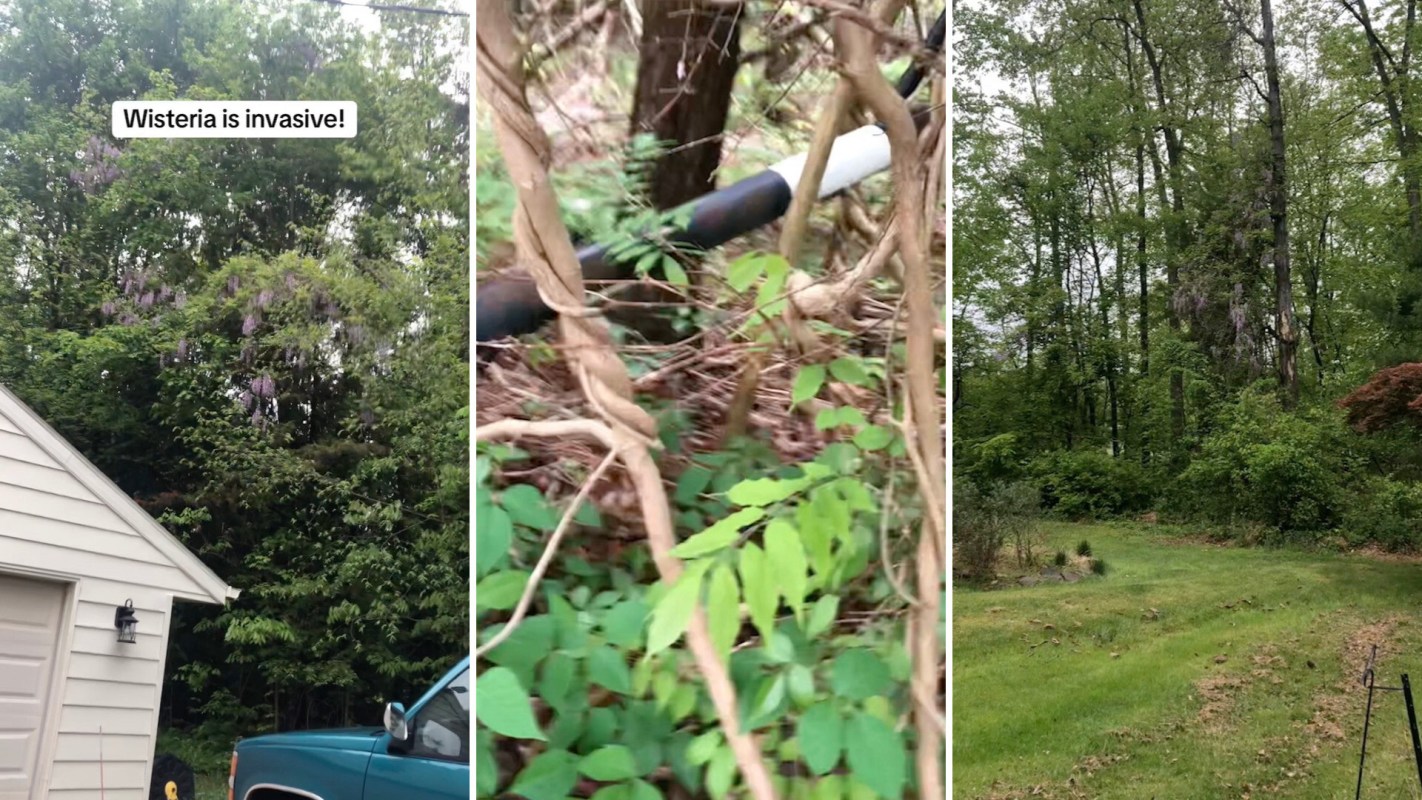
The cascading purple flowers from wisteria plants bring a fairytale-like quality to an outdoor space, so it's no surprise that many gardeners want to add it to their yard.
However, the plant that is common in the Southeast of the United States has an invasive variety that comes from China, which can grow quickly and outcompete native species for light, space, nutrients, and water.
That's why Chilly (@Chillydogs) on TikTok has taken to the platform to warn those with green thumbs about the damage this rapidly thriving plant can do.
@chillydogs PSA! Keep it in containers and far from other plants it can grab onto! #wisteria #planttok #plants #garden #invasivespecies ♬ original sound - Chilly
In their video, Chilly shows a woodland area that has been completely taken over by wisteria.
"Take a look at these branches," they said. "These branches have been here for so long. This entire woods is wisteria. All these baby plants you see here are all wisteria. And trees are being choked."
Indeed, Chilly showed examples of thick vines that were wrapping around tree trunks, even showing one tree that had fallen but was being held up by the wisteria's grip.
According to the University of Florida's Gardening Solutions website, it can grow in a number of different conditions and grows rampantly, leading to ecosystem damage. It can even persist in shady conditions, even though it won't produce its trademark flowers in this type of environment.
"Individual wisteria plants can live for more than 50 years; wisteria's longevity only increases its ability to invade an area and choke out native plants," UF detailed.
As Chilly said, if you want to grow wisteria, "keep it in containers and far from other plants it can grab onto!" But if it's already taking over, UF recommends removing it carefully, cutting off the vines close to the root and using a brush to coat the stem with glyphosate, a common weed killer.
Glyphosate, while effective, can be problematic. WebMD noted exposure can lead to kidney and liver damage, as well as endocrine and reproductive issues. The Environmental Protection Agency has also linked it to some types of cancer. It should only be used as a last resort in your green space.
TCD Picks » Quince Spotlight
💡These best-sellers from Quince deliver affordable, sustainable luxury for all




While perhaps not as effective on wisteria, there are nontoxic ways to help control undesirable growth in your garden. Using boiling water on weeds can be a useful chemical-free alternative, as can mulching.
TikTokers had some horror stories regarding unchecked wisteria growth.
"It will rip the gutters off your house," one user said. "It can cause a lot of property damage if you don't cut it back constantly."
"Wisteria can also uproot the foundation of your house!" added another.

Join our free newsletter for easy tips to save more, waste less, and help yourself while helping the planet.
Cool Picks






