


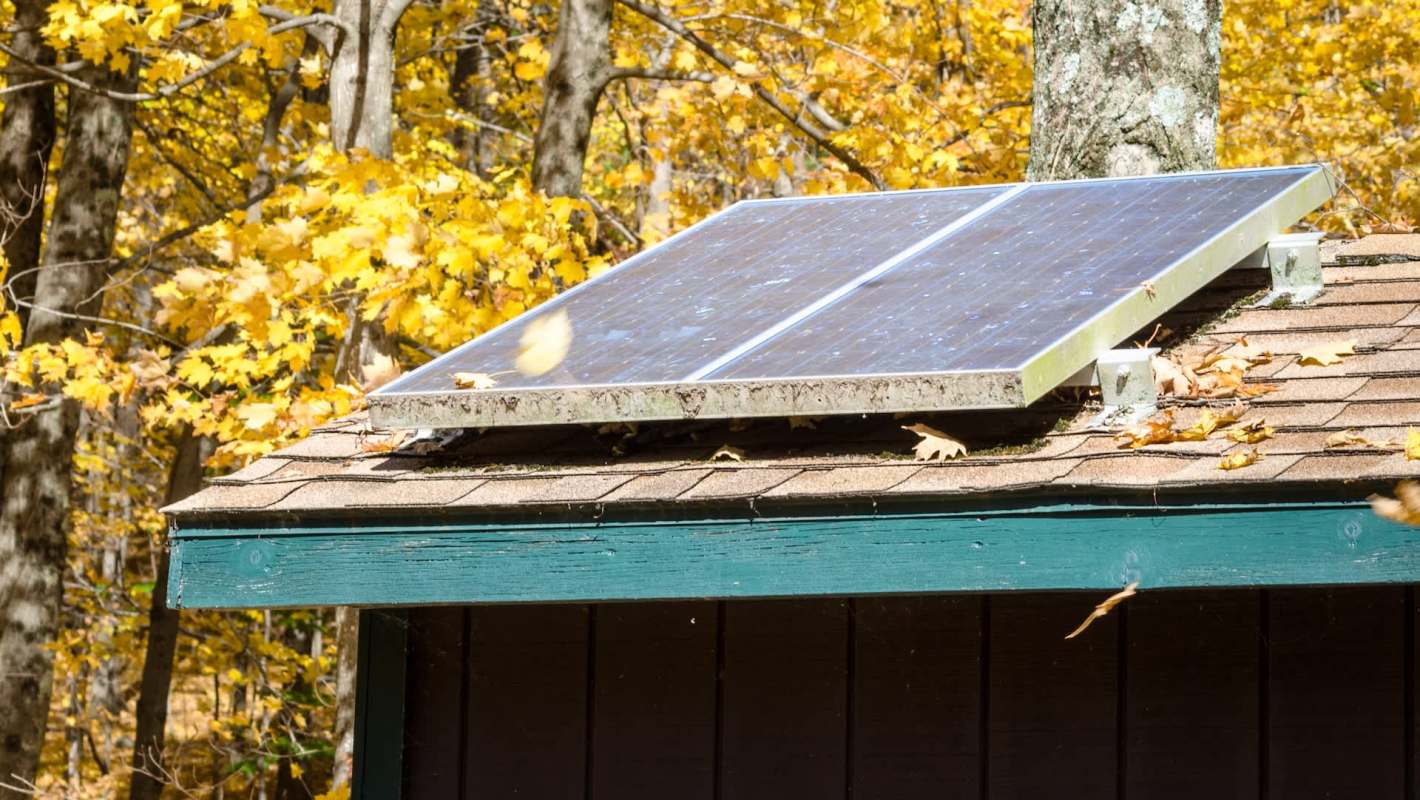
After 12 months of off-grid living, a North Georgia resident says a small-cabin setup has been able to cover a fairly typical daily routine.
As they told the r/OffGrid subreddit, the power system supports a full-size 240-volt washer and dryer, plus a 1,500-square-foot workshop about 2.5 times the size of the 600-square-foot cabin.
Here's what to know
In a Reddit post, the homeowner said a year in the Blue Ridge Mountains left them with a setup built around 6.4 kilowatts of solar panels, two split-phase MPP6548 units, and 30 kilowatt-hours of lithium iron phosphate batteries.
According to the post, propane is the only outside fuel source, used only for on-demand hot water and a gas grill. Most of the heat comes from a wood stove, with a mini-split helping on cold nights.
The cabin was described as "borderline insulated," with an open crawl space, no floor insulation, R13 exterior walls, and an R19 roof. They shared a photo of their view, presumably with their dog.

More background
The homeowner noted, "I make a healthy living as a consultant and work 100% remotely. It's fair to say this kind of off-grid build likely comes with significant upfront equipment costs."
TCD Picks » Quince Spotlight
💡These best-sellers from Quince deliver affordable, sustainable luxury for all




Internet service changed over time. The cabin started with Starlink but later got fiber after "the rural broadband peeps showed up with a screaming deal to run glass to the cabin for free."
For the solar arrays, the first eight panels sit on a pressure-treated lumber rack the homeowner built using perforated angle iron and ag pins so the angle can be adjusted. They said the second array is mounted on a white oak rack harvested from the property and set on boulders uncovered while excavating for the shop foundation.
They also said the mounts use 14-foot farm gates, hinges, U-bolts, and panel clamps, and they change the tilt four times per year. They showed a photo of their handiwork in front of the cabin.
What can be done?
One commenter said they pair an on-demand propane heater with a small tank water heater tied to solar.
"This setup cut down my propane usage by like half and gave me something to do with extra power when my batteries are charged up," they revealed.
The suggestion immediately resonated with the original poster: "Brilliant idea. Actually was just contemplating other ways to store power once my batteries are topped off. My base load on a moderate fall or spring day is only about 3kWH so the batteries get to about 89% before the panels kick in."

Get TCD's free newsletters for easy tips, smart advice, and a chance to earn $5,000 toward home upgrades. To see more stories like this one, change your Google preferences here.






