


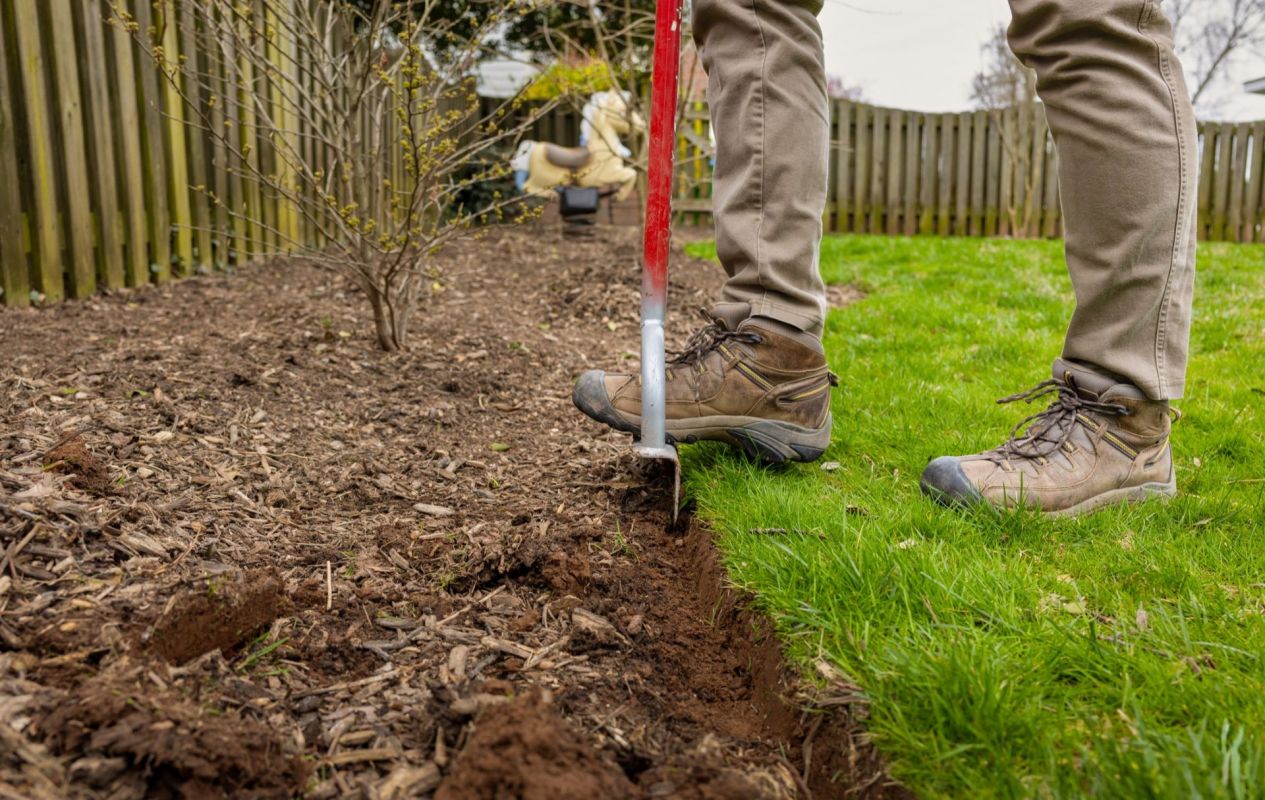
In a Reddit post to the r/arborists community, a gardener shared concerns about 50-year-old western red cedar trees that were struggling decades after some problematic landscaping choices.
Alongside photos of the problem, the poster said the plants were suffering from poor moisture and soil conditions.
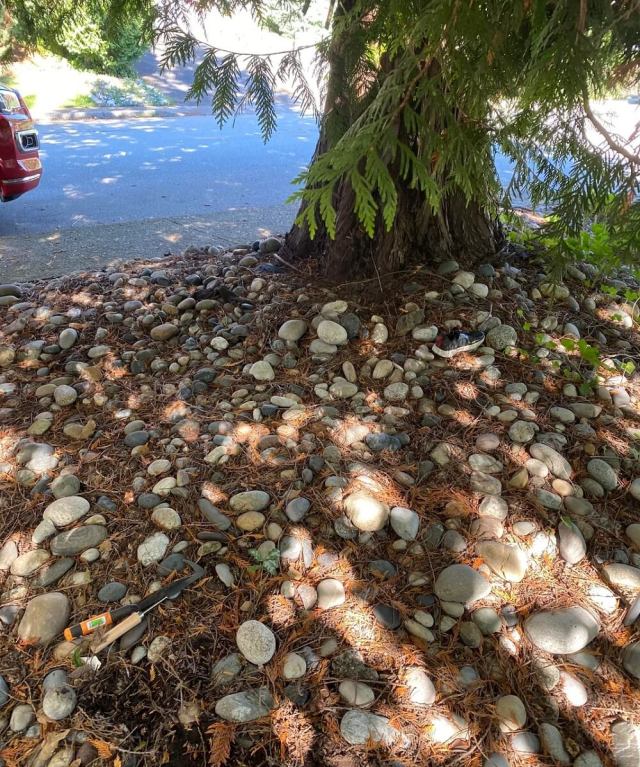
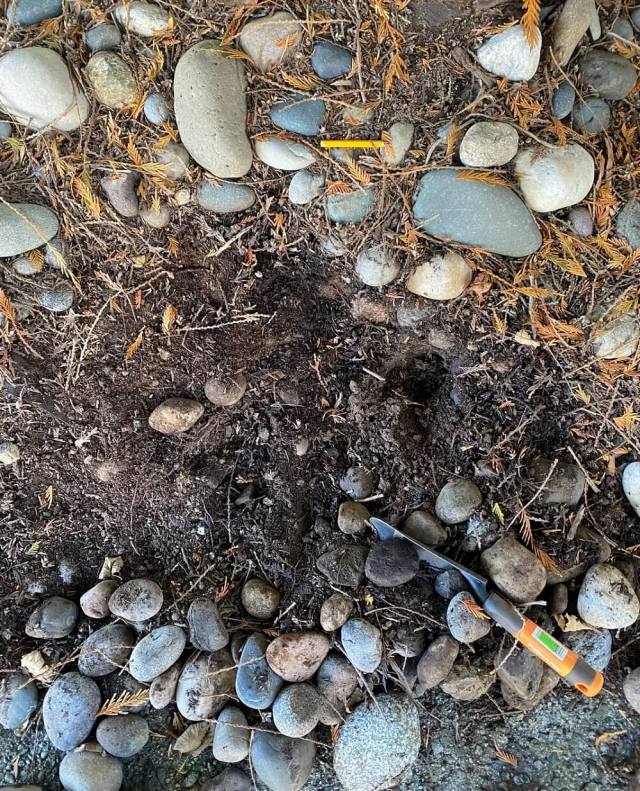
About 25 years ago, landscape fabric was installed beneath the trees, followed by a thick layer of river rock roughly a decade later. They said that over time fallen leaves had decomposed on top of the fabric, creating a shallow layer of healthy soil. Tree roots began growing into this upper layer, while the soil beneath the fabric remained gray and sandy.
They came to Reddit to ask for advice: whether removing the fabric would damage the tree roots that had grown above it, which kind of mulch or soil should replace the rocks, and whether there were other steps that could help restore the cedars' health. "It will definitely be a lot of work," the OP said in a comment.
Arborists and experienced gardeners frequently warn against landscape fabric for exactly this reason. "Whoever invented landscape fabric should be beaten with a bar of soap in a sock," one commenter quipped.
While it's often marketed as a long-term weed solution, the juice actually might not be worth the squeeze. Weeds eventually grow on top of landscape fabric, soil builds up, and homeowners are left with a plastic barrier that restricts water movement and root development. In the long run, it creates more maintenance and expenses.
Instead of relying on landscape fabric, experts often point homeowners toward organic mulches such as wood chips, shredded bark, and leaf mulch — all of which help retain moisture, regulate soil temperature, and break down over time. This helps to enrich the soil without creating a barrier that roots have to fight through.
Some gardeners also use dense ground cover or layered plantings to naturally suppress weeds, reducing the need for synthetic materials. This approach connects closely to the growing movement to add native plants to gardens.
Ditch the landscape fabric, and go native. Working with what works in your climate from the start can save labor, money, and frustration years down the line.
|
What's the hardest thing about taking care of your yard? Click your choice to see results and speak your mind. |
 Mowing the lawn 🏡
Get TCD's free newsletters for easy tips to save more, waste less, and make smarter choices — and earn up to $5,000 toward clean upgrades in TCD's exclusive Rewards Club.
TCD Picks » Quince Spotlight
💡These best-sellers from Quince deliver affordable, sustainable luxury for all




Cool Picks






