


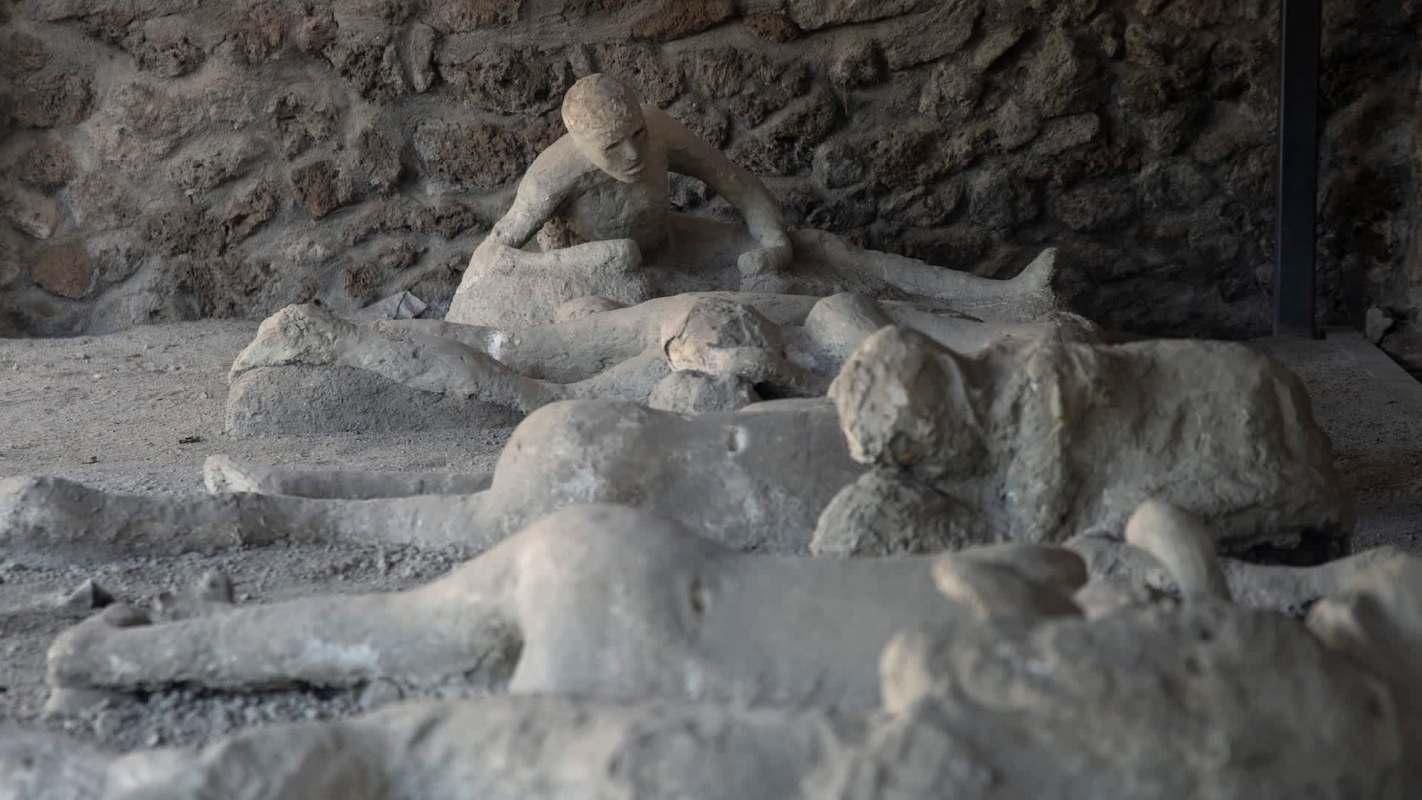
The plaster casts of Pompeii's victims have long stood as some of the most haunting reminders of the eruption of Mount Vesuvius in A.D. 79.
Now, a new round of scans has revealed a striking detail about one of the site's most famous victims, The Jerusalem Post reported.
The discovery adds a deeply human layer to the tragedy preserved in the Garden of the Fugitives, where 13 people were killed while attempting to escape the eruption nearly 2,000 years ago.
Pompeii Archaeological Park said new analysis of artifacts in its storage warehouses helped identify one of the human casts from the Garden of the Fugitives as a doctor. The key clue was a small case concealed inside one victim's cast from the garden.
The case is made of "organic material with metal elements" and contains a fabric bag filled with bronze and silver coins along with "a series of instruments compatible with a medical kit."
X-rays and CT scans carried out at the Casa di Cura Maria Rosaria nursing home in Pompeii helped researchers map the contents in greater detail.
TCD Picks » Quince Spotlight
💡These best-sellers from Quince deliver affordable, sustainable luxury for all




The source article explains that experts identified a small slate tablet for preparing medical or cosmetic substances inside the case, as well as small metal tools believed to be surgical instruments. The scans also revealed a sophisticated closing mechanism featuring a toothed wheel.
All 13 victims from the garden are believed to have died when a pyroclastic cloud hit as they tried to leave the city through Porta Nocera.
The Garden of the Fugitives, in Pompeii's southeastern section, was once part of a thriving city block before it was turned into a vineyard in the years before the eruption.
Archaeologists have since identified other victims there as a merchant, a mother with two children, a young couple with an infant daughter, and a teenage servant.
Researchers are continuing to use imaging tools such as X-rays and CT scans to examine Pompeii artifacts without damaging them. That approach is allowing experts to identify hidden objects, understand how they were made, and connect them to the lives of the people who carried them.
The park has also been experimenting with newer digital tools. In late April, archaeologists working with the site used artificial intelligence to reconstruct the appearance of another victim found outside one of the city's southern gates. That effort drew mixed reactions online, with some praising the use of AI and others arguing human artists should have been involved instead.
"Already two thousand years ago, there were those who did not practice medicine only during consulting hours, but who were simply doctors at all times, even at the moment of fleeing the eruption, thwarted by the pyroclastic cloud that struck the group of fugitives trying to leave the city through Porta Nocera," Gabriel Zuchtriegel, Director General at Pompeii Archaeological Park, said.
"We dedicate this small but significant discovery to all the women and men who today continue to carry out this profession with a very high sense of responsibility and service to the community."

Get TCD's free newsletters for easy tips, smart advice, and a chance to earn $5,000 toward home upgrades. To see more stories like this one, change your Google preferences here.






