


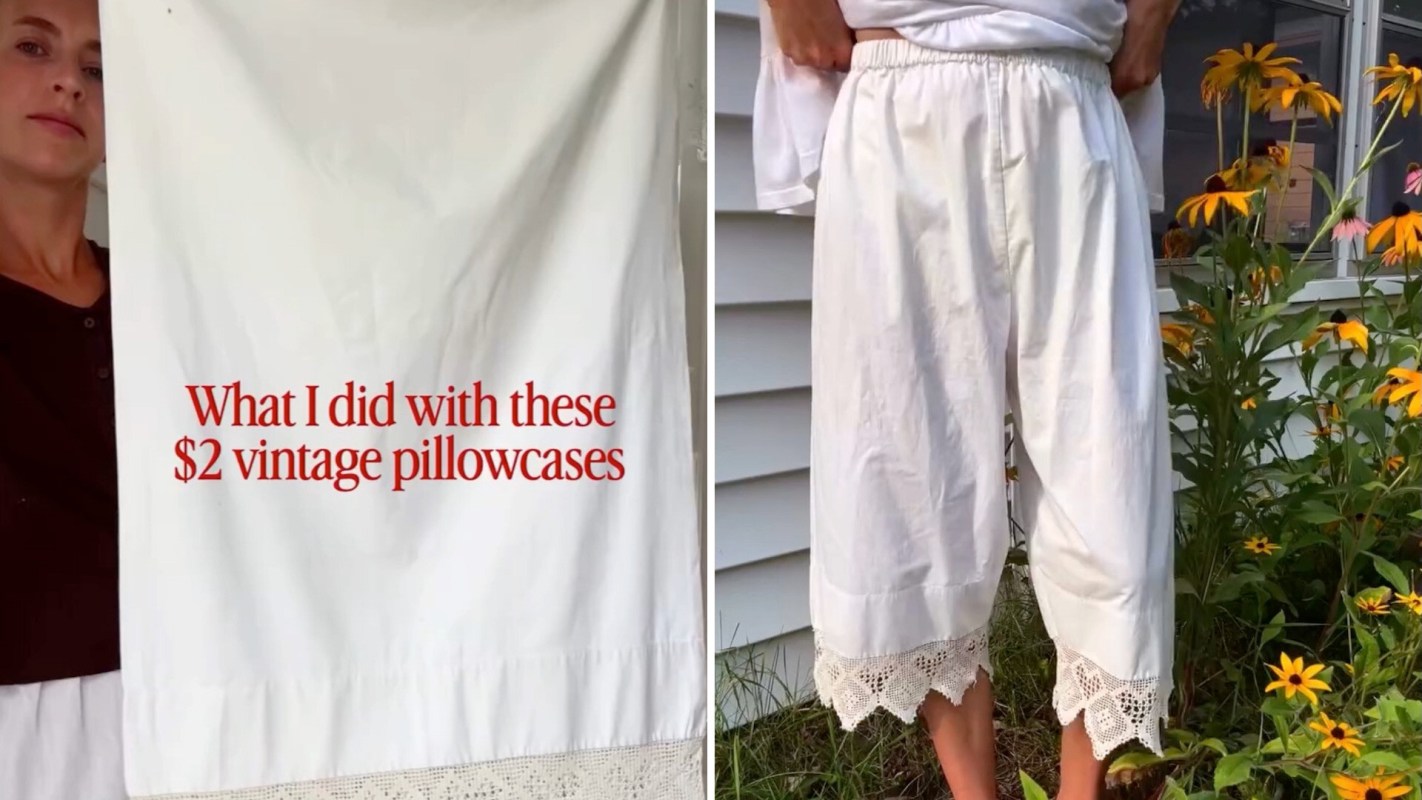
A breezy summer outfit can start in the most unlikely of places.
One Instagrammer turned 50-year-old cotton pillow cases into loose, airy pants that looked just as practical as they were stylish.
What happened?
Tess Johnson (@little_wifey) posted a thrift-flip reel showing the results of transforming old bedding into wearable clothing.
The creator's caption centered on both comfort and creativity, noting, "These vintage cotton pillowcases make the dreamiest, breathable summer pants."
More than a simple makeover, the post illustrates how household linens can be converted into useful clothing with some planning and sewing. In place of new fabric or another mass-produced pair of pants, an overlooked secondhand item becomes a custom piece someone can actually wear.
Why does it matter?
Projects like this offer a practical alternative to fast fashion. Repurposing thrifted linens or vintage textiles can cost far less than buying new fabric or a new pair of summer pants, especially since pillowcases and sheets are often available secondhand at low prices.
TCD Picks » Quince Spotlight
💡These best-sellers from Quince deliver affordable, sustainable luxury for all




There is also a comfort advantage. Older cotton textiles are often soft, breathable, and already broken in, which can make them especially appealing for warm-weather clothing. Turning them into pants, shorts, or tops can give people a one-of-a-kind wardrobe piece without the premium price tag often attached to boutique handmade fashion.
Extending the life of existing textiles helps keep usable materials in circulation longer. While that alone will not solve the fashion industry's waste problem, it can help people get more value from items that already exist.
What can I do?
The easiest first step is to check thrift stores, estate sales, flea markets, or even linen closets for old pillowcases, sheets, or tablecloths made from breathable natural fibers. Cotton pieces with fun prints or sturdy seams can be especially useful for beginner sewing projects.
It also helps to inspect textiles carefully before buying. Look for stains, thinning fabric, or damage in the areas you plan to use most. After that, wash everything thoroughly before cutting, since older fabrics can shrink or soften after cleaning.
If sewing from scratch feels intimidating, simple elastic-waist pants or shorts can be a realistic place to start. People who do not sew can still take part by hiring a local tailor or shopping for upcycled clothing from small makers, which can still provide the benefits of buying something unique while keeping older materials in use.
"There is something so special about taking 50 year old textiles and turning them into something wearable today," Johnson said.

Get TCD's free newsletters for easy tips, smart advice, and a chance to earn $5,000 toward home upgrades. To see more stories like this one, change your Google preferences here.







