


With global temperatures rising, keeping a house cool is becoming increasingly important to stop energy bills soaring with constant AC use.
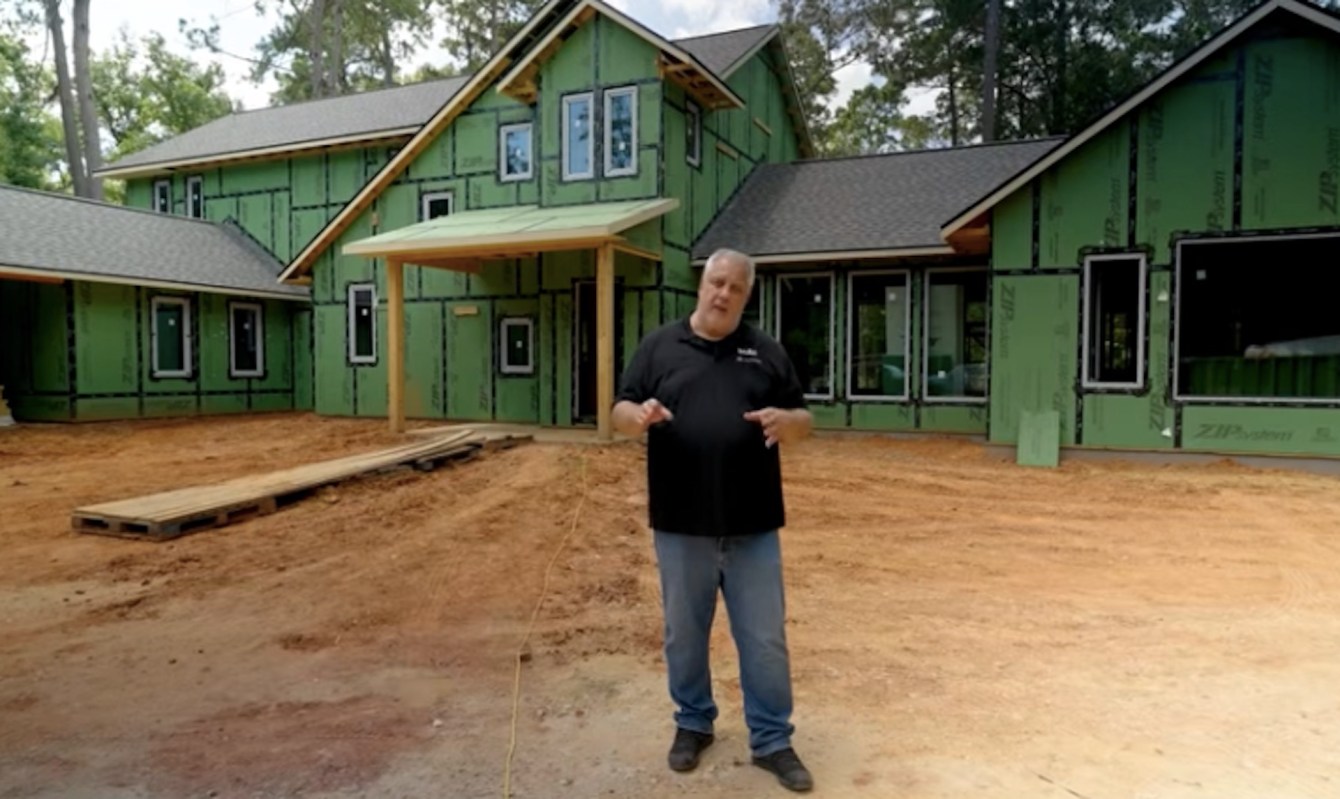
In a video for The Build Show Network (@buildshow), architect Steve Baczek used a high-performance Houston home he called "Passive House 1.5" to argue that in hot climates, better wall design is less about installing higher-grade insulation and more about stopping heat where it enters.
What's happening?
When designing a house to avoid excessive heat, the location matters. As Baczek noted, in Houston, outside heat is pressing inward, and the building has to resist that gain. However, in the Northeast, the priority is keeping indoor heat from leaking out. Either way, the wall is dealing with the same basic issue: energy transfer.
He used ZIP R sheathing, which pairs sheathing and a weather-resistant barrier with exterior insulation. It creates a continuous layer that interrupts heat moving through the studs instead of relying only on insulation inside the wall cavity. By cutting thermal bridging, it boosts wall performance and can ease demand on the air conditioner.
Only after the design was finished did the team compare it with Passive House certification benchmarks.
The results landed at about 150% of the required target, which is why the project got its nickname and why he described it as already performing at a very high level.
TCD Picks » Quince Spotlight
💡These best-sellers from Quince deliver affordable, sustainable luxury for all




Why does it matter?
For people living in hot, humid climates, this kind of wall assembly can make homes more comfortable and less expensive to operate. If less heat gets into the house, the air conditioner does not have to work as hard to maintain a steady indoor temperature. That can mean lower electric bills, more even temperatures from room to room, and less wear on cooling equipment.
That point challenges the idea that southern houses can skimp on robust insulation planning. Baczek said exterior insulation is valuable beyond heating-dominated regions and can meaningfully help in cooling-dominated places too, especially alongside good air sealing and moisture management.
One commenter who used a similar setup wrote, "Zero regrets and low energy bills."
In places that regularly see triple-digit heat, smarter wall design can also help a home change temperature more slowly if cooling is interrupted.
What can I do?
Homeowners may want to avoid chasing the highest R-value (or the highest insulation grade) on paper without considering the full wall assembly. Instead, they can ask builders or designers how they are addressing continuous insulation, air sealing, moisture, and framing-related thermal bridges. A wall that performs well in the real world depends on the system, not just a single number.
He also highlighted condensation control and structural performance as part of the discussion, both of which are important in humid climates.
Commenters brought up additional real-world issues, including termites, slab insulation, very high dew points, and how orientation, window placement, and overhangs can shape results. Climate-specific design still affects performance.
For anyone planning a new build or major retrofit, one useful step may be to ask for modeling that reflects local weather conditions.
In a place like Houston, a better building envelope can cut cooling demand without simply stuffing walls with more material.
As one commenter noted, "Better building comes from understanding the entire system, not just adding more materials."

Get TCD's free newsletters for easy tips, smart advice, and a chance to earn $5,000 toward home upgrades. To see more stories like this one, change your Google preferences here.






