


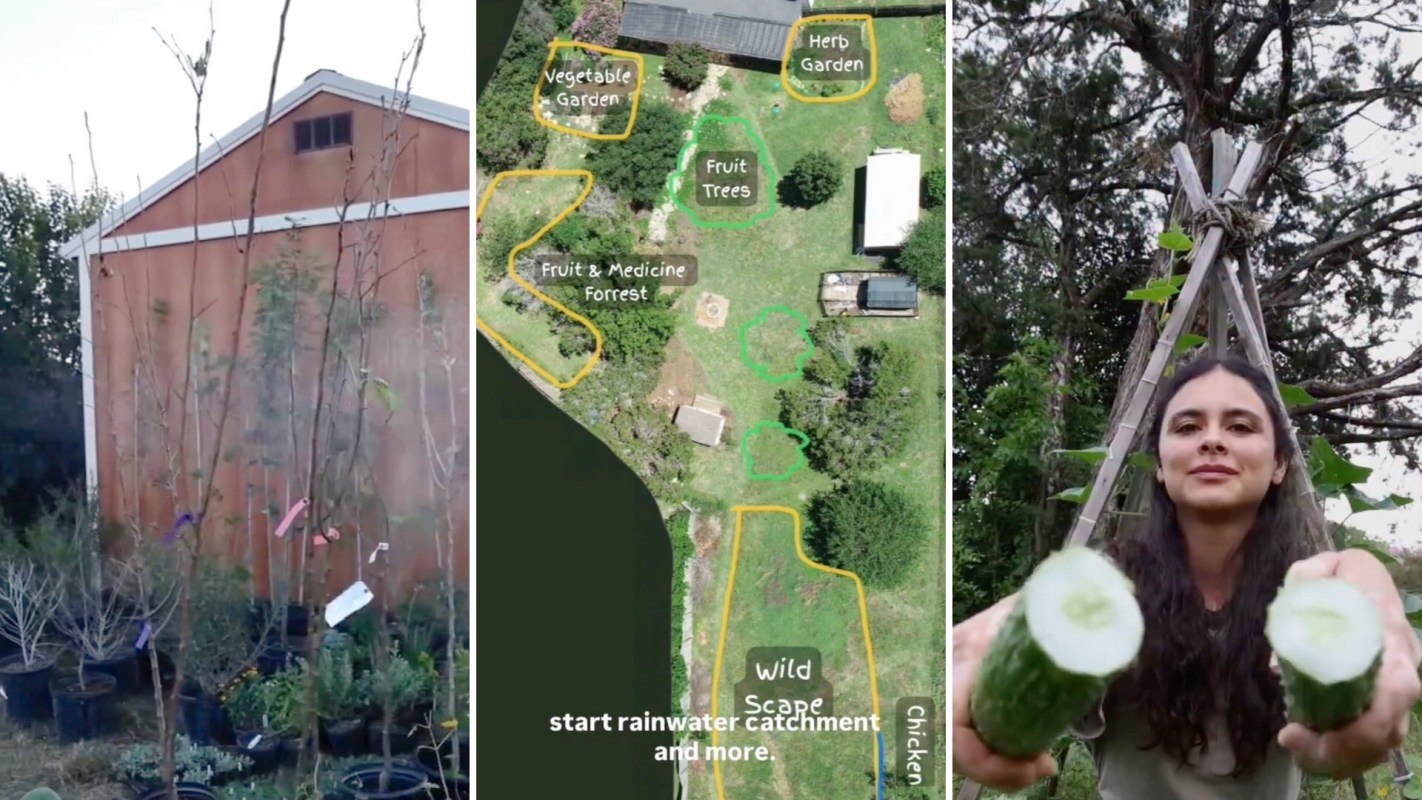
A one-acre homesite in Central Texas is being redesigned as an edible landscape meant to better withstand dry conditions.
The long-term vision, as shared by creator Isai (@supermilk21), is to replace conventional lawn space with a water-resilient food forest.
What happened?
Phase two focuses on planting more than 100 trees and shrubs, including fruiting, nut-bearing, and native varieties, with chickens, composting, and rainwater catchment also planned.
In a TikTok video, Isai shared an update on the second phase of the one-acre agroforestry build and said it is being created with Symbiosis TX (@symbiosis.tx), which the video identifies as a Central Texas company centered on regenerative design and water-resilient landscaping.
@supermilk21 Phase 2 of our 1-acre agroforestry build is officially underway! Teaming up with @symbiosis.tx to build a water-resilient, regenerative system right here in Central Texas. Self- sufficiency is good, but group sufficiency is where the future is built. Check out our latest progress and what's coming next! #Agroforestr #RegenerativeAgriculture #TexasHomestead #FoodSovereignty #PermacultureDesign ♬ original sound - Isai
The creator described it as a "water-resilient, regenerative system."
"Self-sufficiency is good, but group sufficiency is where the future is built," Isai wrote in the caption..
TCD Picks » Quince Spotlight
💡These best-sellers from Quince deliver affordable, sustainable luxury for all




According to the video, the homestead owners moved from the city to land to begin farming. Rather than keep a standard lawn, they let much of the property grow wild, built native pollinator gardens, and added a range of food-producing and ecological plantings, including peaches, pears, figs, guava, pomegranate, pecan, mulberry, Mexican plums, blackberry, yaupon, and medicinal plants.
Roughly 20% of the property is being used for pathways and open areas, the creator said, while the remainder is allocated to wildlife habitat, the agroforestry system, and an annual vegetable garden.
"Our goal is to be providing 30% of the food we eat by next year," Isai said. Phase two also includes a permanent annual garden, a compost system, and rainwater harvesting.
Why does it matter?
The video reflects growing interest in using backyards for more than grass, particularly as households look for ways to cut costs, grow some of their own food, and create landscapes better suited to heat and drought.
The creator framed yards as an opportunity for resilience and habitat.
"Can you imagine if instead of maintaining them, we invested in them instead?" Isai asked in the video
Native and edible landscapes can support pollinators, improve biodiversity, and reduce reliance on resource-intensive lawns, which often require heavy watering and maintenance. In dry regions especially, replacing traditional turf with more resilient plantings can help conserve water while still producing food and shade.
"We turned our back yard from compacted soil to a complete pollinator garden now we want to do the front with natives and drought resistance plants," one commenter wrote.
"Fruit and nut trees are an investment that will last generations," another added.
What's being done?
The project highlights one way to combine food crops, native species, wildlife space, and systems designed for dry conditions in a single yard. The creator said they are also using locally sourced hemp fabric in place of standard landscaping tarp.
They also pointed to other approaches, including community gardens, land-access programs, HOA-friendly "pockets of purpose," and yards that preserve play space for children while adding herbs or pollinator plantings.
"We're moving from consuming to producing and creating again," the creator said.

Get TCD's free newsletters for easy tips, smart advice, and a chance to earn $5,000 toward home upgrades. To see more stories like this one, change your Google preferences here.







