


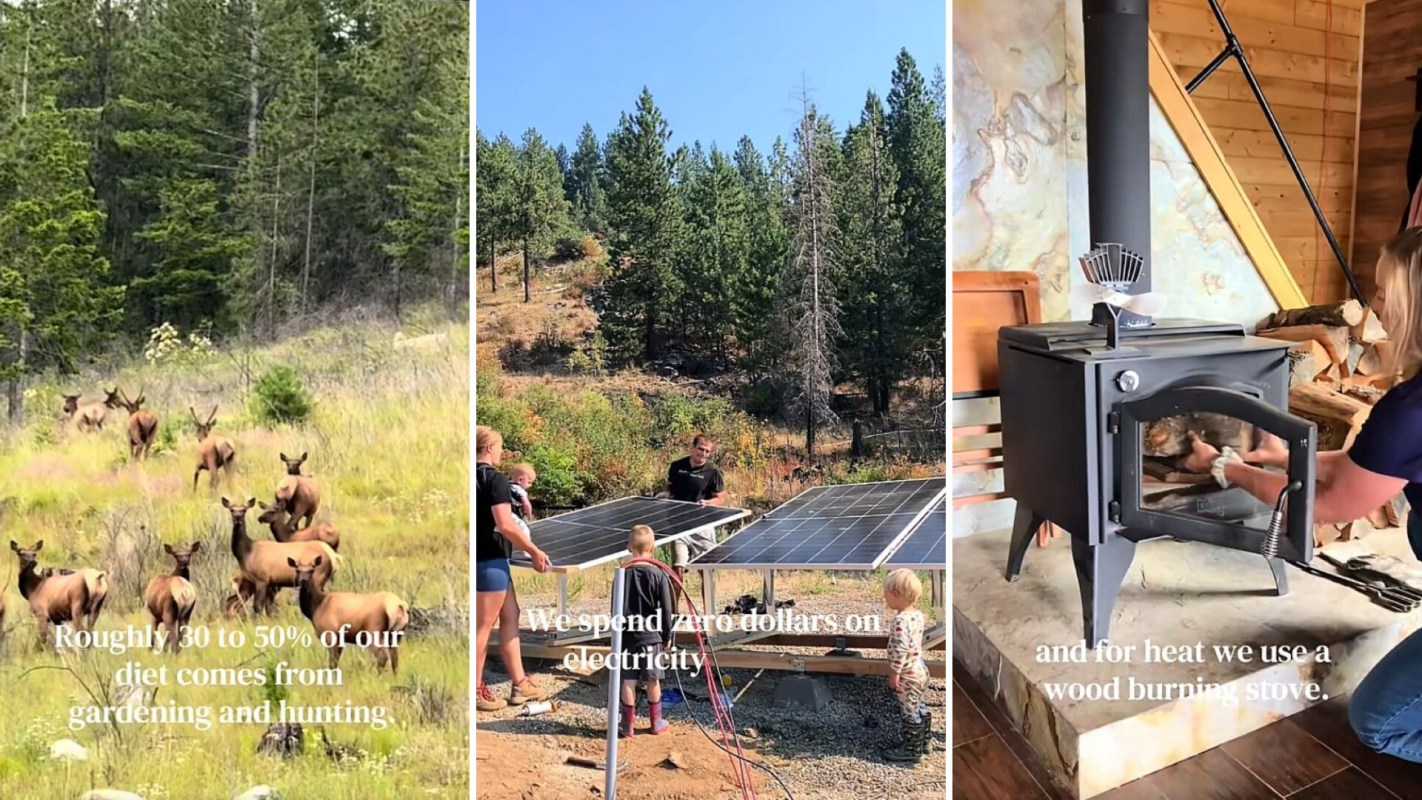
A family sharing its off-grid life on TikTok says about $400 of its monthly budget goes to projects, while its electricity, water, and heating and cooling costs are $0.
The family also said those low recurring bills come only after major upfront costs and with tradeoffs.
Here's what to know
According to a TikTok post, a North Carolina couple named Brock and Anna (@wildnorthfamily), who live off-grid in the Rocky Mountains, budget about $35 a month for homeschooling materials and about $50 a month for property taxes. The family said "building supplies" are its biggest recurring expense and that it sets aside roughly $400 each month for projects.
@wildnorthfamily This is how much we spend per month living Off Grid. There is definitely an initial up front cost of buying land, potentially a living structure or building, and establishing off grid systems. We've grown our systems a little at a time and our allocated budget for projects every month now is about $400. Month to month off grid living is extremely affordable. But the lifestyle — spending all day together working as a family, raising our kids in the beautiful wild north and finding more independence and freedom is worth any cost. #offgridlife #offgridliving #homestead #family #priceless ♬ original sound - wildnorthfamily
For heating and cooling, the couple said they spend "zero dollars a month to heat and cool our home" because the home has no air conditioning and is heated with a wood-burning stove. The family also said it spends "zero dollars on electricity because we installed our own solar array" and "zero dollars on water because we have a rainwater system."
The family said food costs are lower because gardening and hunting currently supply about 30% to 50% of what it eats, and it hopes to increase that share to 80%.
Some viewers were skeptical of the breakdown. One commenter wrote, "You didn't mention gasoline for your vehicle and chainsaw. I burn wood as well, and I know it's not free."
TCD Picks » Quince Spotlight
💡These best-sellers from Quince deliver affordable, sustainable luxury for all




More background
In the caption, Brock and Anna said the low monthly costs came from gradual setup rather than something achieved immediately. The family wrote that there is "definitely an initial up front cost of buying land, potentially a living structure or building, and establishing off grid systems," and that they expanded those systems "a little at a time."
For many households, going fully off-grid would be unrealistic because of land prices, local regulations, climate, financing, and the work required to maintain systems such as solar panels, water collection, food production, and home heating. Even in this example, the comments raised additional costs and systems not addressed in the video, including gasoline and wastewater.
A separate commenter highlighted another practical issue that was not addressed in the video, asking, "what about waste water? x."
What can be done?
Installing rooftop solar, improving insulation, sealing air leaks, and switching to more efficient appliances can all reduce monthly utility costs without requiring a complete lifestyle overhaul. Growing even a portion of your own produce can also help offset grocery spending, especially for herbs, greens, and seasonal vegetables.
Rain barrels, low-flow fixtures, and drought-tolerant landscaping may help reduce water use where local laws allow them. Families hoping to lower child care or education costs may also find small opportunities for at-home learning or shared care, though those decisions depend heavily on work schedules and personal circumstances.
As the caption on their TikTok post put it, "Month to month off grid living is extremely affordable." The caption added, "But the lifestyle — spending all day together working as a family, raising our kids in the beautiful wild north and finding more independence and freedom is worth any cost."
Where can I learn more?
These stories look at how other homeowners are chasing some of the same goals Brock and Anna described: lower bills and more independence. They also show the range of ways people try to get there, from full off-grid setups to smaller energy upgrades that can chip away at monthly costs.
• In Tennessee, one homeowner said he went off-grid with almost no money while building a self-sufficient life.
• One homeowner said they ditched their city's power grid and took greater control of rising utility costs.
• Homeowners adding rooftop panels found that a $0 energy bill could become a realistic outcome in some cases.

Get TCD's free newsletters for easy tips, smart advice, and a chance to earn $5,000 toward home upgrades. To see more stories like this one, change your Google preferences here.






