


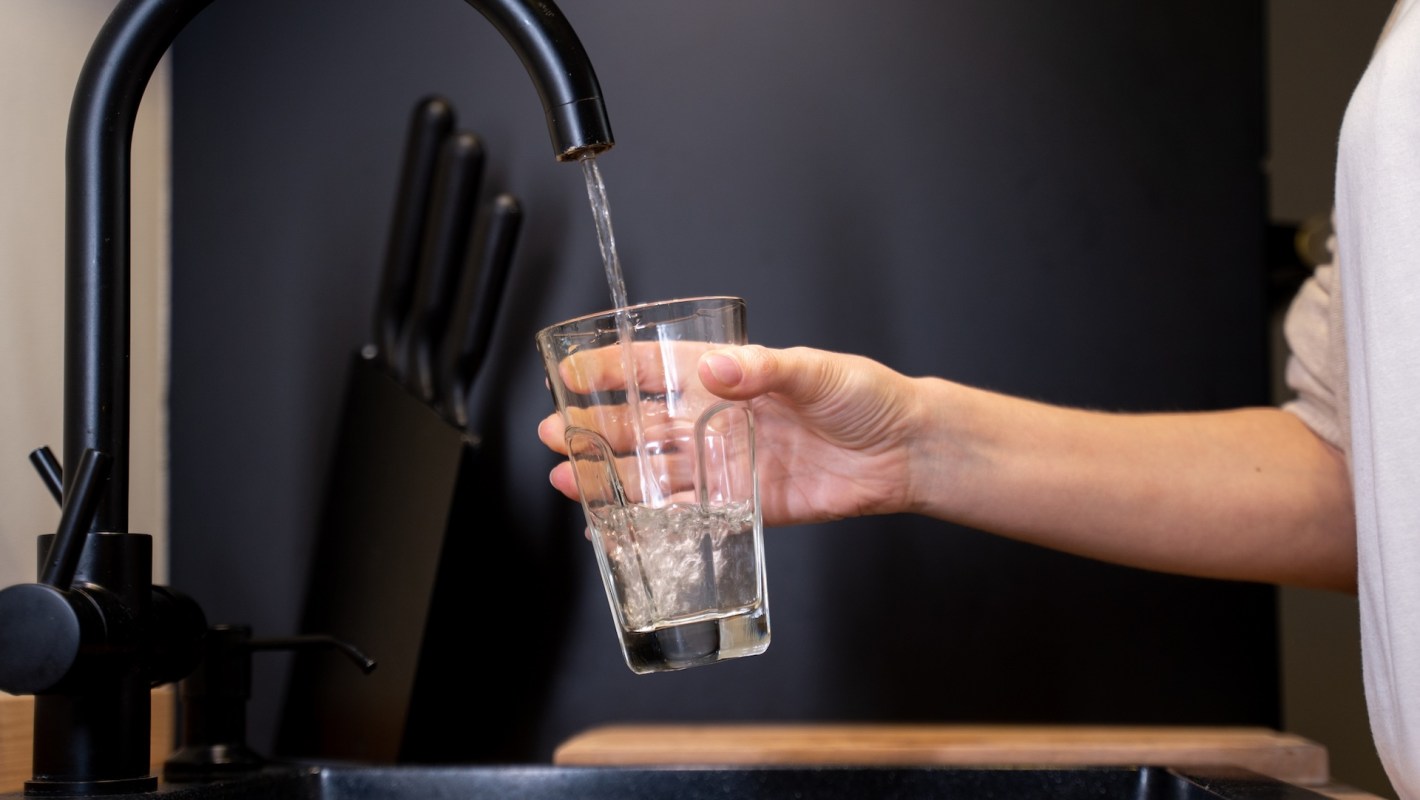
As you fill a glass with water, you expect nothing but refreshment. But beneath the surface, an invisible, cancer-linked contaminant may be lurking.
More than 62 million Americans could be exposed to elevated nitrate levels in their drinking water, according to CNN.
What's happening?
A recent investigation by the Environmental Working Group found that roughly one in five people may be consuming tap water with concerning nitrate concentrations.
"Nitrate is a naturally occurring compound found throughout the environment," said Christopher Glen, vice president of public affairs at The Fertilizer Institute, per CNN. "While fertilizer is one source, others include organic matter mineralization, septic systems, urban stormwater, and atmospheric nitrogen deposition from industrial and vehicle emissions."
Because nitrates are colorless, odorless, and tasteless, they are nearly impossible to detect without proper testing.
Federal safety standards, set in 1962, cap nitrate concentrations at 10 milligrams per liter. But newer research suggests potential health risks at much lower concentrations, as low as 2 to 5 milligrams per liter.
TCD Picks » Quince Spotlight
💡These best-sellers from Quince deliver affordable, sustainable luxury for all




Using nationwide data, researchers found more than 6,000 water systems exceeding 3 milligrams per liter, a level linked to increased risks of pediatric cancers and other health concerns.
"This is a first-of-its-kind map," report author Anne Schechinger said, per CNN. "No one has done this before."
Why is this concerning?
The highest nitrate levels are often found in groundwater, particularly in smaller communities that rely on wells.
However, the issue isn't limited to rural areas. Major cities such as Los Angeles, Phoenix, Philadelphia, and Las Vegas have also recorded elevated levels, showing how contamination can travel far downstream from its original source.
"Your water may come from a reservoir outside your major city, but the stream or the river that feeds that reservoir comes from miles and miles upstream where farms may be," Schechinger explained.
What's being done about it?
Public water systems that exceed federal limits are required to treat their supply, but the cost of upgrades often falls on residents.
At the household level, experts said one of the most effective solutions is a reverse osmosis filter at the kitchen tap, which can remove most nitrates from drinking water.
"It's a peace-of-mind issue," biologist and chemist Christopher Jones said, per CNN. "If you know the water coming out of your tap is above 3 milligrams per liter of nitrates and you want peace of mind, then I think a reverse osmosis system on the kitchen cold tap is advisable."
Experts also recommend staying informed by reviewing local water quality reports. Tools such as the Environmental Working Group's tap water database allow users to search by ZIP code to better understand what's in their water.

Get TCD's free newsletters for easy tips, smart advice, and a chance to earn $5,000 toward home upgrades. To see more stories like this one, change your Google preferences here.






