


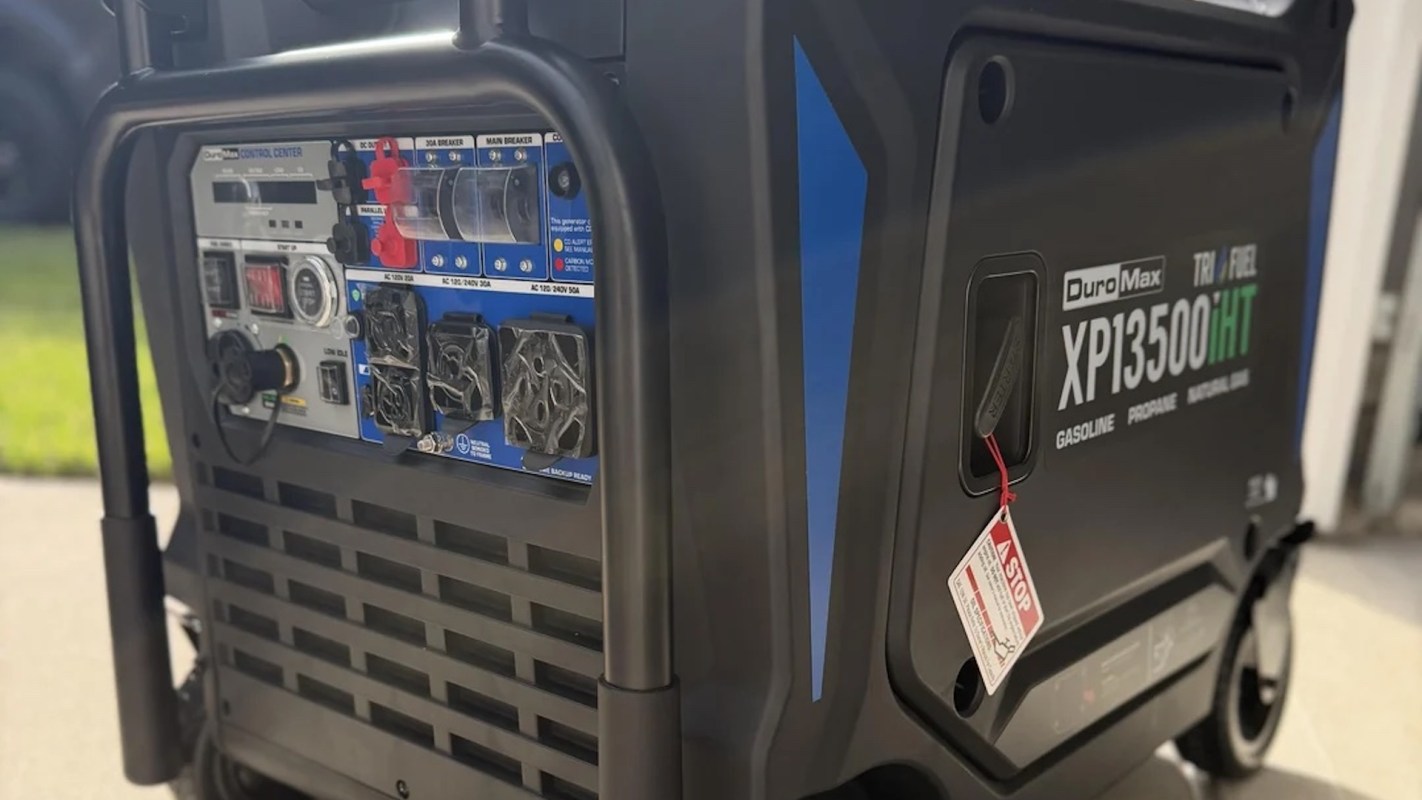
Testing a portable generator as a serious whole-home backup, a homeowner near Houston used a natural-gas-fed DuroMax XP13500 inverter model to power a 4-ton central AC system and pool pumps.
With those loads running, the unit showed roughly 5.6 kilowatts, and the user said the usual hum and light flicker experienced with open-frame Firman generators did not appear.
Here's what to know
The setup was described in a post on Reddit's r/Generator, where the owner said the XP13500 was tied into the house through a 50-amp inlet and supplied by natural gas through a 1/2-inch line.
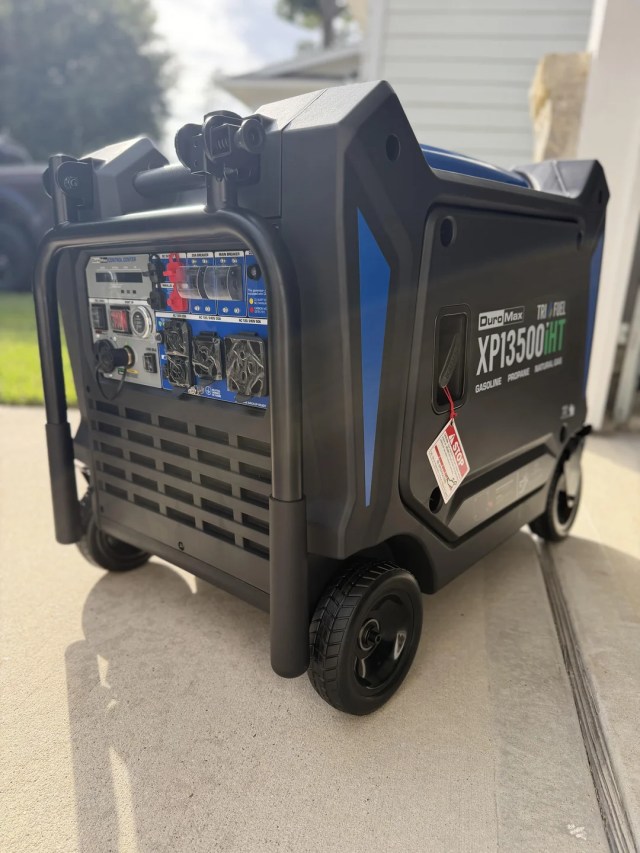
In that configuration, the generator carried a 4-ton variable-speed air-conditioning system, plus pool pumps, for a total of about 5.6 kW.
Asked whether the house connection was direct, the OP answered, "Yes, just plugged my home 50 amp into it."
That put the test well beyond basic emergency essentials, covering comfort-heavy loads during hot Texas weather.
TCD Picks » Quince Spotlight
💡These best-sellers from Quince deliver affordable, sustainable luxury for all




The owner also highlighted the built-in load readouts as a main selling point.
"I bought it mainly for the data. My other generators are open frames and don't give you load data so really like seeing that," the OP said.
Another user reacted, "Definitely need this setup in the Houston area!!!!" and referred to the home's "4 ton down + 3 ton up" air-conditioning arrangement.
More background
Unlike a standard open-frame generator, the XP13500 uses inverter technology.
According to the homeowner, lights that had buzzed or flickered on open-frame Firman machines stayed stable during this trial.
So in this test, the unit kept central air and pool equipment running while avoiding the unstable lighting and buzzing seen with the owner's other generators.
The unit ran on natural gas, not gasoline. The OP did not share fuel-cost figures, but the setup carried large household loads without the need to rotate gas cans during the test.
The homeowner also indicated the test is not finished.
The owner already has a soft-start device on the 3-ton system and said, "I think I can run both but didn't get a chance to try it. Will definitely try it at some point."
What can be done?
The post suggested a few practical ways to stretch a portable generator's capability during an outage.
One was using a 50-amp inlet, which lets the homeowner feed household loads more seamlessly than relying on extension cords.
A second takeaway was the value of a generator that shows live load information.
That display mattered to the buyer, who said the open-frame units already on hand did not provide the same data.
With that kind of feedback, an owner can better judge what a great demand such as air conditioning is actually drawing.
The homeowner said, "I have the AirGo G3 on my 3 ton. The 4 ton I ran in the video is a variable speed unit."
Compared with harder-starting compressor setups, both soft starts and variable-speed equipment can ease the initial power surge.
The homeowner also seems to be approaching the setup incrementally instead of assuming every major load will work together.
The 4-ton system has already been shown running, while the 3-ton unit was not tested in that run.
Where can I learn more?
For a broader look at backup power and high-demand cooling, these stories show how other homeowners are handling both. They also cover battery alternatives to generators, generator safety risks, and newer air-conditioning and heat-pump technologies.
• Across the U.S., homeowners are pairing rooftop solar with home backup batteries to ride out outages quietly.
• After Hurricane Beryl, Texas families were warned that generator carbon monoxide can turn storm recovery deadly.
• Engineers unveiled a complete rethinking of air conditioning that could slash long-term cooling costs.
• Across Europe, surging demand showed that heat pumps can cool homes as grids strain in heat waves.

Get TCD's free newsletters for easy tips, smart advice, and a chance to earn $5,000 toward home upgrades. To see more stories like this one, change your Google preferences here.






