


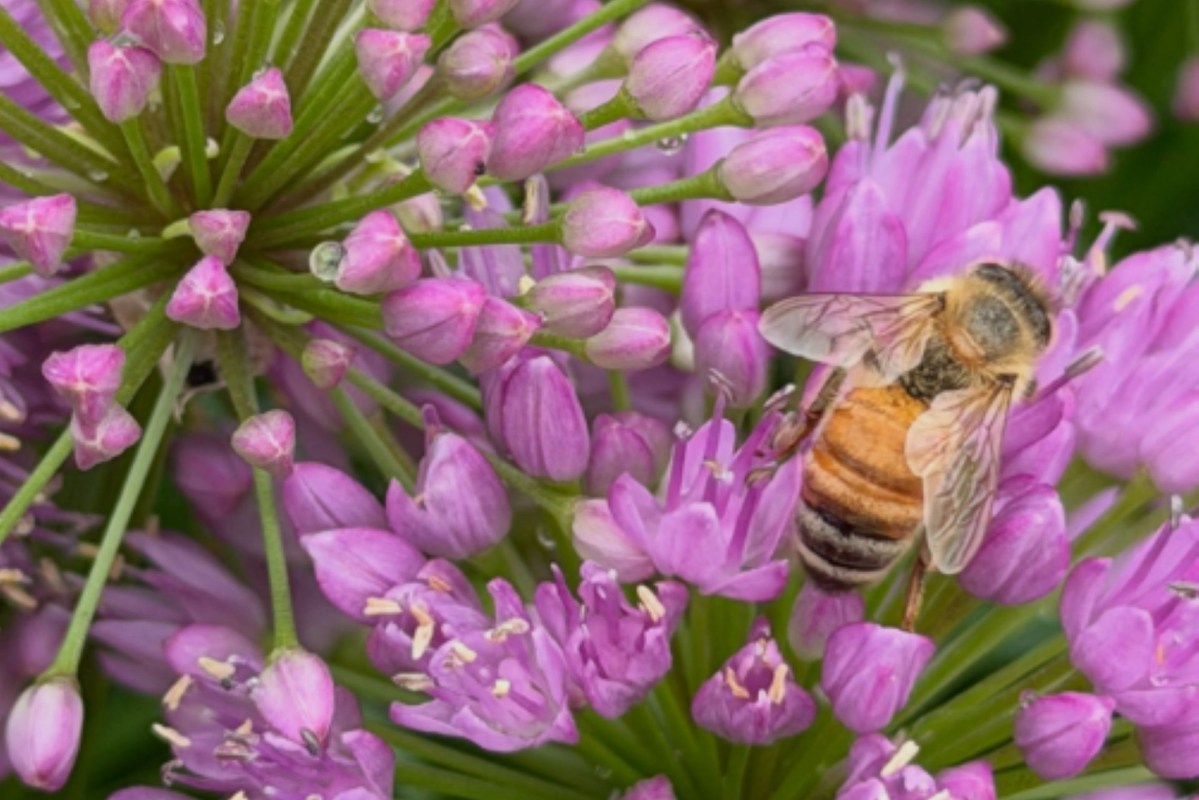
A gardener's enthusiastic recommendation for one bee-friendly perennial is resonating with fellow plant lovers.
What's happening?
For anyone looking to create a prettier, more productive garden, Millenium allium may be worth a closer look.
An Instagram post showed the picturesque scene of Millenium allium blooming around a garden fountain, and the creator (@figmentcottagegardens) called it "a perennial your garden can't live without."
The plant appears around a fountain the creator described as "a favorite watering hole for my bees." Among "so many different alliums: drumstick, giant, bubble bath, nodding, etc.," they said Millenium was "a standout."
They also suggested combining it with creeping Veronica, lambs ear, salvia, and lollipop verbena. Together, that mix can create a layered, visually rich display while also giving pollinators more reason to stop by.
The gardener praised Millenium allium for how it provides a safe haven for pollinators to enjoy, showcasing photos of these vibrant purple flowers with bees resting on them. They added that it gives bees "a safe and textural place to land for a snack and drink."
TCD Picks » Quince Spotlight
💡These best-sellers from Quince deliver affordable, sustainable luxury for all




Why does it matter?
Pollinator-friendly gardening can bring benefits that extend far beyond the flower bed. Bees and other pollinators help support the plants people rely on for food, including many fruits, vegetables, and herbs that thrive in home gardens.
A thoughtfully planted yard can help gardeners save money on produce, enjoy fresher and often better-tasting food, and cut down on trips to the grocery store. Even if a plant like Millenium allium is grown mostly for its vivid looks, the pollinators it attracts can still support nearby kitchen gardens and edible landscapes.
Gardening also offers personal benefits beyond the harvest. Spending time outdoors digging, watering, and tending plants can improve physical health through regular movement, while the routine and sensory experience of gardening may help reduce stress and support mental well-being.
A perennial can be especially appealing because it keeps coming back, producing blooms year after year without needing to replant every season. That can make it an easy choice for gardeners who want beauty, habitat value, and lower-maintenance landscaping.
What can I do?
If you want to make your yard more welcoming to bees, starting with long-blooming plants that offer easy access to nectar and pollen can be a smart first step. Grouping pollinator favorites together can make them easier for insects to find while also creating a stronger visual impact in the garden.
The content creator's setup offers another useful idea: adding a safe water source. A shallow fountain or dish with places to perch can help pollinators drink without struggling, especially during hot weather.
Gardeners can also build on that approach by mixing ornamental flowers with edible plants.
Choosing hardy perennials, reducing chemical use, and planting a variety of flowering species can all help create a healthier backyard ecosystem — one that supports pollinators while making gardening more rewarding for people, too.
One Instagram user wrote of Millenium allium, "A favorite this time of year. And the deer leave it alone!"

Get TCD's free newsletters for easy tips, smart advice, and a chance to earn $5,000 toward home upgrades. To see more stories like this one, change your Google preferences here.






