


A stubborn indoor temperature during a heat wave does not necessarily mean an air conditioner is broken.
In one conversation on the r/AirConditioners subreddit, a house was taking in heat and losing cooled air fast enough to keep the system from making progress.
Here's what to know
The thread began with a simple question about a unit: "Anyone know why it can't cool better?"
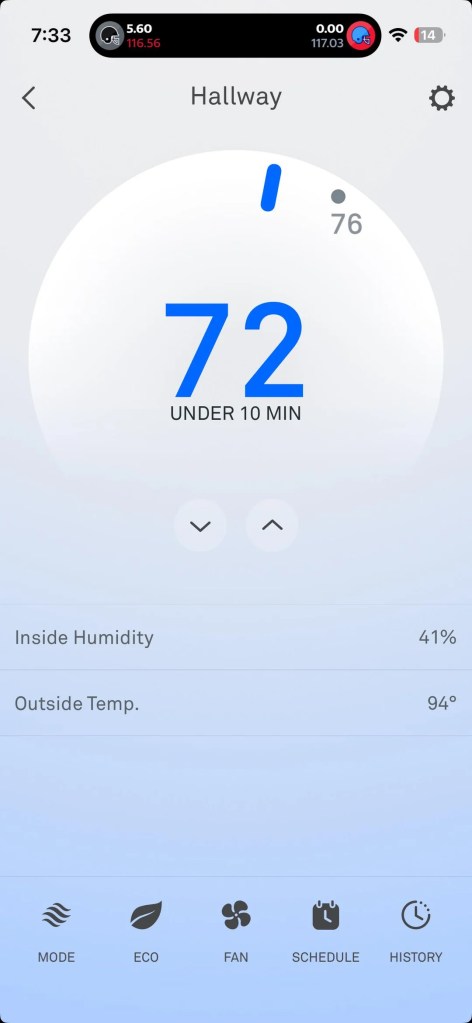
The original poster said the home would not get down to the temperature they set.
"I changed the filter," they said. "I don't have access to the HVAC as it's on the ceiling. I am renting the house I'm living in, and this happened last year too."
One commenter offered a straightforward explanation.
"Looking at your screenshot, you are trying to reach 72 when it is 94 outside," they wrote. "That 22-degree difference is likely the main reason your AC is struggling and running nonstop."
AC systems lower the temperature of the air moving through them in stages. How much that helps a room or whole house depends on whether the home can hold onto that cooled air.
Save $10,000 on solar panels without even sharing your phone number Want to go solar but not sure who to trust? EnergySage has your back with free and transparent quotes from fully vetted providers in your area. To get started, just answer a few questions about your home — no phone number required. Within a day or two, EnergySage will email you the best options for your needs, and their expert advisers can help you compare quotes and pick a winner. Solar panels can save you more than $50k over their 25-year lifespan, and EnergySage can help you save as much as $10k on installation. Which begs the question — isn't that worth an email or two? |

Upgrading your heating and cooling system can be one of the best ways to save money on utility bills and protect yourself against rising energy prices. For homeowners exploring next steps, Palmetto's Comfort Plan can help you find efficient heating and cooling solutions for your home and connect you with vetted installers.
More background
In old houses and rentals, poor insulation, leaky windows, heat from the roof, and even an attached garage can all make the inside hard to cool.
In explaining the problem, the aforementioned commenter contrasted efficient homes with leaky ones. In a tightly sealed, well-insulated house, cooled air stays inside. But in "older or under-insulated homes, heat radiates through the roof and walls while outdoor air leaks in."
Another poster agreed: "Yeah, you need good insulation and windows. Otherwise your AC is just cooling new hot air over and over."
Cooling costs can climb quickly when systems run without delivering comfort. It can also lead renters and homeowners to pay for unnecessary service calls.
What can be done?
Suggestions in the thread included using ceiling fans, keeping blackout curtains closed on windows that get direct sun, setting the thermostat a bit higher during the hottest part of the day, and asking a landlord or technician whether the outdoor condenser needs cleaning.
Those small fixes can help, but they have limits. If a home's insulation is poor or the equipment is outdated, a more efficient HVAC system or heat pump can make a major difference.
Palmetto is worth considering for homeowners who want to explore an upgrade through its Comfort Plan. If you're not prepared to spend up front, it features $0 down options that can cut cooling costs by up to 50% and offer 12 years of maintenance.
Homeowners can also pair solar panels with an efficient HVAC to drive utility costs even lower. EnergySage makes it easy to land the best solar installer and system for your budget and home, with savings of up to $10,000.
Where can I learn more?
AC maintenance, dry-mode settings, and heating habits can affect energy bills.
• A homeowner on TikTok showed how a simple drain-line change can boost AC efficiency.
• Another homeowner found cleaning their air-conditioning unit cut energy waste and improved cooling fast.
• A sustainability expert said using dry mode all summer trimmed cooling costs in warm months.

Get TCD's free newsletters for easy tips, smart advice, and a chance to earn $5,000 toward home upgrades. To see more stories like this one, change your Google preferences here.






