


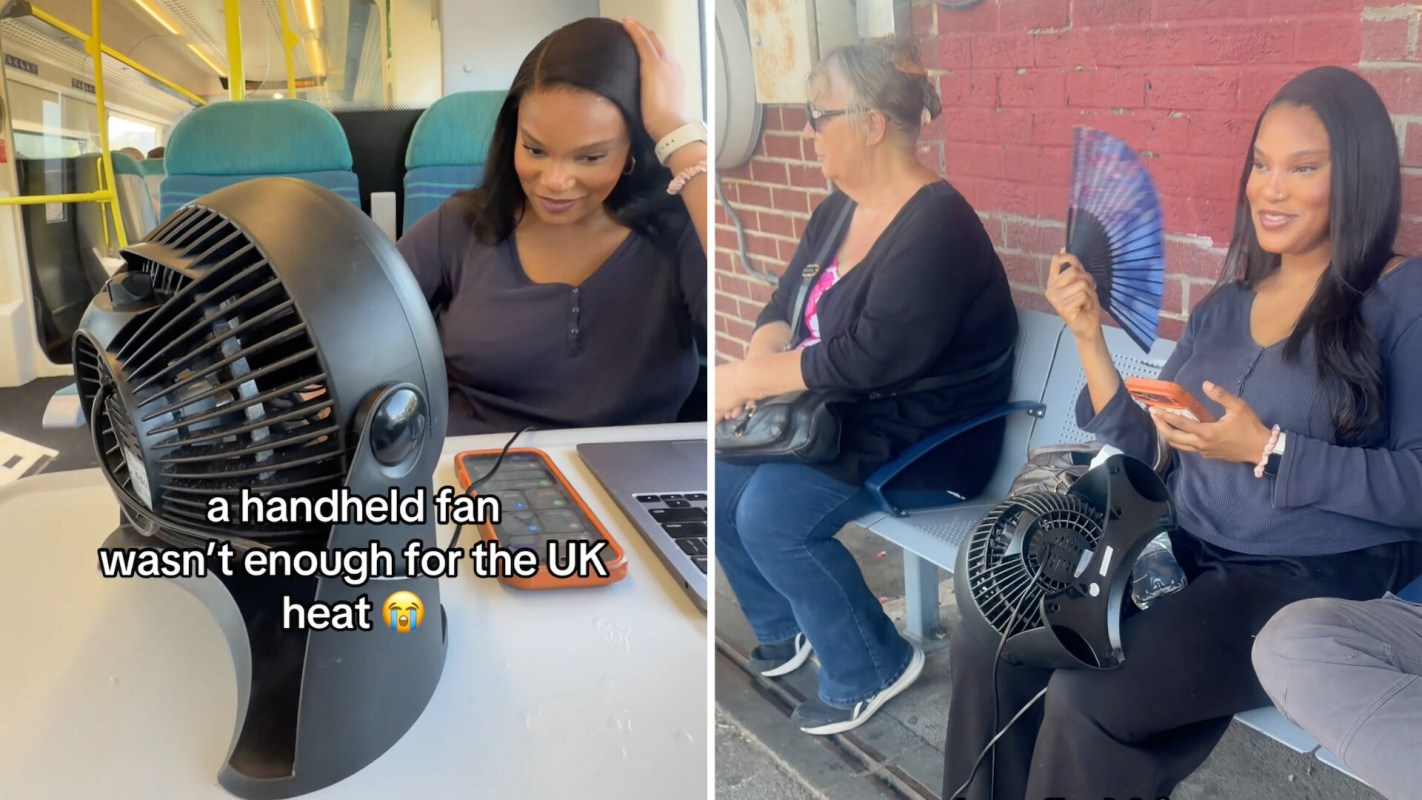
London's latest heat wave has turned one everyday survival tactic into a viral hack, with one woman showing off her improvised, DIY cooling setup.
Instead of featuring an expensive appliance, the video spotlights a simple fix aimed at fast relief.
What's happening?
Posted on July 31, the original poster, destdol (@destdol), wrote, "a handheld fan wasn't enough for the UK heat," before showing the woman's dual-fan system.
They added, "it's lowkey kinda genius."
@destdol It's lowkey kinda genius😂😂 @tolsfeso #londonheat #heatwave ♬ suara asli - SOUND MEME VIRAL
The video then showed a woman bringing a small corded fan around with her, positioning it so that it could work in conjunction with her handheld one.
Commenters were quick to applaud the ingenuity, with one writing, "I'm here for it because this heat is not playing."
TCD Picks » Quince Spotlight
💡These best-sellers from Quince deliver affordable, sustainable luxury for all




Another wrote, "Yes my sister, [this] is a necessity."
Why does it matter?
When temperatures spike, staying comfortable can quickly become a health issue, not just an inconvenience. Overheated indoor spaces can make it harder to sleep, work, and recover, especially for older adults, children, and anyone with underlying health concerns.
But not everyone can afford an air-conditioning unit, and even portable options can be expensive to run.
At the same time, viral hacks underscore how unprepared many buildings and people still are for extreme heat. Homes designed to retain warmth during cooler months can become uncomfortable during summer surges, pushing residents to get creative.
Even if a social media trick looks smart, though, it works best as a supplement to basic heat safety, not a replacement for it.
What can I do?
If you are dealing with very hot weather, the most practical steps are often the simplest. Keep curtains or blinds closed during the hottest part of the day, drink water regularly, and avoid using ovens or other heat-generating appliances when possible.
Fans can and do help, especially when paired with cooler nighttime air, but they may be less effective when temperatures become extreme. Lightweight clothing, cool showers, and shaded rooms can also make a real difference in day-to-day comfort.
Check on neighbors, relatives, or friends who may be more vulnerable to heat. And if you notice signs of heat exhaustion, such as dizziness, heavy sweating, weakness, or nausea, it is important to cool down quickly and seek medical advice if symptoms worsen.

Get TCD's free newsletters for easy tips, smart advice, and a chance to earn $5,000 toward home upgrades. To see more stories like this one, change your Google preferences here.






