


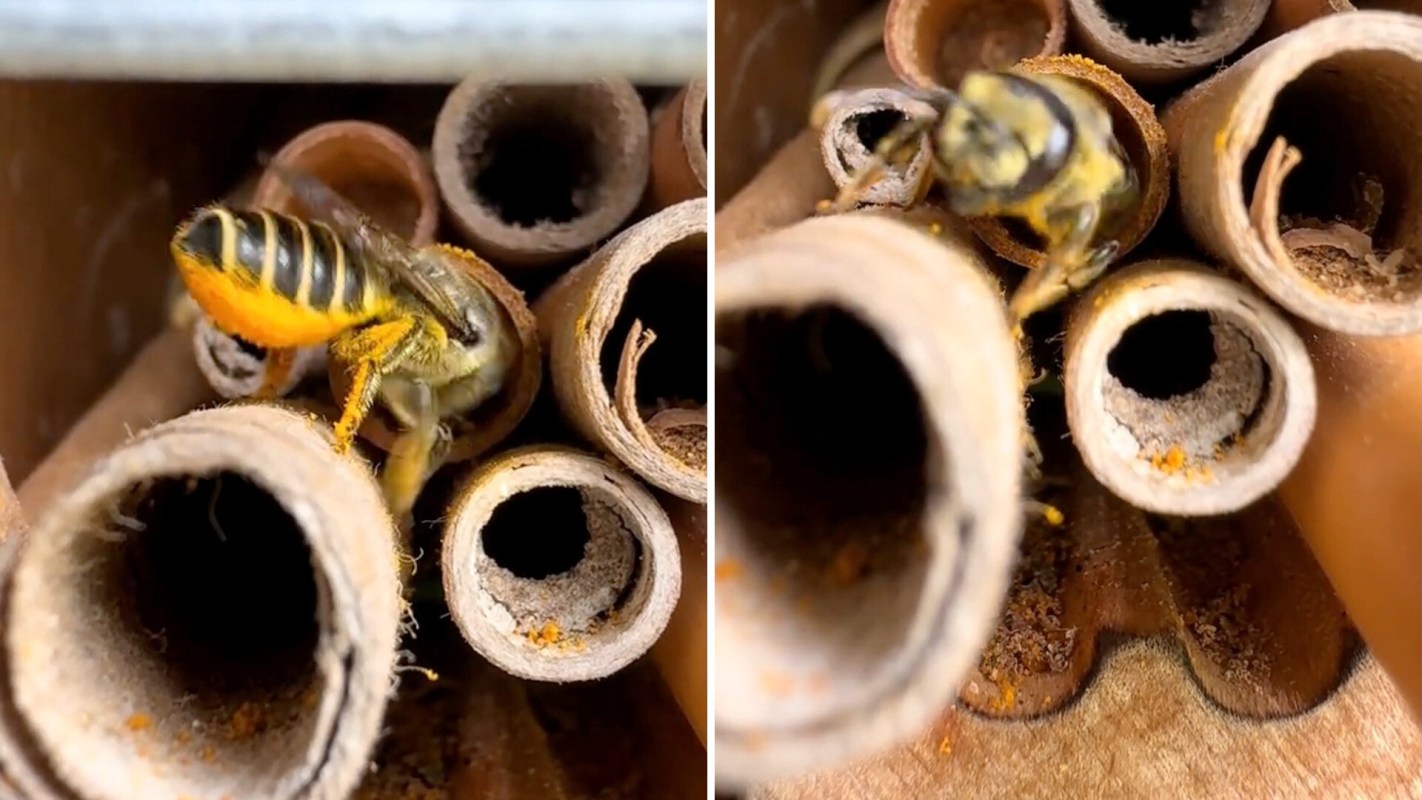
Texas gardeners who notice neat, round holes in their plants' leaves may be seeing something less alarming than it appears. A recent TikTok suggests the unusually tidy damage can actually point to a helpful presence in the garden.
Instead of signaling a destructive outbreak, those marks may come from a small native pollinator collecting material for its nest.
What's happening?
According to garden creator Bury Me In Dirt (@dirtyironbotanicals), leafcutter bees are often responsible for the clean circular pieces missing from garden leaves, as noted in the video's caption.
The creator described them as "one of Texas' hardest-working pollinators" and explained that the insects "don't damage plants for fun — they carefully cut pieces of leaves to build nurseries for their babies."
The caption also reassured viewers that "Unlike honey bees, leafcutter bees are solitary, gentle, and rarely sting." They do not live in hives; instead, each bee works alone and uses bits of leaf to line chambers for eggs.
@dirtyironbotanicals 🐝✂️ Meet one of Texas' hardest-working pollinators: the leafcutter bee! These tiny bees don't damage plants for fun—they carefully cut pieces of leaves to build nurseries for their babies. Unlike honey bees, leafcutter bees are solitary, gentle, and rarely sting. The best part? They're incredible pollinators. Many native Texas wildflowers, vegetables, and fruiting plants benefit from their work. If you see perfectly round circles cut from your leaves, don't panic—you've likely got a healthy pollinator population in your garden. A few missing leaf pieces are a small price to pay for a thriving ecosystem. 🌼🌿 Leave the leaves. Support the bees. Grow more life. #LeafcutterBee #TexasPollinators #NativeBees #PollinatorGarden #TexasGardening ♬ original sound - banned_shannon
The video shows a leafcutter bee climbing in and out of a small tube, covered in pollen. "Leafcutter bees are so fun to watch," they wrote. At the end of the video, the bee emerges from the tube one more time, this time without all the pollen. "Look how clean she is when she comes out," they added.
TCD Picks » Quince Spotlight
💡These best-sellers from Quince deliver affordable, sustainable luxury for all




Why does it matter?
For people growing flowers, herbs, or vegetables at home, unexpected leaf damage can feel like a threat to the entire garden. After investing time and money into plants, it is easy to worry about any visible change.
But not every bite mark means a garden is under attack. In this case, reacting too quickly could disrupt a pollinator that helps plants reproduce and supports a healthier backyard ecosystem.
Home gardening comes with real benefits. Growing food at home can help reduce grocery costs, and produce harvested straight from the yard often tastes better than food that has traveled through stores and supply chains. Gardening can also support mental and physical health by getting people outdoors and providing a calming, hands-on routine.
A thriving garden is not always a spotless one. Sometimes a little imperfection is evidence that nature is doing exactly what it is supposed to do.
What can I do?
If you notice smooth circular cuts in leaves, resist the urge to immediately spray or remove the plant. First, check whether the plant is otherwise healthy and whether the damage appears limited. A better approach is to learn which insects are actually harmful and which are helpful.
It can also help to grow a variety of plants and create a yard that supports pollinators. A few clipped leaves may be a small tradeoff if the result is stronger pollination and a more resilient garden overall.
As the creator put it, "If you see perfectly round circles cut from your leaves, don't panic — you've likely got a healthy pollinator population in your garden. Leave the leaves. Support the bees. Grow more life."

Get TCD's free newsletters for easy tips, smart advice, and a chance to earn $5,000 toward home upgrades. To see more stories like this one, change your Google preferences here.






