


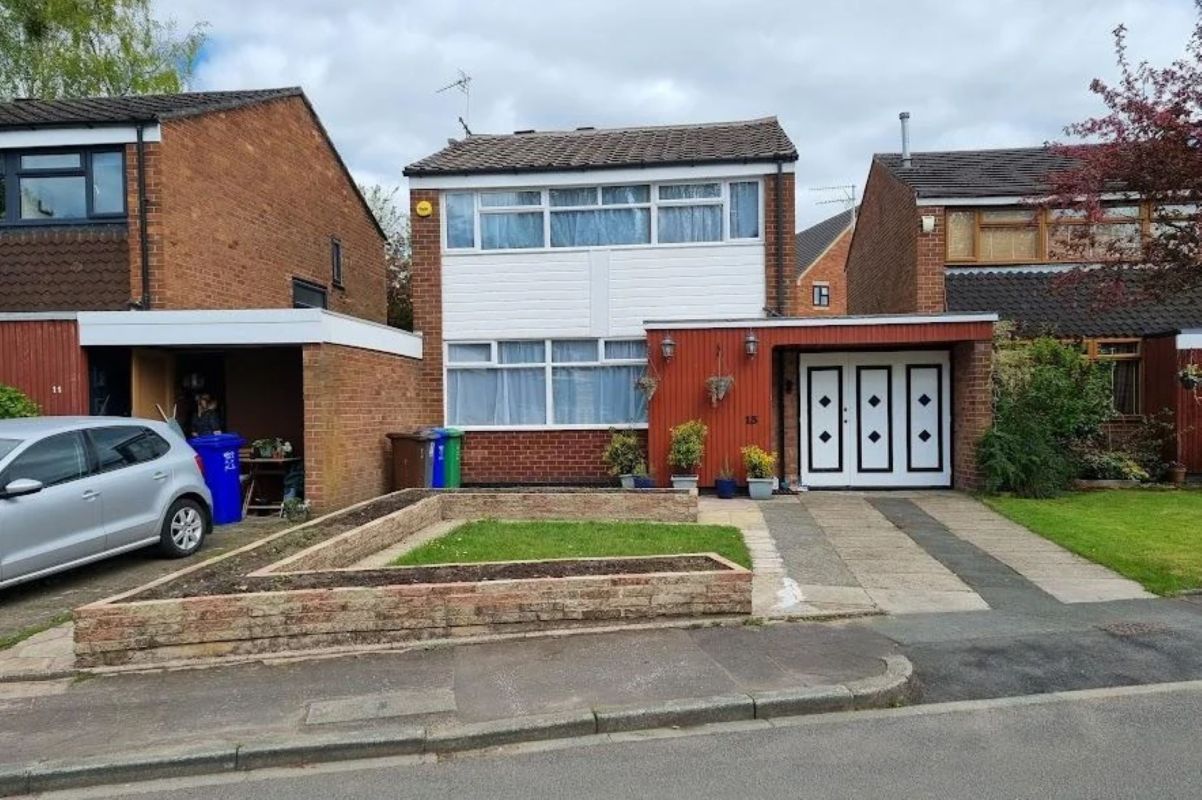
In the r/NoLawns subreddit, a forum dedicated to lawn alternatives for replacing monoculture lawns, one homeowner shared their one-year progress of replacing their front yard with an assortment of native plants in a xeriscape design.
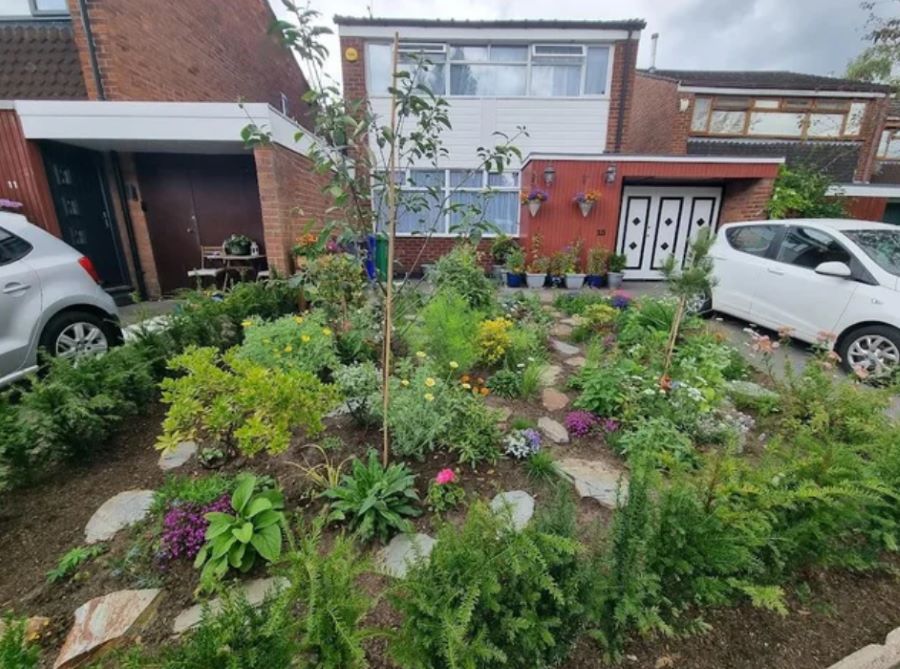
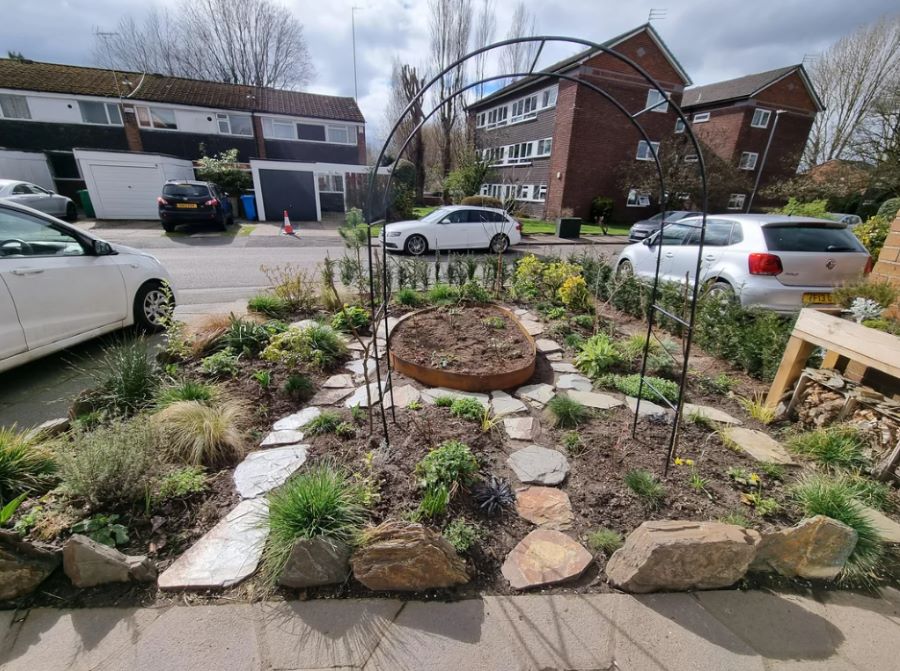
"It has been 1 year now since I removed the lawn from our front garden. I wanted to share some progress pictures in case it is helpful for others," the original poster wrote, attaching pictures of their garden over the past year.
The OP showed the original lawn that had accompanied their house in the UK when they first bought the property — a smaller patch of monoculture lawn bordered by a strip of raised garden beds.
The OP began the destruction and reconstruction project by digging up the old lawn and stripping it of all the old concrete and grass, which were disposed of in the trash.
With a bare yard of poor-drainage clay dirt, the OP began to design a xeriscape landscape, or landscaping that requires little to no added water, with slate rocks, gravel, and drought-resistant plants.
The OP planted some of the original plants that came with the old lawn, and filled in the remaining space with rocks and other drought-tolerant plants. They placed Yew shrubs along the boundary, installing in-ground plastic drainage pipes along the shrubs to help redirect runoff water from the hardened clay.
"By June everything was looking very green!" the OP described, showing a picture of their lawn with the plants grown in, filling in the previously barren yard with a unique plot of land, featuring a multitude of colors, textures, and rock faces.
"Absolutely no regrets about losing the lawn," the OP wrote.
Most American lawns feature a single species of grass, and it tends to be an invasive species, such as Kentucky bluegrass.
Invasive plant species grow at a much more rapid pace than native plant species due to the lack of natural predators, allowing them to outcompete native ones for resources like nutrients and water. It explains why most lawns grow so quickly, requiring homeowners to mow their lawns more frequently.
TCD Picks » Upway Spotlight
💡Upway makes it easy to find discounts of up to 60% on premium e-bike brands





|
How much time do you spend taking care of the plants inside or outside your home? Click your choice to see results and speak your mind. |
 Several hours a week 🧑🌾
 Xeriscape lawns generally require no mowing and require little to no added water on behalf of the homeowner. Consisting of drought-tolerant, native plants, which have deep root systems to help the plants access water, xeriscape lawns can save homeowners time and money on lawn maintenance and water bills.
Native lawns also attract friendly pollinators to your yard, providing them a healthier ecosystem of native plants for food, which in turn helps protect the human food supply.
If you still prefer a turf-like lawn, clover and buffalo grass are alternative lawn replacement options that can also save you time and money on yard work and water bills. Upgrading your lawn with even a partial lawn replacement will yield you savings on time, money, and precious energy.
"Nice work!!! I'm excited to start my blank canvas here soon," one commenter shared.
"That is absolutely lovely," another commenter admired.
"What a transformation!" a third user said.

Join our free newsletter for easy tips to save more and waste less, and don't miss this cool list of easy ways to help yourself while helping the planet.
Cool Picks






