


One homeowner took to social media to seek advice on managing landscaping issues near a dead apple tree.
In a post to the r/arborists subreddit, they shared several photos of the situation. After discovering their apple tree had died, the homeowner wondered how to remove it without damaging a nearby oak tree.
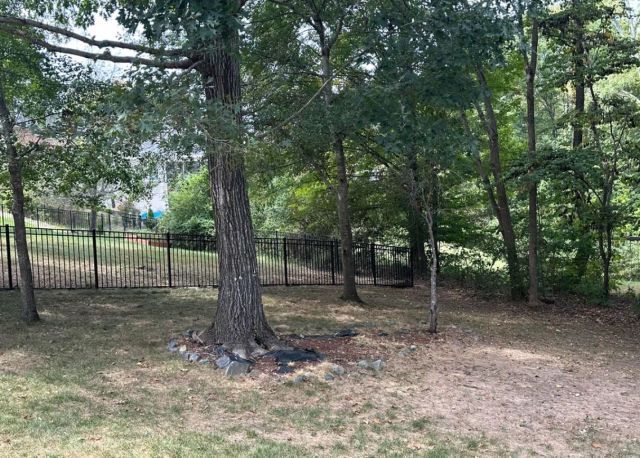
The OP wrote that the previous homeowner used landscape fabric, mulch, and a rock border around the trees, as seen in the photos. The user wanted to hire a company to address these issues and the dead tree.
"The idea would be to then plant grass up to the trunk of the oak, or go for a lower impact mulch bed," the poster wrote. "Is that a good choice for the tree's health?"
Finally, the user wondered if they should hire an arborist or if a landscaper would be able to get the job done.
Fixing landscaping mistakes by previous homeowners — from eliminating overgrown mint to removing rubber mulch — may take time, but it's worth it in the long run. One of the major issues the poster faced was not so much the dead tree but the landscape fabric.
TCD Picks » Quince Spotlight
💡These best-sellers from Quince deliver affordable, sustainable luxury for all




Unfortunately, weed barriers can cause more harm than good. According to the University of Illinois Extension, the fabric can prevent water from reaching the soil, weeds can grow through it, and it degrades quickly.
Of course, each of these issues not only affects your trees, shrubs, or plants but also makes the money you spent worthless.
Instead of using weed fabric, you can opt for natural materials. For example, the Piedmont Master Gardeners suggest using pine needles, shredded leaves, or straw as alternatives to fabric and traditional mulches.
That said, you don't need to use mulch if you don't want to. Surrounding your trees with native plants or ground covers can attract pollinators — which help protect our food supply — and they require little to no maintenance (saving you time and money), per Sustainable Saratoga.
|
What's the hardest thing about taking care of your yard? Click your choice to see results and speak your mind. |
 Mowing the lawn 🏡
 Native plants also don't need as much water as nonnative plants, adding to the financial savings they offer. Native plant gardens, buffalo grass, and xeriscaping are all options that help homeowners save money instead of waste it on harmful materials such as landscaping fabric.
Commenters helped the poster by offering advice.
"Get that weed fabric out of the ground," one person wrote. "It degrades to microplastic and is poisoning your own land. And never use it again. It even looks ugly."
Another person made a suggestion for dealing with the apple tree: "Just leave the old stump. It'll come out naturally in a few years anyway. Lot cheaper for you too."
A third person echoed that sentiment, stating: "Stumps rot out in 1-3 years even if you do nothing to them. They will provide good habitat for beneficial insects and fungi."

Join our free newsletter for easy tips to save more and waste less, and don't miss this cool list of easy ways to help yourself while helping the planet.






