


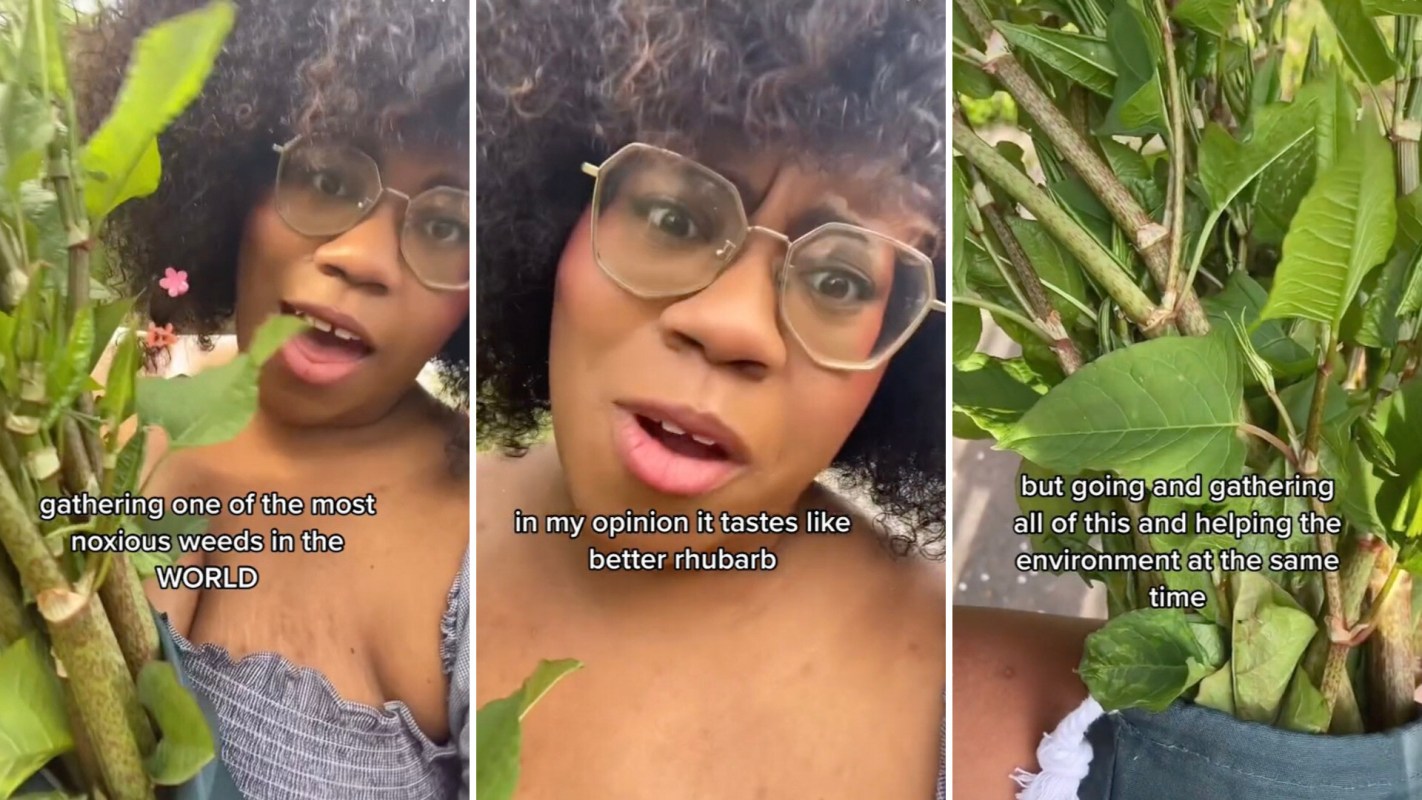
Japanese knotweed has been a significant problem for gardeners in many parts of the world. The invasive species grows quickly and abundantly and kills off native plants by depriving them of water, nutrients, and sunlight.
But one keen forager noted that there's a tasty use for this troublesome weed.
The scoop
Alexis Nikole (@alexisnikole) on TikTok demonstrated that knotweed is not only satisfying to pick — creating a fun popping noise — but that it's also edible and delicious.
@alexisnikole EAT YOUR WEEDS: KNOTWEED EDITION ✨ Reynoutria japonica is AGGRESSIVE, but coming through and collecting shoots this time of year helps keep it at bay!! I ate the knotweed growing under our last place to extinction (i really REALLY love the flavor 😅) so i know it can be done!
♬ original sound - Alexis Nikole
"Knotweed is one of the hardest plants to kill, but thankfully, it's also delicious," she told her over 4 million followers. "In my opinion, it tastes like better rhubarb."
While getting rid of it can be tricky, Alexis noted that collecting shoots in the spring months will at least keep the weeds at bay.
"I ate the knotweed growing under our last place to extinction (I really REALLY love the flavor) so I know it can be done!" she added.
TCD Picks » Quince Spotlight
💡These best-sellers from Quince deliver affordable, sustainable luxury for all




How it's helping
According to the U.S. Department of Agriculture, Japanese knotweed — also known as fleeceflower, Mexican bamboo, and huzhang — is native to Asia and was introduced to the United States in the late 1800s.
As Canada's Invasive Species Center noted, it aggressively outcompetes native plants, and it can negatively impact wetland and riparian (river-based) habitats. It can cause significant ecosystem damage and decrease biodiversity, affecting mammal, amphibian, reptile, and bird populations.
🗣️ How often will you be gardening this summer?
🔘 Every day 🥗
🔘 At least once a week 🥕
🔘 At least once a month 🌱
🔘 I don't garden 🚫
🗳️ Click your choice to see results and speak your mind
By helping to limit the spread of knotweed, Alexis is helping her local ecosystem thrive while saving money on grocery bills by adding the weed to her diet.
What's more, Alexis noted that picking the knotweed provided a little mental health boost that day. Working with plants outdoors has been proved to reduce stress, so it's no wonder she felt great after gathering in the haul.
What people are saying
TikTokers were amazed that the plant is edible and praised Alexis for her resourcefulness.
"I have been fighting this stuff in my yard for years!" one user said. "Now that I know I can do something with it I'm excited."
Those sentiments were shared by another user, who seemed keen to get to work in the kitchen with the surprisingly tasty weed.
"Better rhubarb? Time to make a pie!" they said.
However, one TikToker had some helpful advice for anyone looking to take advantage of the fast-growing plant.
"Be careful with your harvest though, dropped pieces can make new plants and spread the problem," they observed.
"Great warning!" Alexis replied. "Please, everyone, do not drop knotweed!"

Join our free newsletter for easy tips to save more, waste less, and help yourself while helping the planet.






