


It's a fierce battle that has played out in many backyard arenas: the match between a determined invasive plant and an even more determined gardener.
In this case, one gardener posted updates on the subreddit r/NativePlantGardening, asking for advice on how to clinch a final victory.

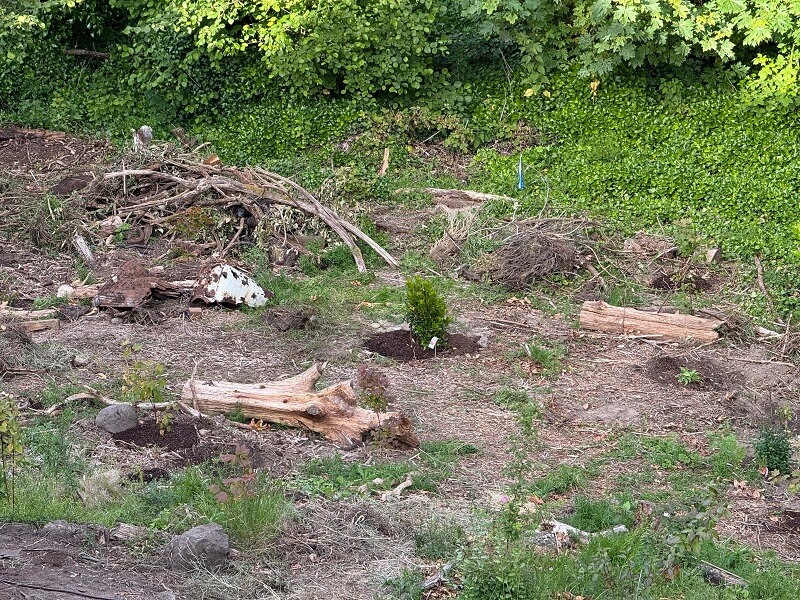
"Year 3 of a PNW invasive removal and native plant restoration project," they wrote. "[Approximately] 10,000 sq. ft ... This entire area started as a delightful mix of japanese knotweed, black locust, poison hemlock, himalayan blackberries, bindweed, and english ivy. Happy to say all of the above is nearly eradicated, except for the massive clusters of english ivy on the back 1/3 of the lot."
In the photos, enormous ivy mats can be seen scaling the trees in what resembles a green wall.
"[I'm] not sure how to deal with these mats," the OP wrote. "My goal is to replace this patch with native trees (vine maple) and shrubs, so I want to make sure I don't do anything chemically that messes up my future native plants. Any tips on how to approach removal to prepping this area for planting?"
One person had a simple answer: "Get a pitchfork and some gloves and start pulling," they wrote.
TCD Picks » Quince Spotlight
💡These best-sellers from Quince deliver affordable, sustainable luxury for all




Another commenter jumped in with more detailed thoughts. "English Ivy pretty much demands meticulous hand clearing. Best practice is to mostly just use gloves and hand pull," they explained. "Supplement with clippers and a spot application of herbicide on vines that are too woody and deep to practically remove by hand. Combing back through a month later will pretty much guarantee a near complete eradication."
While the masses of leaves might look pretty at first glance, English ivy isn't just a pain for homeowners — it's generally a fatal neighbor to native plants.
"This ivy climbs up trees, attaching itself tightly to the bark," Conserving Carolina reported. "This tight squeeze reduces the tree's ability to transfer nutrients, continue outward growth, and adds immense amounts of weight onto the tree, increasing fungus and decay, and ultimately killing trees over time."
For homeowners like this one, it's even more frustrating to have had no choice in the matter. Fortunately, with methods including the ones suggested above — or other nontoxic approaches, such as using zero herbicides and drying out cuttings so they can't regrow — you can win the fight against invasives and achieve a beautiful, rewilded yard full of native plants.
By removing invasive plants like English ivy and opting for a native-planted lawn or other alternatives such as clover, buffalo grass, and xeriscaping, homeowners not only alleviate the headaches associated with invasive species but also enjoy lower maintenance costs, reduced water consumption, and a vibrant ecosystem that supports pollinators.

Join our free newsletter for easy tips to save more, waste less, and help yourself while helping the planet.






