


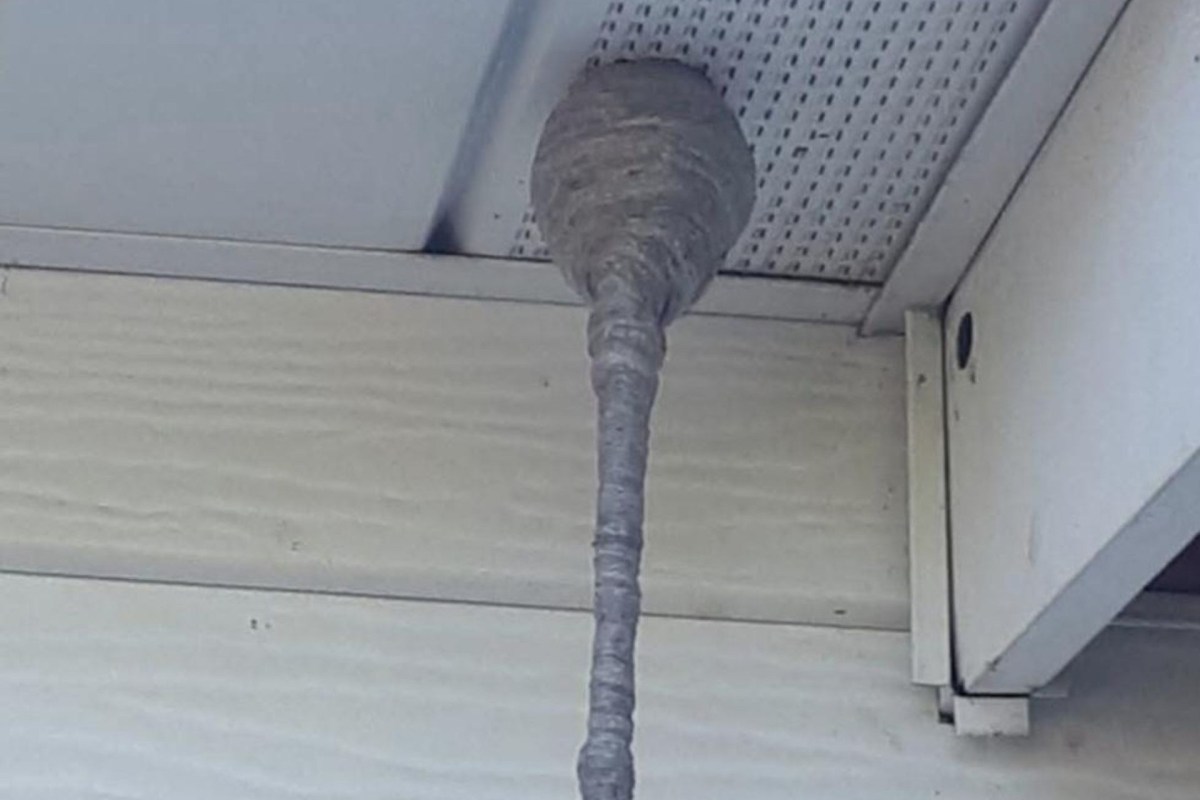
A strange paper-like tube hanging beneath a home's eaves sent one homeowner looking for answers after returning from a few weeks away. What appeared almost alien turned out to be something much more familiar — and potentially far more dangerous.
What happened?
The mystery in a Reddit thread was pretty quickly resolved when commenters identified the structure as a bald-faced hornet nest. In the submission, which drew over 680 comments, the original poster wrote, "Found this under my eaves after being away for a few weeks. Never seen anything remotely like it before."
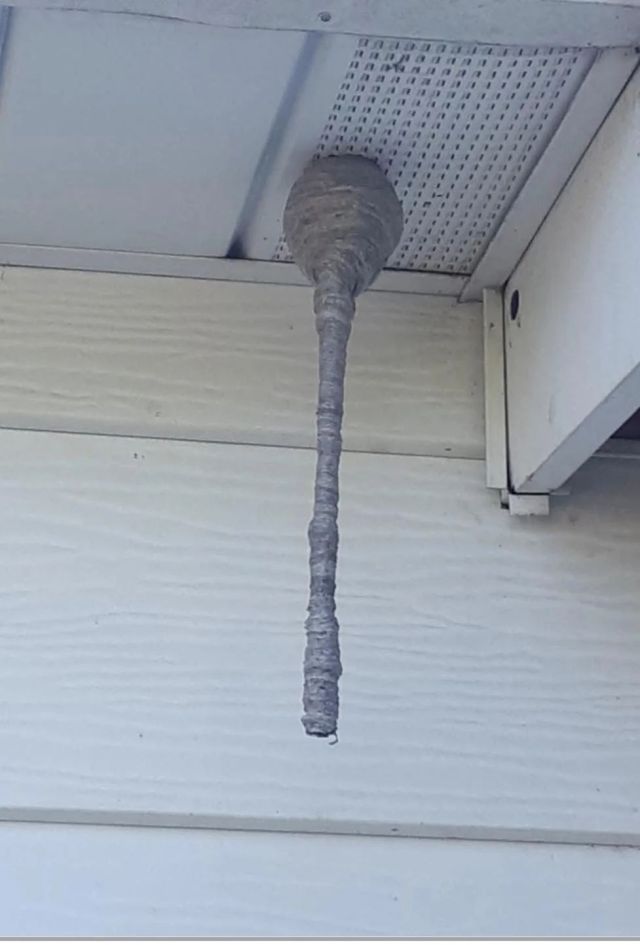
Bald-faced hornets can become highly defensive if a nest is allowed to grow undisturbed near a home. Acting early can make a major difference when stinging insects build in places people use every day.
Afterward, the original poster described how the situation was handled: "My wife saw a huge black and white hornet about to go in so she nailed it with wasp killer, then sent a whole bunch up the tube and booked it."
Why does it matter?
Roof overhangs, sheds, decks, and other built structures can create sheltered spaces that attract wasps and hornets looking for a protected place to establish a nest.
Checking eaves, vents, and corners around the house can become a matter of safety, especially during warmer months when colonies begin to form. A nest near an entryway can pose additional risk in households with allergies, children, or pets.
TCD Picks » Quince Spotlight
💡These best-sellers from Quince deliver affordable, sustainable luxury for all




In this case, the home itself likely offered the kind of sheltered location a queen hornet was seeking.
What can I do?
If you spot an unfamiliar nest or tube-like paper structure under your roofline, the safest first step is to keep your distance and identify it before taking action. A small starter nest may not seem threatening, but disturbing it without knowing what it is can increase the risk of stings.
Homeowners can reduce the chances of surprise nest-building by regularly inspecting eaves, soffits, attic vents, and porch ceilings, especially after travel or other long stretches away from home. Catching activity early is usually much easier than dealing with a larger colony later in the season.
If the nest is in a high-traffic area or you are unsure how to handle it safely, contacting a local extension office or licensed pest professional is often the best option. If a nest is far from where people gather, it may be worth confirming whether removal is actually necessary, since many stinging insects also prey on garden pests and play a role in local ecosystems.

Get TCD's free newsletters for easy tips, smart advice, and a chance to earn $5,000 toward home upgrades. To see more stories like this one, change your Google preferences here.






