


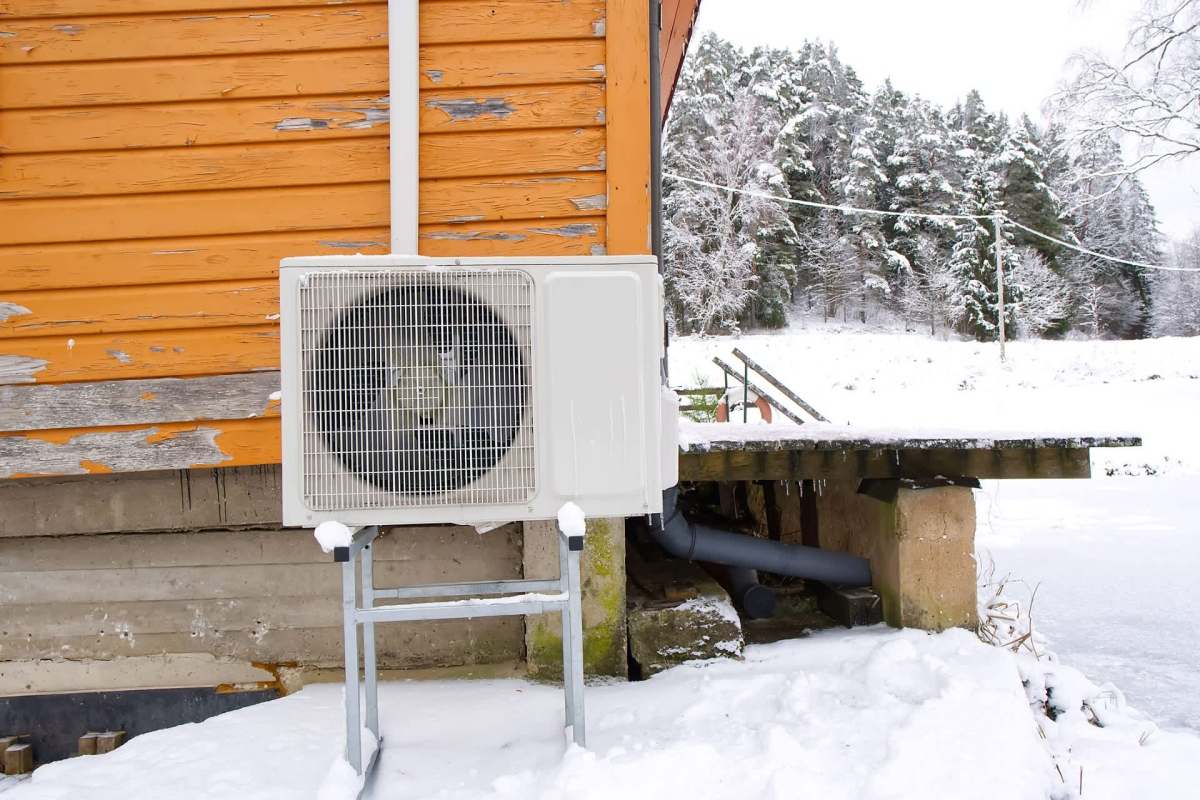
A Canadian homebuyer considering a 2,300-square-foot house in eastern Ontario raised a question that is becoming increasingly common in colder regions: Can a heat pump really replace a furnace, or will auxiliary heat send utility bills soaring?
Here's what to know
The question came up in a Reddit post, where the original poster asked about relying mainly on heat pumps and a fireplace for winter warmth.
"I'm mostly worried about the auxiliary," they clarified.
A user identifying themselves as an Ottawa HVAC engineer whose own house uses only a heat pump replied that it "depends," but added that if the equipment is sized for local temperatures and controlled so backup heat does not come on regularly, "then it will be slightly more expensive than a natural gas furnace to operate at current gas and electricity prices."
The engineer also emphasized that the monthly bill is not the only cost that matters.
Another commenter made a similar point, saying that if a homeowner can cancel gas service and avoid Enbridge's customer charge, "the heat pump would likely be less cost overall."
TCD Picks » Quince Spotlight
💡These best-sellers from Quince deliver affordable, sustainable luxury for all




Other commenters from Ontario and Quebec also reported good winter heat-pump results, including a homeowner in Hamilton who said their electric backup strips "never engaged all last winter."
More background
The main issue in the thread was whether a heat pump can keep a house comfortable through a cold eastern Ontario winter without depending too much on backup heat.
Commenters suggested the answer has more to do with the house itself than the postal code. Insulation, air sealing, windows, ductwork, and overall heating load all play a part.
One user drove this point home, writing, "Nobody can answer this without knowing about your insulation situation."
A house that leaks heat will cost more to warm no matter what heating system is installed. In a better-performing home, a properly sized cold-climate heat pump can also deliver winter heat and summer air conditioning.
That means the real comparison involves more than just comparing electricity prices versus natural gas costs. Fixed gas charges like connection fees also affect the final cost picture.
What can be done?
Several commenters said backup heat still has value, but more as occasional insurance than as part of the primary plan. The original poster seemed to accept that logic, writing that keeping the existing baseboard heaters for a trial period was "absolutely right."
To ensure that a heat pump HVAC is appropriate for their local climate, buyers can also verify whether the installed system is truly a cold-weather model and ask how the controls are set. Poor settings can trigger auxiliary heat more often than necessary, increasing energy costs.
Still, some owners remain confident that heat pumps alone can get them through frigid Canadian winters.
"There are no 'auxillary' installed. We have always been toasty in winter and chill in summer," said one.
Where can I learn more?
These articles look at how heat pumps hold up in extreme cold and when backup heat can still be useful.
• In Minnesota, a homeowner still wanted propane backup for winter despite sub-zero heat pump data.
• After hearing a common myth, one homeowner found cold-climate heat pumps work and save money in winter.
• In New England, one homeowner showed their heat pump works through the dead of winter.
• Across Minneapolis and other cold states, homeowners are finding a lot of savings in heat pumps.
• An EnergySage adviser tackled a common misconception about super-efficient heat pumps and winter performance.

Get TCD's free newsletters for easy tips, smart advice, and a chance to earn $5,000 toward home upgrades. To see more stories like this one, change your Google preferences here.






