


With energy and gas prices rising across the country, more and more Americans are searching for energy-efficient appliances to reduce their monthly bills. Luckily, manufacturers, installers, and local governments are all rising to the challenge with new technologies and rebates meant to make clean home upgrades easier.
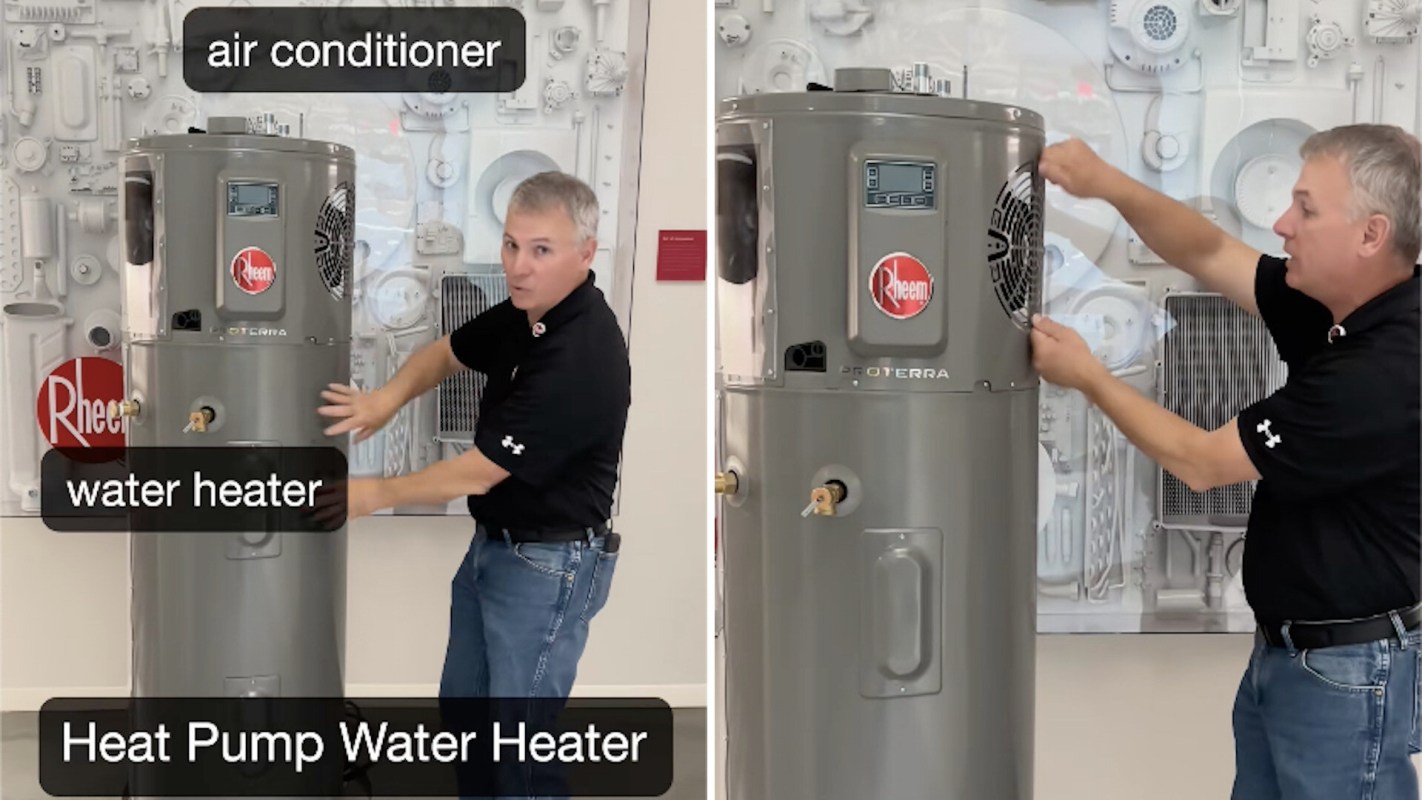
One emerging appliance making waves in the home-efficiency world is the heat pump water heater. Many homeowners already know about the energy savings these systems can offer, but as the water heater experts at Rheem explain in this video, there's another lesser-known perk: They can also provide a cooling effect similar to free air conditioning.
@rheemwater What does a heat pump water heater actually do? 👀 It moves heat instead of generating it, which is what makes it such an efficient option for homeowners. Simple concept. Big difference in performance. #HeatPumpWeek #HPWH #RheemWater #WaterHeater #HotWater ♬ original sound - Rheem Water Heating
In the short clip, master plumber Mike Henry explains that heat pump water heaters function a bit differently from traditional units.
Unlike a normal electric-resistance or gas-fired water heater, heat-pump-equipped models don't generate heat. Instead, they capture and condense ambient energy from our air and turn it into hot water.
In turn, these units are much more efficient than their traditional counterparts. And that efficiency can translate into meaningful savings on your electricity bills.
In fact, the water heating experts at Cala estimate that homeowners who replace outdated water heaters with the company's modern heat pump models — which use software to optimize when the system runs — could save nearly $10,000 over 10 years through lower energy costs.
Heat pumps rely on similar compression and refrigerant technologies to a traditional AC unit or your refrigerator.
In the video, Henry explains that a heat pump water heater is essentially heating the water in the tank using what amounts to a small AC-style system mounted on top. Because the unit pulls warmth from the surrounding air, it leaves behind cooler air.
Save $10,000 on solar panels without even sharing your phone number Want to go solar but not sure who to trust? EnergySage has your back with free and transparent quotes from fully vetted providers in your area. To get started, just answer a few questions about your home — no phone number required. Within a day or two, EnergySage will email you the best options for your needs, and their expert advisers can help you compare quotes and pick a winner. Solar panels can save you more than $50k over their 25-year lifespan, and EnergySage can help you save as much as $10k on installation. Which begs the question — isn't that worth an email or two? |

So, if you install a heat pump water heater in a space without air conditioning — such as a warm garage — it can provide a slight cooling effect that helps make the area more comfortable while still delivering highly efficient hot water.
And if you want to avoid the cooling effect — or redirect it somewhere else — Henry explains that the system can be fitted with ductwork to move the cooled air where it's needed.
If this information has you curious about heat pump water heaters, check out the next-gen models from Cala.
Cala's water heaters are designed to learn your household's hot water habits, allowing the system to deliver hot water when you need it while avoiding expensive peak-electricity rates and unnecessary energy use.

Get TCD's free newsletters for easy tips, smart advice, and a chance to earn $5,000 toward home upgrades. To see more stories like this one, change your Google preferences here.







