


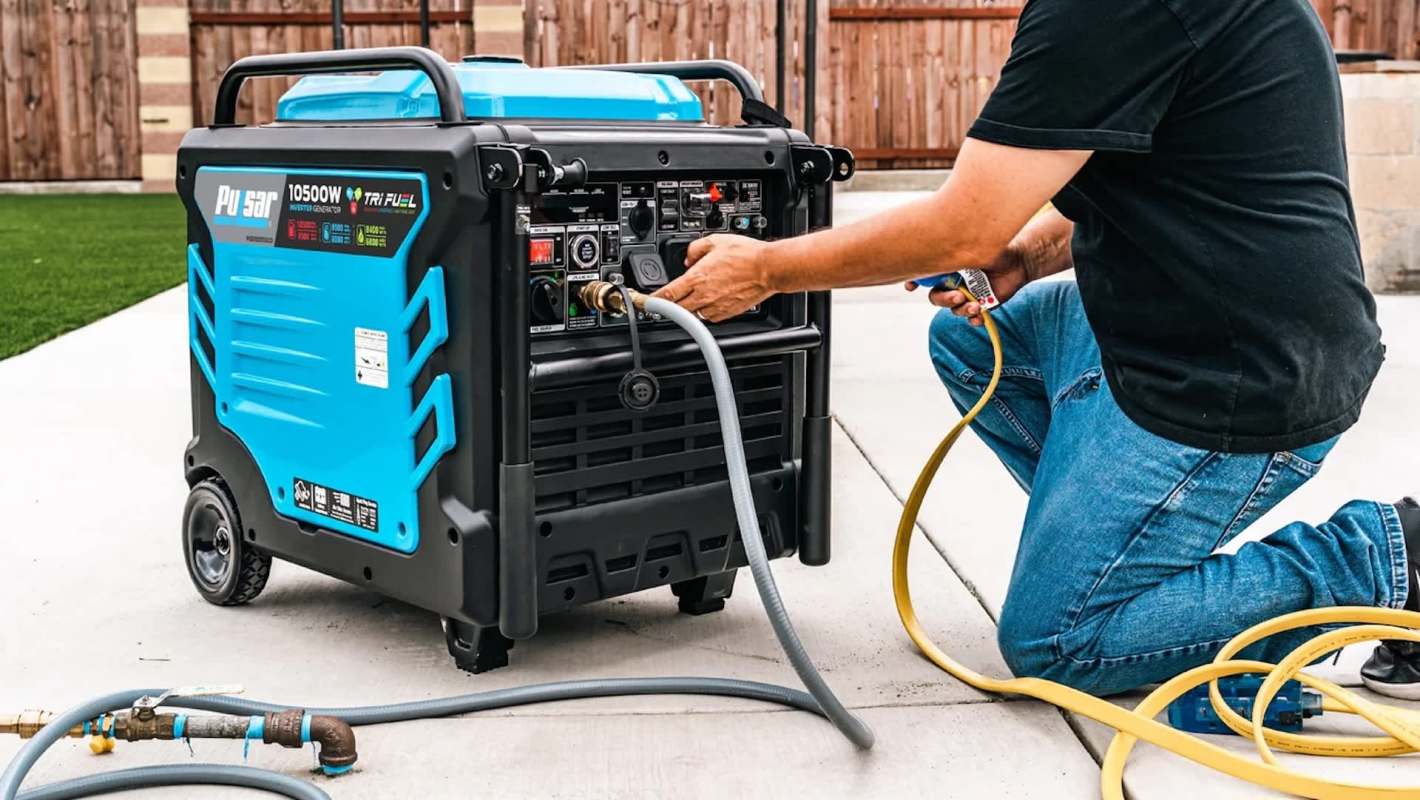
A backup-power test went sideways for one homeowner.
After trying to bring a pool pump online during hot weather, the generator later would only crank and flash an overload warning.
What happened?
On Reddit, the owner of a Pulsar PGD105TiSCO said the generator had been operating on natural gas without trouble until an additional load was added for the pool pump.
The first sign of trouble showed up on the air conditioner.
"My AC flipped off and threw a low voltage code, but the generator kept running just fine," the user wrote.
Later, after the system had been shut down and the load removed, the owner tried to run the generator again.
TCD Picks » Quince Spotlight
💡These best-sellers from Quince deliver affordable, sustainable luxury for all




According to the Reddit post, it would turn over, blink the overload light, and fail to start.
People in the comments pointed to several possibilities, including startup surge from the pump motor, an imbalance between L1 and L2, and basic checks such as resetting the unit and confirming breaker and switch positions.
One user noted, "L1 and L2 imbalance is likely," while also warning that a pool pump motor can create a significant startup surge.
In the end, the problem was far less dramatic than it first appeared: the battery was weak.
The original poster later updated the thread, writing, "Finally I checked the battery and boom, 6v. D'oh! I have it sitting on the trickle charger now. Case closed."
Why does it matter?
Air conditioning, refrigeration, medical devices, and sump pumps may all depend on a generator starting reliably when grid power goes out.
The thread highlighted two common but easily overlooked problems: startup surge from motor-driven equipment and battery maintenance.
Devices such as pool pumps, A/C units, and well pumps can briefly require far more power when they first kick on than they do while running.
A generator may seem to be handling the load without trouble until a motor starts or one electrical leg becomes overloaded.
In hot places such as Houston, where the original poster lives, cooling can be the top priority.
What can I do?
Understand your generator's limits before an outage occurs. That means checking running watts, startup watts, and whether large appliances are split across the system in a way that avoids overloading one side.
Testing your setup ahead of time rather than during an emergency can help.
The poster later admitted, "I didn't run any hard numbers before flipping the breaker, I just convinced myself it would probably be ok, paid the price for my laziness lol."
Routine battery care matters as well, especially for electric-start generators that may sit unused for long stretches. A trickle charger or regular voltage check can keep a dead battery from looking like a more serious mechanical or electrical failure.

Get TCD's free newsletters for easy tips, smart advice, and a chance to earn $5,000 toward home upgrades. To see more stories like this one, change your Google preferences here.






