



New research zones in on the roles that gas and propane stoves play in dangerous indoor air pollution across the United States.
What's happening?
Researchers at Stanford University recently published what the Washington Post calls the most comprehensive model of indoor air pollution attributable to gas stoves. The team estimated total residential exposure to nitrogen dioxide at a ZIP-code level, integrating both outdoor sources and the primary indoor source — gas- and propane-powered stoves.
The Post summarized the research, which found that gas stoves can account for up to half of a person's exposure to nitrogen dioxide and maps out where the combination of nitrogen dioxide from gas stoves and outdoor air pollution is either safe or dangerous. The analysis shows a highly variable situation across the U.S. — for instance, some areas have dangerous levels of outdoor air pollution regardless of what type of stove is used, while others are characterized as having safe outdoor air until combined with gas stove use.
The Post also has a tool that lets people input their information into the model to see how they fare.
TCD Picks » Induction Cooking
💡Discover the induction option that’s just right for your needs and your home



Why is this study important?
Nitrogen dioxide is a byproduct of burning gas and has been correlated with some major health risks. The Post reported that longer-term exposure above the World Health Organization's limit of about 5.3 parts per billion increases rates of lung cancer, diabetes, heart disease, preterm birth, and childhood asthma. The publication also pointed to a study focusing on older adults that found that no level of nitrogen dioxide is safe.
"Studies show NO2 might damage every organ in your body," the publication stated, pointing to the gas's effects on the respiratory and circulatory system, which leads to chronic inflammation and serious illnesses such as heart and lung disease.
What's being done about indoor air pollution?
The article points out that life changes, like spending less time in the kitchen or improving ventilation, can make a difference. Another option is trading your gas stove for an electric one.
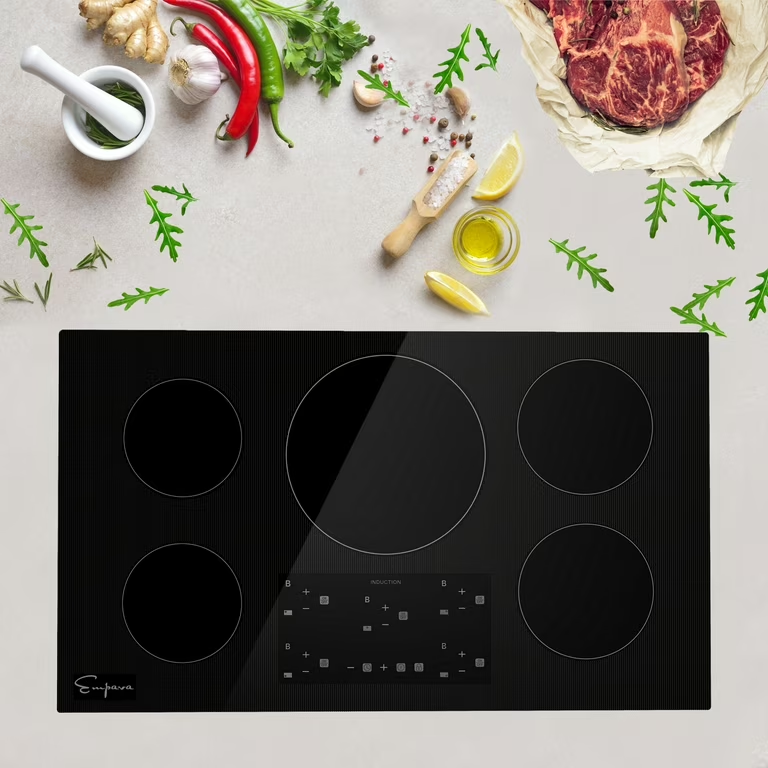
One option is an induction stove, which uses electromagnetism to directly heat cookware. Since these devices do not rely on gas, they do not pollute your home with nitrogen dioxide or other pollutants. They also cook food faster and can save you money on your power costs since they're more energy efficient, even when compared to other electric stoves.
Save $10,000 on solar panels without even sharing your phone number Want to go solar but not sure who to trust? EnergySage has your back with free and transparent quotes from fully vetted providers in your area. To get started, just answer a few questions about your home — no phone number required. Within a day or two, EnergySage will email you the best options for your needs, and their expert advisers can help you compare quotes and pick a winner. Solar panels can save you more than $50k over their 25-year lifespan, and EnergySage can help you save as much as $10k on installation. Which begs the question — isn't that worth an email or two? |

Some states are even offering residents up to $840 to cover the cost of a new induction stove, thanks to government incentives.
Plug-in induction burners are another great option for renters and homeowners who can't afford a major kitchen renovation. These devices start at around $50 and offer the same health, cooking, and cost benefits as induction ranges.
|
What's the most you'd pay per month to put solar panels on your roof if there was no down payment?
Click your choice to see results and speak your mind. |
 $200 or more 💰
Get TCD's free newsletters for easy tips to save more, waste less, and make smarter choices — and earn up to $5,000 toward clean upgrades in TCD's exclusive Rewards Club.
Cool Picks






