


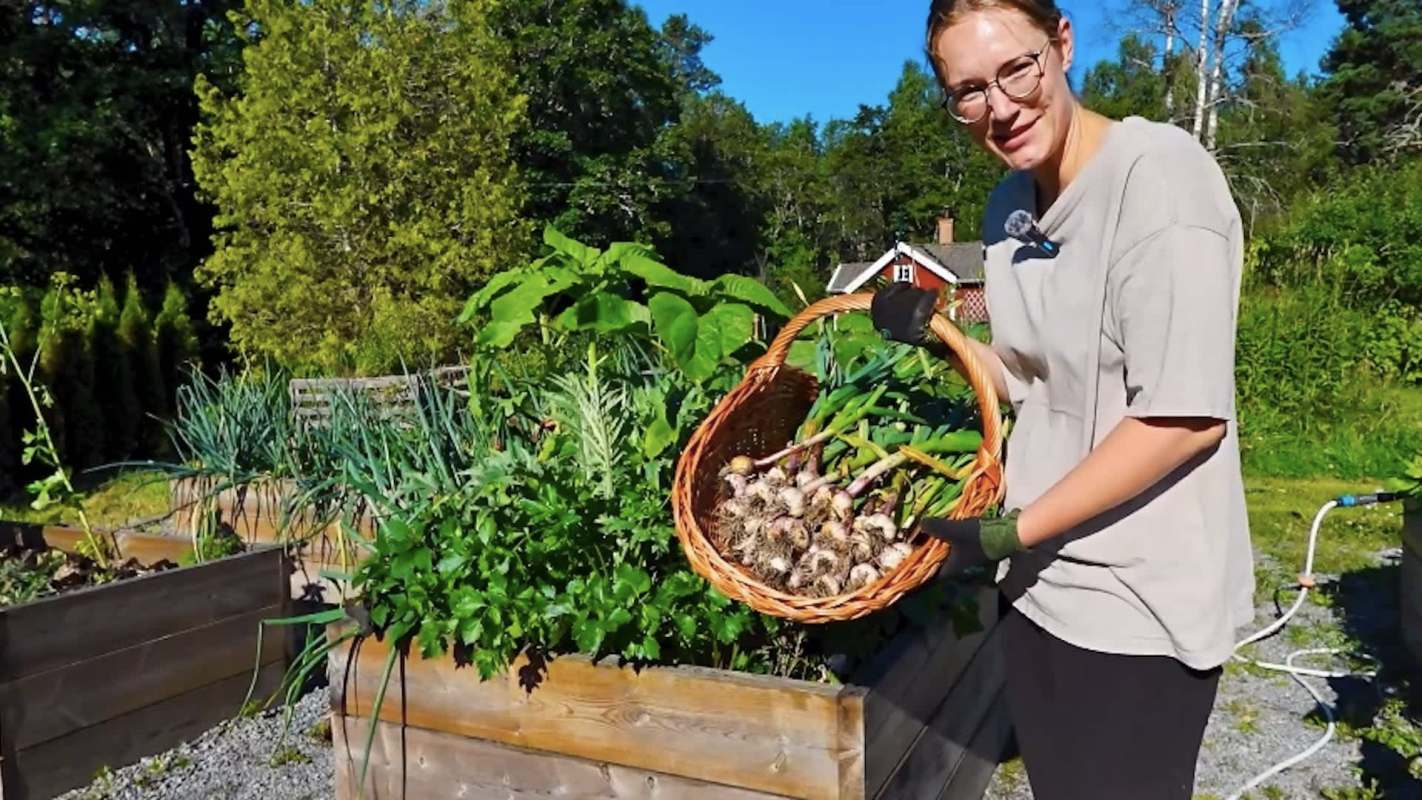
A big onion harvest can mean more than a satisfying gardening milestone. As Swedish gardener Emilia of Emilia's Happy Place (@EmiliasHappyPlace) showed in a video, it can translate into months of lower grocery bills and a pantry stocked with homegrown food.
What happened?
On Aug. 12, the YouTube creator posted a long-form video focused on harvesting onions and garlic and preparing the onion crop for storage.
The video shows Emilia first harvesting garlic, which she says she might wait to pull later next year. The onion harvest is the star of the video and her garden, though
In the video description, Emilia said the harvest came after "months of growing, watering, weeding, and waiting." The creator described the payoff in especially practical terms by declaring, "there's enough onions to last me for an entire year!"
Combining a harvest vlog with step-by-step guidance, the video shows the bulbs being pulled and collected, then explains how the onions are prepared for storage so they can be used long after harvest season.
Emilia gathers them inside, with the onions protected from sunlight in a cool spot in her kitchen, along with a fan to keep the temperature cool, for two weeks. She says the garlic bulbs have firmed up and are about a week away from processing, where she'll crush, chop up, and freeze a large portion of them.
TCD Picks » Quince Spotlight
💡These best-sellers from Quince deliver affordable, sustainable luxury for all




For the onions, Emilia says she's a week or two away from the next steps. The next steps are to peel the crinkly layer, brush out the dirt, cut the roots and tops, then store them in a cool, dry place. She'll chop up and freeze half of that.
Why does it matter?
Onions and garlic are kitchen essentials, so producing a large batch at home can yield meaningful savings over time.
When a gardener harvests enough for months of cooking, each meal made with those ingredients helps trim produce costs.
There is also the flavor factor. Homegrown produce is often picked at peak ripeness rather than shipped and stored before reaching a kitchen, which can mean stronger flavor and a fresher texture.
Gardening can also support mental and physical health. It gets people outside, adds light movement through digging, weeding, and watering, and gives many growers a sense of calm and accomplishment that comes from tending something over a full season.
A good harvest goes only so far if it spoils quickly, so learning how to properly cure and store crops can reduce food waste and extend the benefits of a garden much further. Emilia is also giving away some onions, she reported in the video.
What can I do?
Starting small can make food gardening more manageable. Even a modest bed or a few containers can help beginners build confidence with food crops and see firsthand how much fresher homegrown produce can taste.
It also helps to focus on foods you consume often. Onions, garlic, herbs, and other cooking staples can offer some of the clearest savings because they are ingredients many households buy repeatedly throughout the year.
Drying and storing produce correctly can be just as important as growing it, since good storage is what turns a seasonal win into a pantry resource.

Get TCD's free newsletters for easy tips, smart advice, and a chance to earn $5,000 toward home upgrades. To see more stories like this one, change your Google preferences here.







