


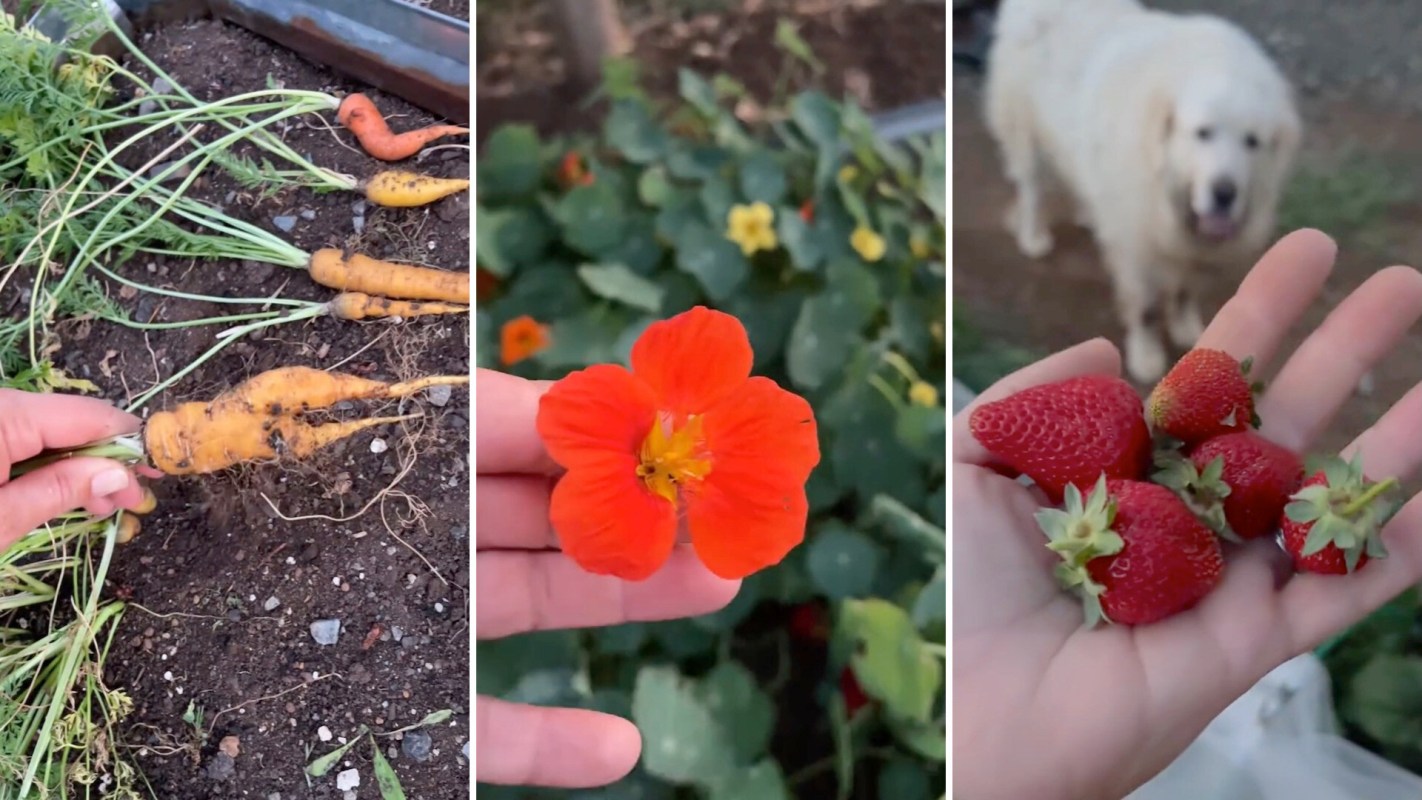
A backyard harvest video boasted quirky vegetables, honest taste tests, and a quiet moment of gratitude. For garden enthusiasts, it was a reminder that growing your own food can be practical, funny, and deeply satisfying all at once.
What happened?
After the weather cooled off, gardener Lauren (@totesma_gotes) took to TikTok to see what could be harvested, gathering a mix of ready-to-pick produce that included carrots, cucumbers, tomatoes, asparagus beans, peppers, jalapeños, nasturtiums, and strawberries.
@totesma_gotes Let's harvest the garden! #garden #harvest #food #fyp #growyourownfood ♬ original sound - Lauren
Lauren moved from plant to plant, explaining what to look for and how to know when the time is right. Keep in mind, some of these are personal preferences. For instance, Lauren prefers to pick tomatoes a little early so they can finish ripening on the window sill, while others may choose to let them stay on the vine a bit longer.
The video also leaned into the fun of homegrown food, from describing a forked carrot as having "pants" and eating a nasturtium straight from the stem.
"I love the spice," Lauren said. "It's like horseradish."
Trying a new type of bean, Lauren explained the asparagus beans as having a nutty, earthy flavor.
TCD Picks » Quince Spotlight
💡These best-sellers from Quince deliver affordable, sustainable luxury for all




"I actually really don't like how they taste. I think they're gross," Lauren said. "But my neighbor likes them, so we're going to pick them for her."
Commenters, while mostly fixated on the two kittens in the video, also chimed in with their own gardening knowledge.
"If you leave the carrots until after the first frost it makes them really sweet," one wrote.
Why does it matter?
One of the bigger learning curves when it comes to home gardening is knowing when to harvest at peak ripeness to ensure better-tasting produce. It's also a demonstration of how rewarding it can be to grow your own food for a true yard-to-table experience.
Store-bought vegetables often travel long distances before reaching the kitchen, while backyard produce can go from soil to plate in a matter of minutes. There's also a clear money-saving benefit. Even a modest garden can help reduce grocery bills by producing herbs, greens, and root vegetables at home.
Gardening encourages movement and time spent outdoors, both of which support mental and physical well-being. Growing your own food also promotes happiness, whether it's discovering a perfectly ripe cucumber or laughing over a strangely shaped carrot.
What can I do?
If you're interested in gardening, it can be overwhelming to know where to begin. Start small with a few containers or even a single raised bed to grow beginner-friendly foods such as lettuce, herbs, peppers, bush beans, or carrots. Check out The Cool Down's guide to growing your own food for a breakdown of practical first steps.
Experimentation is part of the process. Some crops become favorites, while others — such as the asparagus beans in Lauren's case — may not earn a place in next season's garden. That's still valuable because it helps gardeners figure out what works best for their taste, climate, and budget.
Just remember it's a learning process to figure out what works best for you. It's always enlightening to see what other gardeners are up to for inspiration. Along the way, you'll pick up small habits that can help reduce waste and stretch a harvest further.

Get TCD's free newsletters for easy tips, smart advice, and a chance to earn $5,000 toward home upgrades. To see more stories like this one, change your Google preferences here.







