


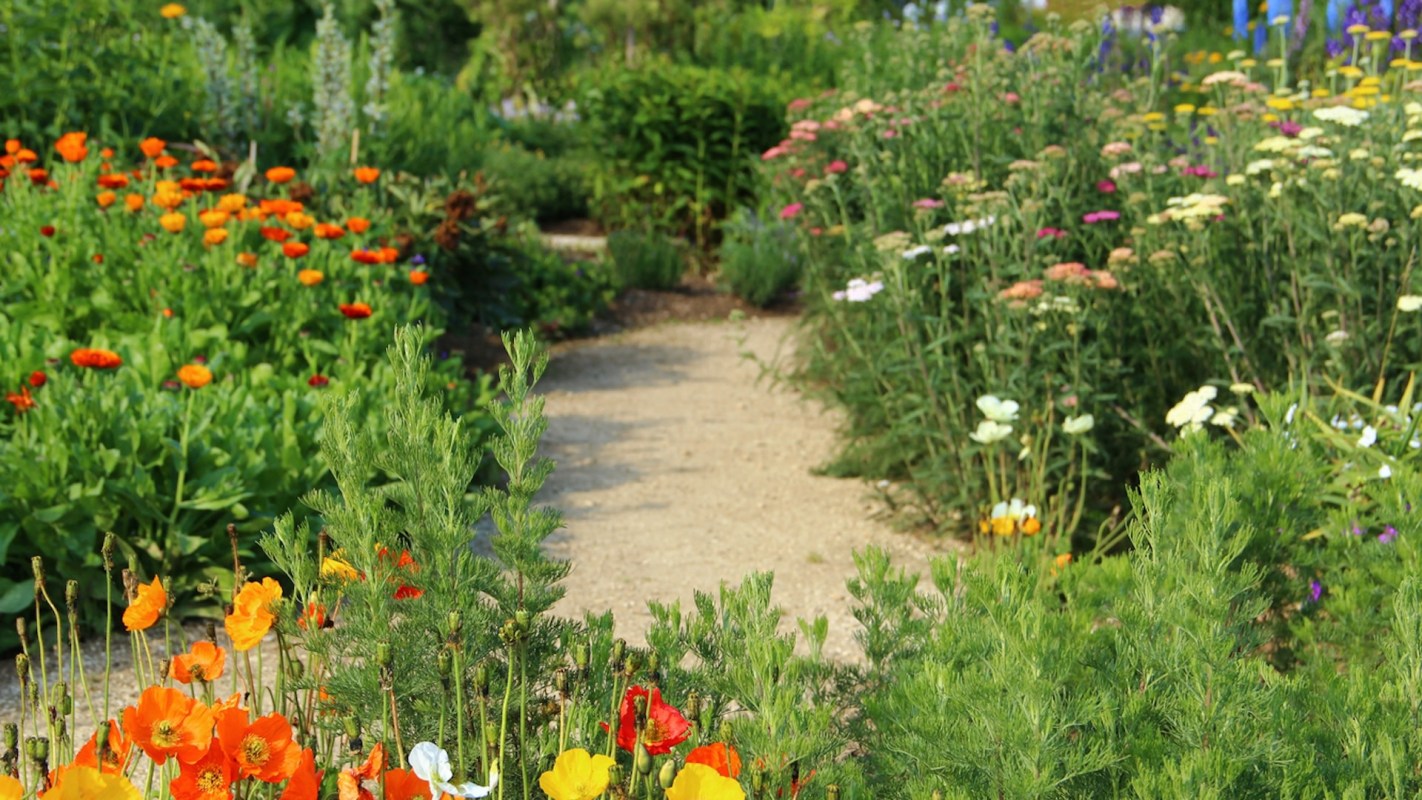
A flower farmer took to Instagram to share sweeping views of their vibrant garden that is bursting with a variety of different blooms, as well as a key detail — they never use landscape fabric.
While the material is often marketed as a shortcut to prevent weeds, Jerilynn (@masoncreekflowerfarm), a DIY gardener, explained why it doesn't fit her gardening style.
Jerilynn said she loves digging and playing in her flower beds, and a weed barrier would restrict that joy and ultimately require more maintenance. "I think after time it is not aesthetically pleasing to the eye and doesn't give a natural feel," she said in the caption. "I also feel like a weed barrier has an [effect] on the beneficial soil organisms, and plants do not get adequate watering."
Instead, Jerilynn focuses on building healthy soil with the right "amendments" and topping her beds with mulch. Not only does mulch look nice, but it also helps with natural weed control and moisture retention, as The Old Farmer's Almanac explained.
Planting densely is another strategy she recommends. It naturally suppresses weeds, according to The Old Farmer's Almanac, and allows plants to reseed. She also pointed out that strong root systems improve soil structure and increase drainage, which are benefits that landscape fabric can't provide.
Landscape fabric can also be harmful to the environment. Made from plastics in the form of synthetic fibers, it eventually breaks down into microplastics that contaminate soil and waterways. It also blocks natural decomposition, preventing organic matter from enriching soils, according to the Arapahoe County Extension. Over time, this makes yards less resilient and less sustainable.
"Weed barriers are a waste of money and make everything more difficult," one commenter said.
Gardening with native plants is better for the environment, requires less water and maintenance, and is aesthetically pleasing. Even more importantly, native plants attract pollinators like bees and butterflies, which help protect our food supply, benefiting entire communities, as the National Wildlife Federation explained. Native plants also increase biodiversity, helping to maintain balanced ecosystems and promote soil and water health.
For those who don't have time to garden, natural lawns are also a good alternative, because they're low-maintenance and climate-adapted. Homeowners save on water bills and mowing, while also cutting the need for fertilizers and pesticides.
Whether you have a vibrant flower farm like Jerilynn or are simply looking to bring a little color to your garden, skip the weed barrier and plant native.
TCD Picks » Quince Spotlight
💡These best-sellers from Quince deliver affordable, sustainable luxury for all




|
What is the biggest reason you don't grow food at home? Click your choice to see results and speak your mind. |
 Not enough time ⏳
Join our free newsletter for easy tips to save more and waste less, and don't miss this cool list of easy ways to help yourself while helping the planet.
Cool Picks






