


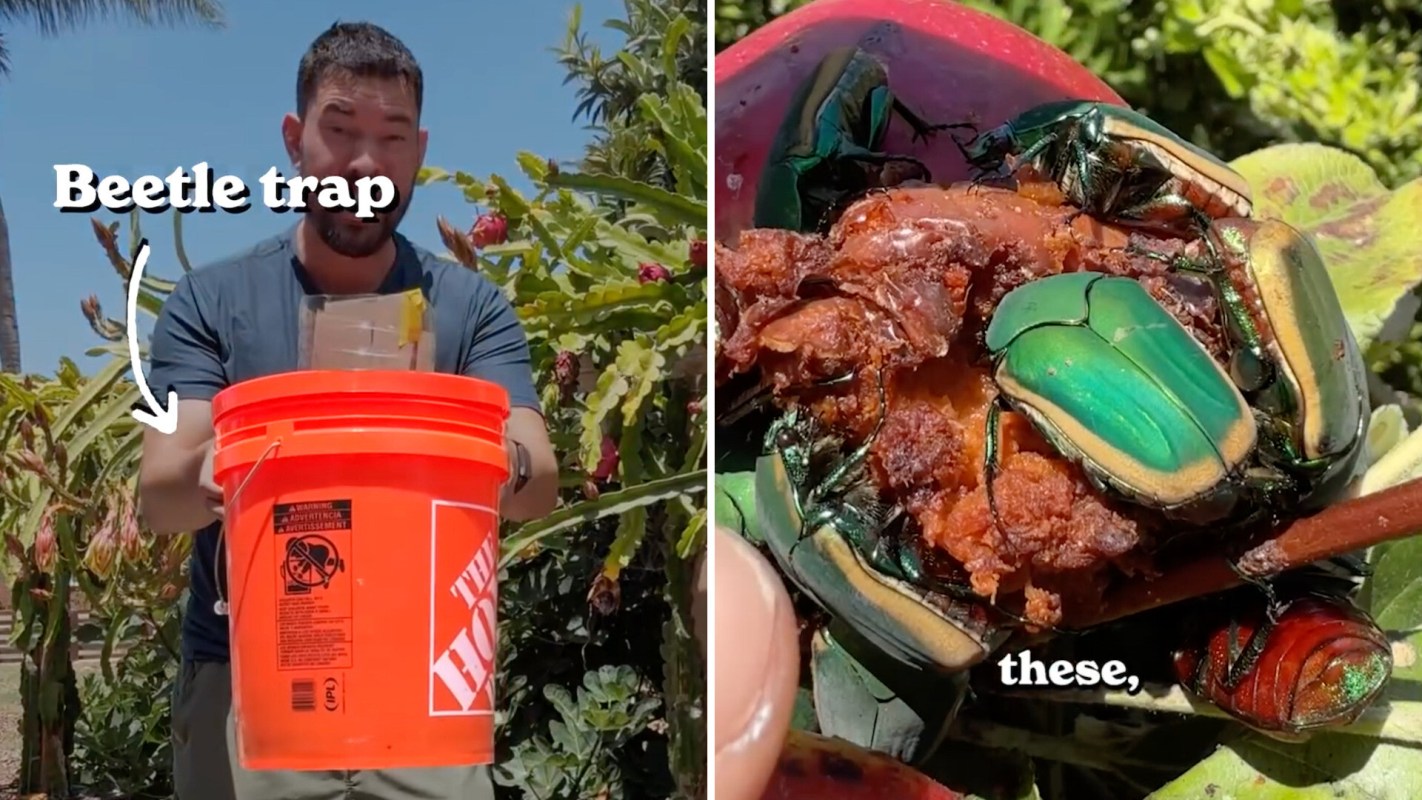
Figeater beetles can take over a backyard garden surprisingly fast, especially when fruit is ripening. A DIY method circulating online suggests gardeners may be able to distract the pests with a separate food source before they get to the main crop.
What's happening?
In a recent Instagram post, gardener Epic Gardening (@epicgardening) shared a homemade trap designed to catch figeater beetles by using rotten fruit as bait. The gardener shares simple steps for how people can create this at home by assembling things you may have around the house: a plastic water jug, cardboard, a lid, and a bucket to put old fruit in to lure the beetles.
Because the insects seek out very ripe produce, gardens with soft fruits can become easy targets. Figs, peaches, grapes, and tomatoes are among the crops they feed on, so offering decaying fruit in another spot may help pull adult beetles away before additional harvest is lost.
The video checks back to the trap's progress after several days and shows that it has collected a large number of beetles.
One commenter captured a common reaction to the pest itself, writing, "I didn't know they get that big." Other Instagram users also pointed out additional ways to ward off these beetles, with one user saying, "I have garden ducks and I don't get those anymore! Unlike chickens, you can let them roam your entire garden and they eat all the bugs, but not your plants!"
Even though it is not a complete fix, trapping adults early in the season may still make a difference if the bait is replaced regularly and the setup is positioned away from the plants gardeners want to save.
TCD Picks » Quince Spotlight
💡These best-sellers from Quince deliver affordable, sustainable luxury for all




Why does it matter?
For home gardeners, pest damage is more than just an eyesore. When beetles chew through soft fruit, they can destroy produce you've spent a whole season watering, pruning, and caring for.
Growing food at home can cut down grocery costs, particularly during peak harvest season, and many gardeners say homegrown fruits and vegetables taste better than store-bought. Gardening can also support mental and physical health by encouraging movement, time outside, and a closer connection to the food on your plate.
Figeater beetles are especially frustrating because they target fruit just as it is nearly ready to harvest. Losing crops at that stage can mean wasted time, wasted money, and less food for the table.
Finding chemical-free ways to manage these pests can help gardeners protect their harvests without immediately turning to harsher treatments. And reusing materials you already have to create a trap instead of throwing them into the trash is a win-win situation for your garden and for the environment.
What can I do?
Gardeners dealing with figeater beetles may want to start with a simple bait trap. Fill it with spoiled fruit and set it away from the plants you hope to preserve, so the insects are drawn off in another direction.
Trapping adults may reduce immediate feeding pressure, but some gardeners pair that tactic with broader nonchemical methods. For more ideas, here is a guide to controlling pests without chemicals.
One commenter shared another tip for anyone dealing with these bugs: "Beneficial Nematodes will kill the larvae in the soil. It took 1 season for them to work. We have less pests in our yard and no more of those beetles."
"No method is a silver bullet, but trapping adults early can make a noticeable difference throughout the season," the creator wrote in the post. Another commenter asked: "Any chance this works with Japanese beetles too??"

Get TCD's free newsletters for easy tips, smart advice, and a chance to earn $5,000 toward home upgrades. To see more stories like this one, change your Google preferences here.






